
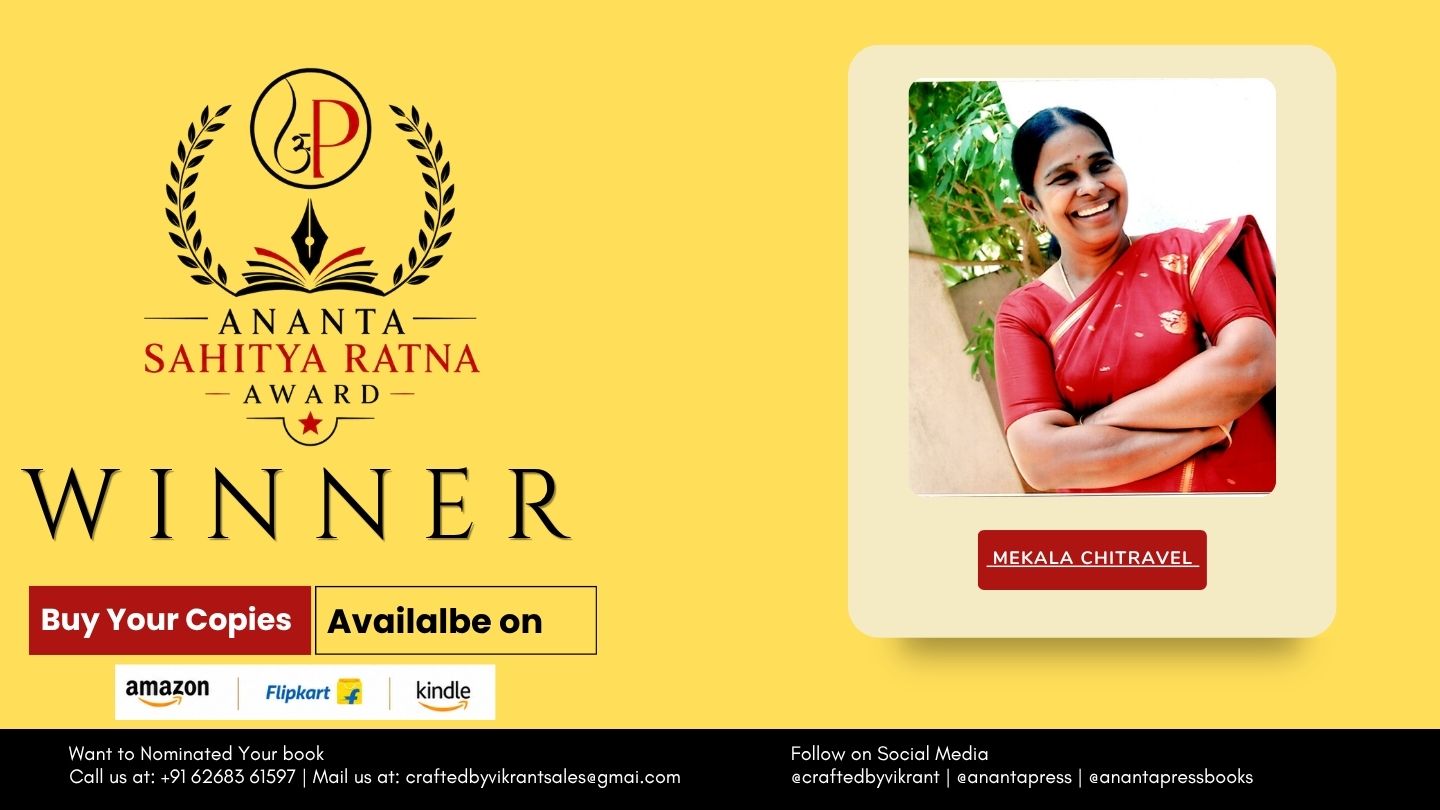
Ananta Press is delighted to congratulate author Mekala Chitravel on being officially declared a Winner of the Ananta Press Sahitya Ratna Award for the fiction novel சௌகந்தி… (Sowganthi). This recognition celebrates a work that places one of the most intimate and meaningful human relationships at its centre: the bond between a mother and her son. Sowganthi is built around a simple but deeply emotional idea. Every mother hopes that her child will grow with love, concern, respect, and a willingness to care for her. In the novel, Sowganthi is portrayed as a fortunate mother because her son, Rishi, gives her the affection and care that a mother naturally longs for. Through this relationship, Mekala Chitravel draws attention to the emotional value of family, gratitude, responsibility, and the quiet forms of love that often shape a person’s life more strongly than grand gestures. The title itself adds an important layer of meaning to the book. Sowganthi is described as the name of a divine flower mentioned in the Mahabharata, associated with the episode in which Bhima brings the flower for Panchali from a heavenly realm. By choosing this name for the central mother figure, the novel connects a personal family story with Indian mythological memory. The flower becomes a fitting symbol of something precious, pure, rare, and worthy of care. This cultural connection gives the book an identity of its own and helps its central theme of maternal love feel both personal and timeless. The Ananta Press Sahitya Ratna Award recognises literary works that offer meaningful ideas, emotional or intellectual value, originality of presentation, and a positive contribution to readers. Sowganthi stood out to the award committee because it takes a universally understood relationship and gives it a clear emotional and cultural focus. Rather than depending on complexity alone, the novel finds strength in sincerity. It invites readers to look at the mother and son relationship not merely as a biological bond, but as a relationship sustained by affection, respect, presence, and responsibility. The committee also recognised the relevance of the book’s message in contemporary life. Families today often face distance, changing priorities, demanding routines, and reduced time for emotional connection. Against this background, a story that reminds readers to value a mother’s love and to return that love through genuine care has social as well as literary importance. Rishi’s relationship with Sowganthi can encourage readers, especially younger readers, to think about how love is expressed in everyday actions and how meaningful it can be to remain emotionally present for one’s parents. As a work of fiction, Sowganthi also demonstrates that powerful literary themes do not always need to be built around extraordinary events. Sometimes the most lasting stories begin with relationships readers already know. By placing maternal affection at the heart of the narrative and linking its title to a culturally significant image from the Mahabharata, Mekala Chitravel gives the story both emotional accessibility and symbolic depth. The selection of Sowganthi for the Ananta Press Sahitya Ratna Award therefore reflects the committee’s appreciation of its heartfelt subject, cultural connection, positive message, and ability to encourage reflection on family relationships. The novel celebrates a form of love that is nurturing, protective, grateful, and deeply human. Ananta Press warmly congratulates Mekala Chitravel on this achievement. May this recognition bring Sowganthi to a wider readership and encourage the author to continue creating stories that carry emotional meaning and cultural value. We extend our best wishes to Mekala Chitravel for the literary journey ahead and proudly recognise the contribution of Sowganthi to fiction centred on family, affection, and the enduring significance of a mother’s love. Jury-Style Feedback Glenville Ashby Sowganthi is a gentle and emotionally sincere novel that places the bond between a mother and her son at the centre of the story. What stayed with me most was the simplicity of its emotional idea. The relationship between Sowganthi and Rishi is not presented only as a family connection, but as a form of devotion, responsibility, and gratitude. Rishi’s love and care for his mother give the story a warm human quality that many readers can understand. I also found the meaning behind the name Sowganthi very interesting. Connecting the name to the divine flower mentioned in the Mahabharata gives the novel a cultural and symbolic layer without taking attention away from the main emotional theme. The book reminds readers that caring for parents is not merely a duty but can also be an expression of deep love. Its strength lies in its heartfelt message, its emotional accessibility, and the respect it gives to motherhood. Kavya Pandey While reading Sowganthi, I was drawn to the way the novel celebrates a mother’s emotional world through a simple but meaningful relationship. Every mother hopes to receive love, concern, and respect from her child, and the character of Sowganthi represents that universal hope. Rishi becomes important because his care is shown as something natural and heartfelt. The story therefore speaks about values that can easily be forgotten in busy modern life. I especially liked the symbolic meaning of the title. The reference to the divine Sowganthi flower from the Mahabharata gives the book a sense of grace and connects a personal family story with a larger Indian cultural memory. This combination makes the novel feel rooted and distinctive. The book does not need an overly complicated idea to create an impact. Its emotional strength comes from affection, gratitude, and the sacred place of a mother in a child’s life. It is a sincere and touching work. Apeksha Gupta What I appreciated in Sowganthi is its focus on an emotion that is familiar to almost everyone but is not always explored with enough attention in fiction. The love between a mother and son can appear ordinary from the outside, yet this novel shows how powerful that relationship can become when it is built on care, understanding, and respect. Rishi’s affection for Sowganthi gives the story its emotional centre. The title also adds depth to the reading experience.
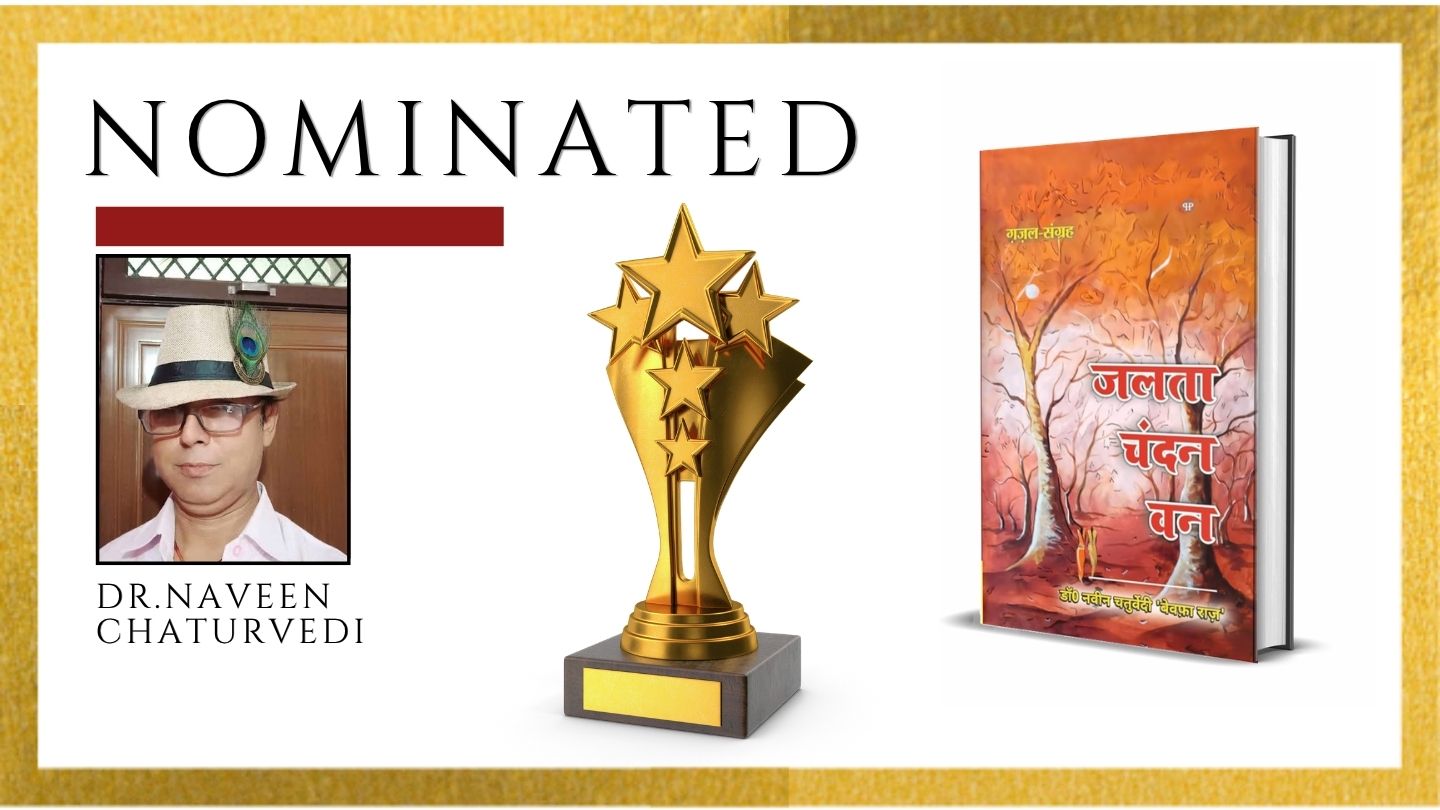
डॉ. नवीन चतुर्वेदी की कृति ‘जलता चंदन वन’ का Ananta Press Sahitya Ratna Award के लिए आधिकारिक नामांकन
Ananta Press Sahitya Ratna Award Committee को यह घोषणा करते हुए अत्यंत प्रसन्नता हो रही है कि सुप्रसिद्ध साहित्यकार डॉ. नवीन चतुर्वेदी ‘बेवफा राज’ की विशिष्ट साहित्यिक कृति ‘जलता चंदन वन’ को Ananta Press Sahitya Ratna Award के लिए आधिकारिक रूप से नामांकित किया गया है। यह नामांकन केवल एक पुस्तक का सम्मान नहीं, बल्कि उस साहित्यिक साधना, संवेदनशीलता और रचनात्मक अनुशासन की पहचान है, जिसके माध्यम से डॉ. नवीन चतुर्वेदी ने ग़ज़ल जैसी प्रतिष्ठित काव्य-विधा को सरल भाषा, प्रभावशाली कथ्य और विशिष्ट छंद-विधान के साथ पाठकों तक पहुँचाया है। ‘जलता चंदन वन’ — संवेदना, शिल्प और अभिव्यक्ति का अनूठा संगम ‘जलता चंदन वन’ डॉ. नवीन चतुर्वेदी का प्रथम प्रकाशित ग़ज़ल-संग्रह है, किंतु इसकी रचनात्मक परिपक्वता इसे किसी आरंभिक प्रयास तक सीमित नहीं रहने देती। संग्रह की विशेष पहचान इसकी वे ग़ज़लें हैं, जो सोलह मात्राओं की दोहा-बहर में रची गई हैं। यह संरचनात्मक अनुशासन अपने आप में पुस्तक को विशेष बनाता है। इस संग्रह की सबसे बड़ी शक्ति इसकी भाषा की सहजता है। कवि ने गंभीर भावों और जीवन के विविध अनुभवों को जटिल शब्दावली में बाँधने के बजाय सरल एवं सीधी अभिव्यक्ति के माध्यम से प्रस्तुत किया है। यही कारण है कि इन ग़ज़लों में साहित्यिक गरिमा के साथ-साथ आत्मीयता भी बनी रहती है। संग्रह की प्रत्येक ग़ज़ल अपनी अलग पहचान रखती है और अनेक शेर स्वतंत्र रूप से भी पाठक के मन में प्रभाव छोड़ने की क्षमता रखते हैं। संवेदनशीलता, मानवीय अनुभव, जीवन की विडंबनाएँ, भावनात्मक संघर्ष और आत्मचिंतन जैसे तत्व पुस्तक में विभिन्न रूपों में सामने आते हैं। ‘जलता चंदन वन’ शीर्षक भी पुस्तक की साहित्यिक गहराई का परिचायक है। चंदन सामान्यतः शीतलता, सुगंध और पवित्रता का प्रतीक माना जाता है, जबकि ‘जलता’ शब्द पीड़ा, संघर्ष और अंतर्द्वंद्व का संकेत देता है। इन दो विपरीत प्रतीकों का मेल मानवीय जीवन की उसी सच्चाई को सामने लाता है, जहाँ व्यक्ति भीतर संघर्षों से गुजरते हुए भी अपने व्यक्तित्व की सुगंध और संवेदना को बनाए रखता है। Award Committee ने क्यों चुना ‘जलता चंदन वन’? Ananta Press Sahitya Ratna Award Committee द्वारा किसी कृति को नामांकन के लिए विचार करते समय उसकी साहित्यिक गुणवत्ता, मौलिकता, रचनात्मक दृष्टि, पाठकीय प्रभाव, भाषा, संदेश और साहित्य में योगदान जैसे अनेक पहलुओं को महत्व दिया जाता है। ‘जलता चंदन वन’ इन मानकों पर अपनी स्पष्ट पहचान स्थापित करता है। विशेष रूप से सोलह मात्राओं की संरचना में रचित ग़ज़लों का व्यापक संग्रह डॉ. नवीन चतुर्वेदी के साहित्यिक अनुशासन और छंद की गहरी समझ को प्रदर्शित करता है। उपलब्ध लेखक-परिचय के अनुसार, यह कृति India Book of Records में 16 मात्राओं पर आधारित विशिष्ट पुस्तक के रूप में दर्ज होने की उपलब्धि से भी जुड़ी है, जो इसके प्रयोगात्मक और रचनात्मक महत्व को और अधिक उल्लेखनीय बनाती है। पुस्तक की एक अन्य विशेषता यह है कि इसमें शिल्प और भाव के बीच संतुलन दिखाई देता है। तकनीकी संरचना के बावजूद अभिव्यक्ति बोझिल नहीं होती। पाठक को ऐसा नहीं लगता कि रचनाएँ केवल छंद की कसौटी पूरी करने के लिए लिखी गई हैं; इसके विपरीत, भाव स्वाभाविक रूप से आगे आते हैं और छंद उन्हें एक अनुशासित स्वरूप प्रदान करता है। यही साहित्यिक संतुलन इस पुस्तक को Ananta Press Sahitya Ratna Award के नामांकन के योग्य बनाता है। डॉ. नवीन चतुर्वेदी — विविध अनुभवों से निर्मित साहित्यिक यात्रा 6 सितंबर 1965 को श्री सुरेश चंद्र चतुर्वेदी और श्रीमती मिथिलेश चतुर्वेदी के परिवार में जन्मे डॉ. नवीन चतुर्वेदी ‘बेवफा राज’ का रचनात्मक संसार केवल ग़ज़लों तक सीमित नहीं है। उनकी साहित्यिक अभिव्यक्ति में ग़ज़ल, गीत, दोहे, मुक्तक और कहानी जैसी विविध विधाएँ सम्मिलित हैं। व्यवसाय प्रबंधन के क्षेत्र में लंबे समय तक अंतरराष्ट्रीय कंपनियों के साथ कार्य करने के साथ-साथ उन्होंने साहित्य और अन्य बौद्धिक क्षेत्रों से अपना संबंध निरंतर बनाए रखा। वर्ष 2008 से 2020 तक दैनिक जागरण में ‘ज्योतिष उवाच’ कॉलम के माध्यम से पाठकों का मार्गदर्शन करना उनके व्यापक चिंतन और संवाद की क्षमता को दर्शाता है। उनकी साहित्यिक प्रतिभा को विभिन्न संस्थाओं ने भी समय-समय पर सम्मानित किया है। उन्हें ‘काव्य दिवाकर’, ‘काव्य शिरोमणि’ और ‘गीत गौरव’ जैसे सम्मान प्राप्त हुए हैं। ‘जलता चंदन वन’ उनकी प्रथम प्रकाशित कृति है, जबकि उनका एक मुक्तक-संग्रह और एक गीत-संग्रह भी प्रकाशन की दिशा में अग्रसर हैं। उनका रचनात्मक संसार वास्तव में संवेदना, अनुभव और अभिव्यक्ति की त्रिवेणी के रूप में दिखाई देता है। साहित्यिक योगदान की एक महत्वपूर्ण पहचान Ananta Press Sahitya Ratna Award का उद्देश्य ऐसी साहित्यिक प्रतिभाओं और कृतियों को सामने लाना है जो केवल प्रकाशित होने तक सीमित न रहें, बल्कि साहित्य में अपनी विशिष्ट पहचान, विचार और प्रभाव छोड़ने की क्षमता रखती हों। डॉ. नवीन चतुर्वेदी की ‘जलता चंदन वन’ इसी भावना का प्रतिनिधित्व करती है। यह पुस्तक पारंपरिक काव्य अनुशासन को समकालीन संवेदनाओं के साथ जोड़ती है और पाठकों को ऐसे शेर प्रदान करती है जिनमें भावनात्मक आत्मीयता के साथ विचार की गहराई भी मौजूद है। Ananta Press परिवार एवं Sahitya Ratna Award Committee की ओर से डॉ. नवीन चतुर्वेदी ‘बेवफा राज’ को इस आधिकारिक नामांकन के लिए हार्दिक बधाई। हम कामना करते हैं कि उनकी साहित्यिक यात्रा इसी प्रकार निरंतर आगे बढ़ती रहे, उनकी रचनाएँ नए पाठकों तक पहुँचती रहें और उनका लेखन हिंदी साहित्य में अपनी विशिष्ट सुगंध बनाए रखे। ‘जलता चंदन वन’ के Ananta Press Sahitya Ratna Award के लिए नामांकन पर डॉ. नवीन चतुर्वेदी को हमारी ओर से हार्दिक शुभकामनाएँ और उज्ज्वल साहित्यिक भविष्य के लिए मंगलकामनाएँ।
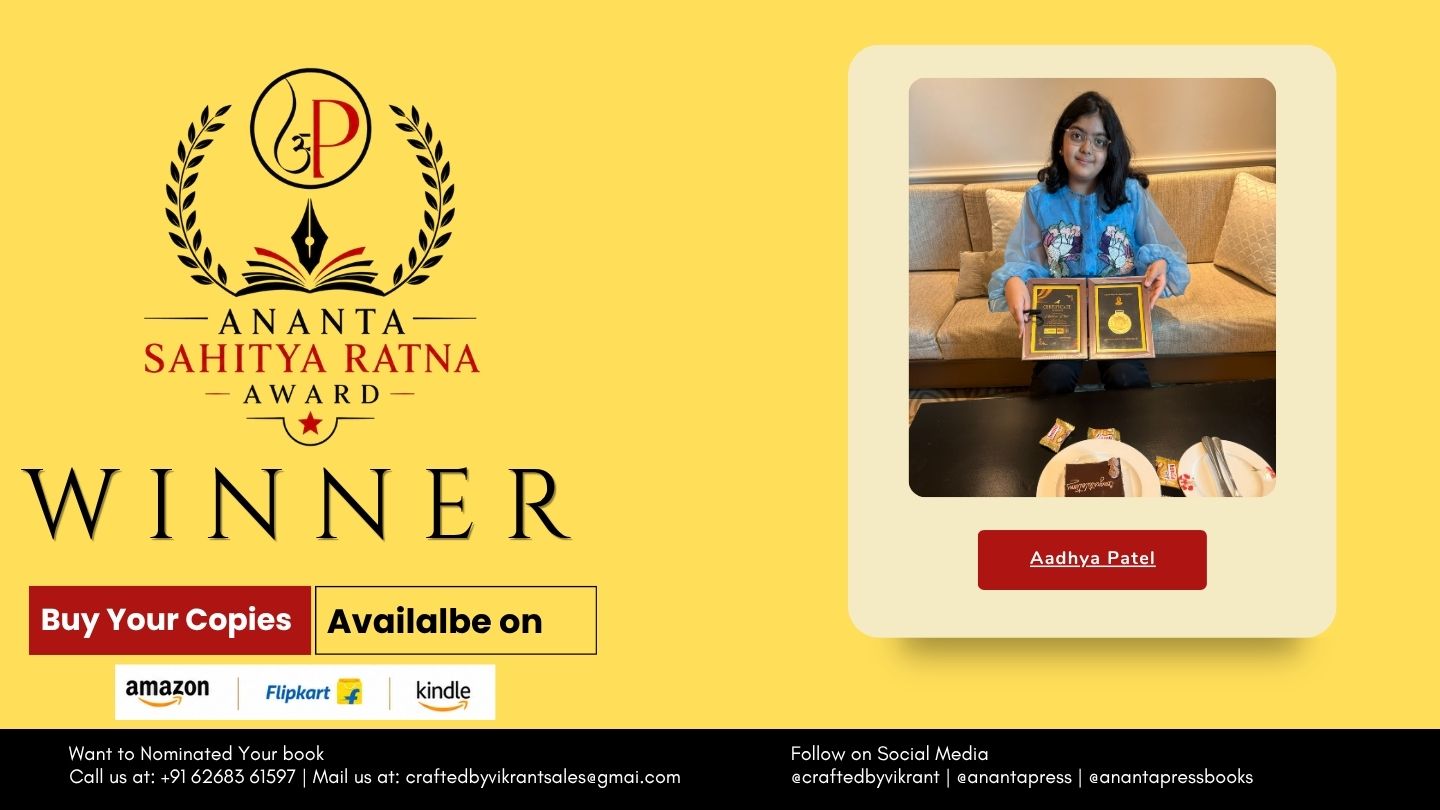
Aadhya Patel Announced as Winner of the Ananta Press Sahitya Ratna Award for Weirdly Indian – Toilets, Toys & Total Mystery!
Ananta Press is delighted to congratulate Aadhya Patel on being officially selected as a Winner of the Ananta Press Sahitya Ratna Award for her remarkable non-fiction work, Weirdly Indian – Toilets, Toys & Total Mystery! The Indus Valley Civilization – 2500 BCE to 1900 BCE. This recognition celebrates a book that approaches Indian history with curiosity, humour, intelligence, and a perspective designed especially for young readers. Rather than presenting the Indus Valley Civilization as a collection of dates, names, and difficult historical terms, Aadhya transforms the subject into an exciting investigation filled with unusual discoveries, unanswered questions, and details from everyday ancient life. At the heart of Weirdly Indian is a simple but powerful idea: history becomes more meaningful when children are encouraged to ask questions instead of simply memorising answers. Ancient toilets, underground drainage systems, toys with moving parts, mysterious seals, jewellery, farming tools, carefully planned cities, and an undeciphered script become clues through which readers begin to understand a civilization that flourished thousands of years ago. The award committee found this approach particularly noteworthy. The book does not restrict history to rulers, wars, monuments, or major political events. Instead, it invites children to study ordinary objects and consider what they can reveal about real people. A toy can tell us something about childhood. A drain can reveal the sophistication of a city. A seal can raise questions about language and trade. Even a pile of ancient bricks can become part of a much larger historical story. One of the most engaging portions of the book is its account of the rediscovery of Harappa, including the extraordinary fact that railway workers once used ancient bricks without knowing that they belonged to a lost civilization. From that fascinating beginning, the reader enters the wider world of Harappa, Mohenjo-daro, archaeology, trade, agriculture, domestic life, sanitation, city planning, and technological innovation. Equally important is the book’s willingness to acknowledge uncertainty. The Indus script remains undeciphered. Historians still debate who governed these cities and why such an extensive civilization gradually declined. Instead of treating these unanswered questions as weaknesses in our knowledge, Aadhya presents them as opportunities for curiosity. This quality played an important role in the committee’s appreciation of the book. Weirdly Indian encourages young readers to understand how historical knowledge is created. It asks not only, “What do historians know?” but also, “How do they know it?” That distinction gives the book value beyond the subject itself. It introduces children to observation, evidence, reasoning, investigation, and critical thinking. Aadhya Patel’s perspective as a young Indian author writing for young readers gives the work additional originality. The narration feels less like a formal lesson and more like an enthusiastic young explorer sharing fascinating discoveries with other children. Humour, comparisons, questions, illustrations, and unusual facts work together to make an ancient civilization feel immediate and surprisingly relatable. The Ananta Press Sahitya Ratna Award seeks to recognise works that demonstrate originality, meaningful communication, literary or educational value, and the ability to contribute positively to readers. In the case of Weirdly Indian, the committee recognised a work that makes an important part of India’s ancient history accessible without removing its complexity or mystery. Its contribution lies not only in teaching children about the Indus Valley Civilization, but also in encouraging them to become curious readers. The book reminds them that history is still full of questions and that discovery does not belong only to professional historians or archaeologists. Every child who looks carefully, asks why, compares evidence, and develops a theory is already beginning to think like an investigator. Through its unusual subject choices and accessible presentation, Weirdly Indian also demonstrates that children’s non-fiction can be entertaining without losing educational depth. Its focus on sanitation, childhood, technology, trade, archaeology, and unresolved mysteries gives young readers several different entry points into the ancient world. The Ananta Press Sahitya Ratna Award committee is pleased to recognise Aadhya Patel and Weirdly Indian – Toilets, Toys & Total Mystery! for bringing history to young readers with freshness, imagination, humour, and intellectual curiosity. We extend our warmest congratulations to Aadhya Patel on this achievement. May this recognition encourage her to continue asking questions, exploring ideas, and creating work that helps other young readers discover the joy of learning. We wish her continued success and proudly acknowledge her contribution toward making Indian history engaging, approachable, and meaningful for a new generation of readers. Jury Member Feedback Glenville Ashby Weirdly Indian is a refreshing way to introduce children to one of the world’s earliest urban civilizations. What impressed me most was the choice to begin with details that naturally make young readers curious, such as toilets, drains, toys, seals, and strange symbols. These are not treated as small facts. They become doors into larger questions about how people lived, planned cities, traded, worked, and raised families thousands of years ago. The book also has the confidence to admit where history does not give us clear answers. That is important because children should understand that learning is not only about memorising facts, but also about asking questions and examining evidence. Aadhya’s voice feels lively and approachable, and the humour makes difficult ideas easier to understand. I believe the book has strong educational value because it can make children interested in archaeology and Indian history without making the subject feel heavy or distant. Kavya Pandey What I enjoyed about Weirdly Indian is the way it makes history feel close to the everyday life of a child. A reader may begin with curiosity about an ancient toy or toilet, but soon starts thinking about city planning, sanitation, trade, farming, writing, and the lives of people from thousands of years ago. The book does not depend on complicated language or long explanations. Instead, it uses questions, funny observations, and familiar comparisons to help young readers imagine the Indus Valley Civilization. I also appreciated the focus on uncertainty. The unread script, the unknown system of rule, and the mystery of the civilization’s decline are presented as
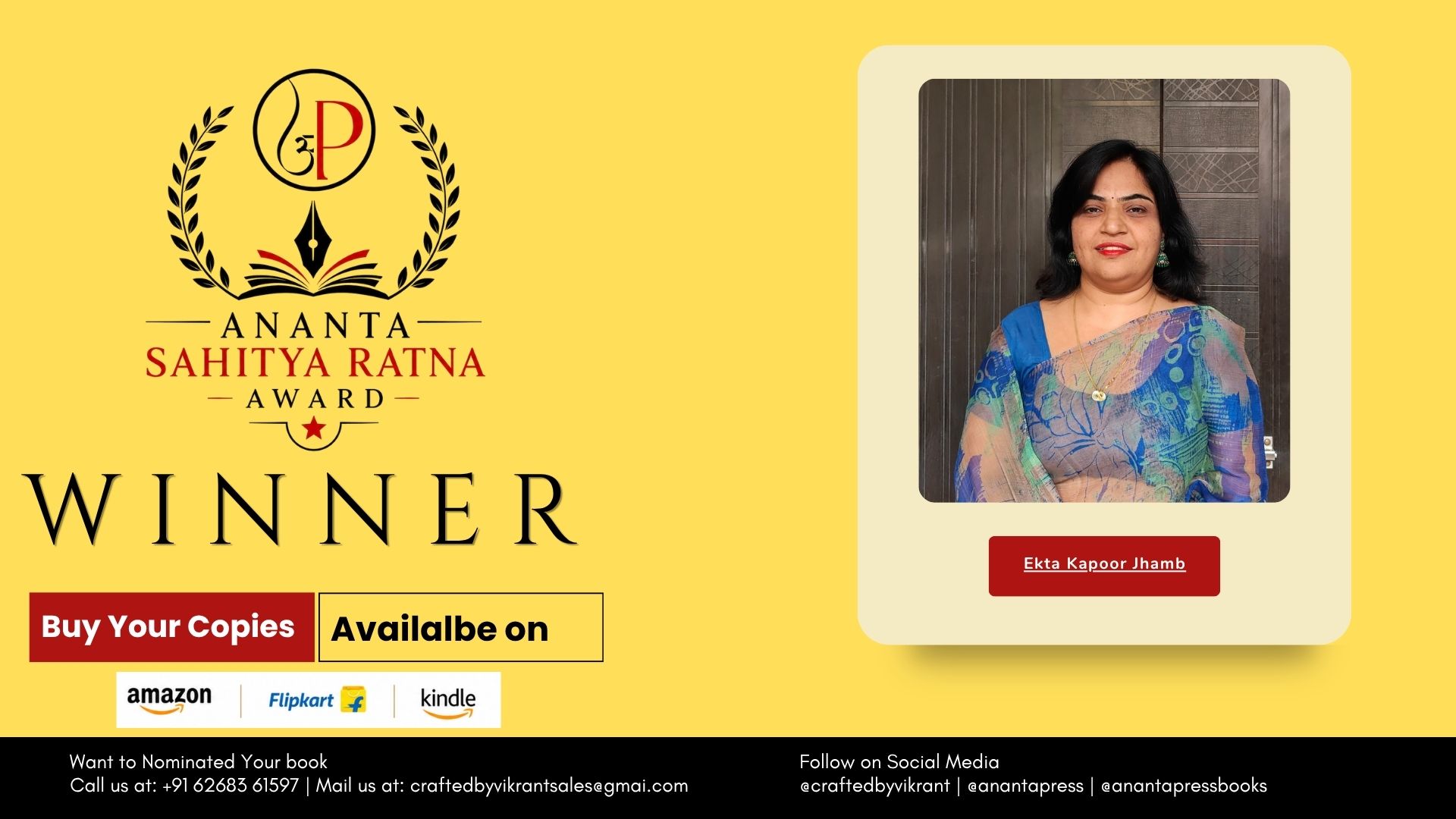
Congratulations to Ekta Kapoor Jhamb on being officially recognized as a Winner of the Ananta Press Sahitya Ratna Award for her fiction title, The Autumn.
The Ananta Press Sahitya Ratna Award celebrates authors whose writing demonstrates literary merit, originality, emotional depth, meaningful ideas, and the ability to leave a lasting impression on readers. Ekta Kapoor Jhamb’s The Autumn stood out to the award committee because it approaches love not simply as a romantic feeling, but as a complex human experience shaped by effort, expectations, change, memory, and acceptance. The Autumn is described as a story “for the fixers,” for people who believe that love can be protected through effort. At the heart of the novel are Aaradhya and Kabir, two intelligent individuals whose relationship appears naturally aligned and yet remains difficult to keep in balance. Aaradhya is meticulous, highly intelligent, and determined. Kabir is equally capable and becomes the architect of some of her most treasured memories. Their compatibility creates beautiful moments, but compatibility alone does not protect them from the changing seasons of a relationship. This emotional contradiction gives the novel much of its literary strength. The Autumn does not appear interested in presenting love as a simple destination. Instead, it explores the difficult question of what people do after they have found someone important to them. How much should they fight to preserve a relationship? When does effort become control? Can two people continue loving each other while accepting that circumstances, personalities, priorities, and emotions may change? The award committee found the central idea of the novel especially meaningful because it reflects a recognizable tendency in modern relationships. Many people grow up believing that anything valuable can be repaired through sufficient effort. The Autumn challenges that belief with sensitivity. It asks whether love is always something that must be held tightly or whether genuine love sometimes requires enough emotional maturity to allow transformation. The seasonal idea within the novel also gives its emotional journey a distinctive identity. Autumn itself represents transition. It is a season associated with beauty, maturity, letting go, and preparation for change. By placing Aaradhya and Kabir within emotional “seasons,” the book creates a thoughtful framework for examining relationships. Their story becomes more than the journey of two fictional characters. It becomes a reflection on how people respond when something they value begins to change. Another important quality recognized by the committee is the characterization. Aaradhya is not presented merely as a conventional romantic heroine. Her intelligence, precision, and instinct to understand and correct circumstances become part of the emotional conflict. Kabir, meanwhile, is portrayed as someone capable of meeting her intellectually and creating memories that define important parts of her life. Their relationship therefore carries both intellectual compatibility and emotional complexity. As an educationist and author, Ekta Kapoor Jhamb brings a thoughtful perspective to storytelling. The themes explored in The Autumn suggest an interest in understanding people, emotional choices, personal growth, and the lessons relationships teach us. Rather than relying only on dramatic romance, the novel encourages readers to think about emotional responsibility and self-awareness. The selection committee also appreciated the accessibility of the book’s message. The fundamental question at its centre can speak to readers across different ages and experiences. Anyone who has tried to save a relationship, preserve a friendship, hold onto a memory, or understand when to continue and when to accept change may find something familiar within Aaradhya and Kabir’s journey. The Autumn earns recognition for turning an intimate relationship into a larger reflection on human nature. Its originality lies in examining the instinct to “fix” love while questioning whether every transformation requires correction. Its impact comes from the possibility that readers may recognize something of themselves in the characters’ attempts to understand one another. For its emotional insight, reflective message, compelling central relationship, thoughtful concept, and contribution to contemporary fiction, The Autumn was considered deserving of recognition by the Ananta Press Sahitya Ratna Award committee. Ananta Press warmly congratulates Ekta Kapoor Jhamb on becoming a Winner of the Ananta Press Sahitya Ratna Award. We wish her continued success as an author and hope The Autumn reaches readers who will engage deeply with its questions about love, effort, acceptance, and change. May this recognition become another meaningful milestone in her literary journey and encourage her to continue contributing thoughtful stories to the world of literature. Jury Member Feedback Glenville Ashby After reading The Autumn, I felt that one of its strongest qualities was the maturity with which it looks at love. Aaradhya and Kabir are not presented as two people whose relationship becomes meaningful only because of romance. They are intelligent individuals who genuinely value one another, yet they still face difficulties that intelligence alone cannot solve. This makes their story feel believable. I especially appreciated the idea of people becoming “fixers” in relationships. Many of us believe that if we work hard enough, communicate enough, or sacrifice enough, everything can be repaired. The book gently asks whether this belief is always healthy. That question stayed with me. Ekta Kapoor Jhamb has created a story that can encourage readers to examine their own expectations from relationships. The seasonal idea also works beautifully because autumn naturally represents change and letting go. The book has emotional sensitivity, a clear central message, and enough depth to remain in the reader’s thoughts after the story ends. Kavya Pandey What I appreciated most about The Autumn was its understanding of emotional change. The relationship between Aaradhya and Kabir has warmth, intelligence, memories, and genuine attachment, but the author does not suggest that these qualities automatically make a relationship easy. I found Aaradhya particularly interesting because her intelligence and meticulous nature influence the way she approaches love. She appears to believe that problems can be understood and solved, but relationships do not always behave according to logic. Kabir is equally important because he is not simply placed beside her as a romantic character. He becomes part of the memories and emotional world that she wants to protect. The question of whether love should be held onto or allowed to change gives the book a thoughtful identity. I also liked that
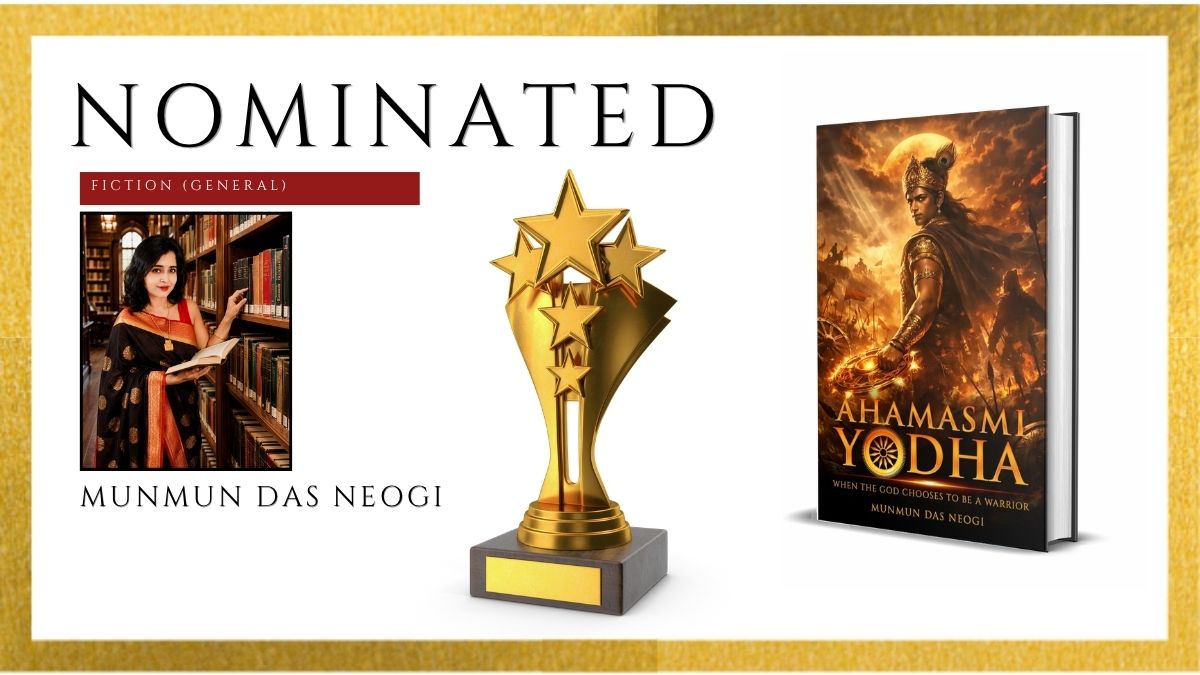
Munmun Das Neogi Officially Nominated for the Ananta Press Sahitya Ratna Award for Ahamasmi Yodha
Ananta Press proudly congratulates author Munmun Das Neogi on the official nomination of her thought-provoking book, Ahamasmi Yodha – When the God Chooses To Be a Warrior, for the prestigious Ananta Press Sahitya Ratna Award. This nomination recognises not only the literary and philosophical strength of the book but also the author’s distinctive ability to reinterpret timeless spiritual wisdom for the challenges faced by contemporary readers. Positioned within the Self-Help and Motivational category, Ahamasmi Yodha presents an inspiring exploration of courage, Dharma, clarity, responsibility, and inner strength through a lesser-discussed dimension of Krsna. Rediscovering Krsna as the Divine Warrior For generations, Krsna has been remembered through many beloved images—as the divine flute-player, the embodiment of love, the teacher of wisdom, and the compassionate guide. Munmun Das Neogi takes readers beyond these familiar representations and draws attention to another equally significant aspect of Krsna: the strategist, protector of Dharma, counsellor of warriors, and decisive force behind the battle for righteousness. The central question of the book is compelling: What if divinity did not always choose the flute, but sometimes chose the battlefield? It is this perspective that gives Ahamasmi Yodha its originality and relevance. Rather than celebrating warfare or physical conquest, the book explores the philosophy of the warrior as a state of consciousness. Its warrior acts without ego, protects without attachment, and confronts conflict without hatred. Through defining moments involving diplomacy, silence, courage, wisdom, and decisive action, Munmun encourages readers to understand that strength is not simply the ability to defeat an opponent. True strength emerges from knowing why one must stand, when one must act, and what values one must refuse to abandon. The Kurukṣetra Within Every Individual One of the strongest reasons for the book’s nomination is its ability to transform an ancient spiritual and philosophical narrative into a deeply personal message. In Ahamasmi Yodha, Kurukṣetra is not treated merely as a historical battlefield. It becomes a powerful metaphor for the conflicts that exist within every human being. Every individual eventually encounters choices between fear and courage, comfort and responsibility, silence and truth, uncertainty and conviction. By connecting these internal struggles with the philosophy of Krsna, the author gives readers a framework through which they can examine their own decisions and rediscover their inner strength. The message at the heart of the book—“Ahamasmi Yodha — I am the Warrior”—therefore becomes much more than a declaration. It represents self-recognition. It is an invitation to understand that courage is not always something acquired from the outside; sometimes it is something already present within us, waiting to be awakened. This combination of spirituality, motivation, philosophy, and self-reflection gives the book considerable value for modern readers. Why Ahamasmi Yodha Earned Its Nomination The Ananta Press Sahitya Ratna Award celebrates literary works and authors whose writing demonstrates originality, meaningful thought, reader impact, and a valuable contribution to literature. Ahamasmi Yodha attracted the attention of the award committee because it brings together several important qualities: a distinctive concept, philosophical depth, contemporary relevance, an empowering message, and the ability to make ancient wisdom meaningful for today’s reader. The book does not simply retell familiar episodes associated with Krsna. Instead, it seeks to interpret their deeper implications for human behaviour, leadership, courage, responsibility, and personal transformation. Its literary significance lies particularly in the bridge it creates between Vedic thought and modern self-development. The book encourages readers not merely to admire Krsna’s strength but to understand the principles behind his actions and consider how those principles might illuminate their own personal battles. Such a perspective enables the work to speak to readers seeking spirituality while remaining equally meaningful to those interested in motivation, leadership, resilience, decision-making, and self-discovery. An Author Bridging Ancient Wisdom and Modern Thought Munmun Das Neogi’s own journey adds another meaningful dimension to this nomination. An emerging author of two books, she is also an accomplished IT professional with more than 19 years of experience in the technology industry. She holds a Bachelor’s degree in Computer Science and a Master’s degree in Business Administration, giving her a strong foundation in both analytical thinking and organisational understanding. Her relationship with writing, however, began much earlier. During her school years, she worked as a newspaper blogger and freelance content writer. Despite building a long professional career in technology, her passion for writing remained alive, ultimately inspiring her to pursue her lifelong ambition of becoming a novelist and professional author. Her deep interests in cosmology, Vedic science, and spirituality are reflected strongly in her creative vision. This intersection between contemporary professional experience and ancient philosophical curiosity gives her writing a distinctive identity. Celebrating a Meaningful Literary Contribution The official nomination of Ahamasmi Yodha – When the God Chooses To Be a Warrior for the Ananta Press Sahitya Ratna Award is a well-deserved recognition of Munmun Das Neogi’s effort to create literature that does more than inform or entertain—it invites readers to reflect, question, awaken, and act with purpose. Ananta Press extends its heartfelt congratulations to Munmun Das Neogi on this important literary milestone. We wish her great success in the award journey and in all her future creative endeavours. May her writing continue to inspire readers to discover courage within themselves, recognise the Dharma behind their choices, and face their own Kurukṣetra with wisdom and clarity. Congratulations, Munmun Das Neogi, on your official nomination for the Ananta Press Sahitya Ratna Award. Your contribution to thoughtful, spiritually grounded, and empowering literature deserves recognition and celebration.
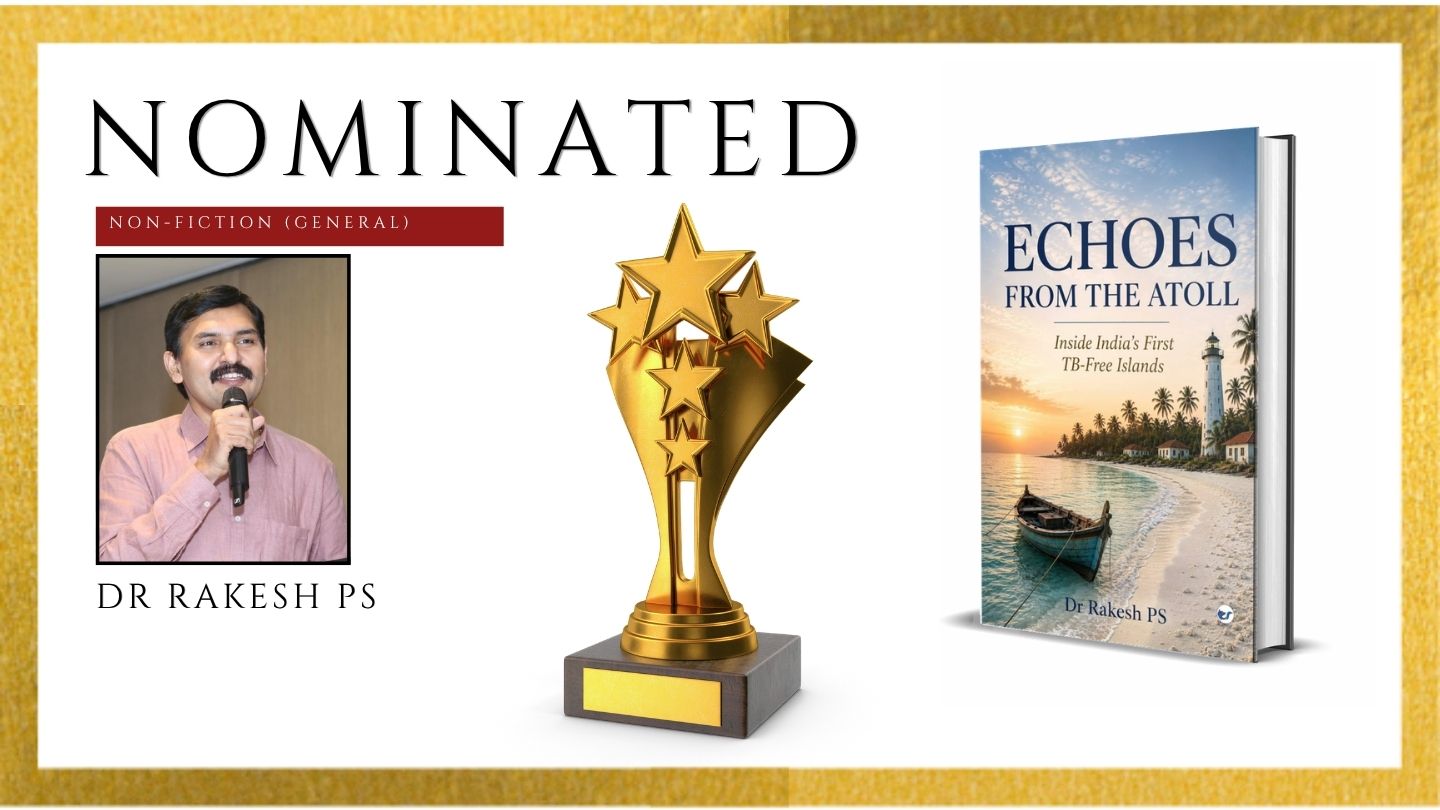
Dr Rakesh PS Officially Nominated for the Ananta Press Sahitya Ratna Award for Echoes from the Atoll
Ananta Press proudly congratulates Dr Rakesh PS on the official nomination of his remarkable literary memoir, Echoes from the Atoll: Inside India’s First TB-Free Islands, for the prestigious Ananta Press Sahitya Ratna Award. This nomination recognises a work that succeeds in doing something rare: it transforms an extraordinary public health achievement into a deeply human story of place, people, memory, belonging and change. Set against the breathtaking yet geographically challenging landscape of Lakshadweep, Echoes from the Atoll emerges from Dr Rakesh PS’s years of experience as a public health professional during the islands’ journey towards TB-Free certification under India’s sub-national certification initiative. Yet the book moves far beyond the boundaries of a conventional public health account. Instead of presenting tuberculosis elimination primarily through statistics, targets, charts or programme frameworks, Dr Rakesh brings readers into the lives of the people who made change possible. Through journeys across the sea, encounters with health workers, ASHAs, families and community leaders, and reflections on everyday island life, the author reveals how an ambitious health mission gradually became a shared community aspiration. The Ananta Press Sahitya Ratna Award seeks to recognise literary works that demonstrate originality, meaningful contribution, intellectual depth, social relevance and the ability to leave a lasting impression on readers. The nomination of Echoes from the Atoll reflects precisely these qualities. A Book Where Place Becomes a Character One of the strongest reasons behind the award committee’s selection of Echoes from the Atoll is the distinctive way in which Lakshadweep itself becomes a living presence within the narrative. The islands are not treated merely as a scenic backdrop. The sea, changing weather, distance between communities and geographical isolation directly influence relationships, livelihoods, movement and healthcare delivery. Readers begin to understand that public health solutions cannot simply be transferred from one region to another without understanding the people and places they are intended to serve. This gives the book an important literary and social dimension. It allows the reader to experience remoteness rather than merely read about it. Public Health Made Human Dr Rakesh’s greatest achievement in this memoir lies in making public health accessible to readers far beyond the medical and scientific community. Tuberculosis elimination is an important thread running through the book, but it never overwhelms the human narrative. Instead, the achievement is presented through the dedication of ordinary people who transformed policy into action: frontline health workers who entered homes, families who participated in change, community leaders who encouraged collective responsibility and individuals who believed that TB did not have to remain part of the islands’ future. The book reminds us that behind every successful health indicator is a human relationship, and behind every public health milestone are people whose contributions may never appear in official statistics. This human-centred approach was a particularly important consideration in the award committee’s decision to nominate the book. A Powerful Exploration of Belonging and Change Echoes from the Atoll also distinguishes itself through its deeper reflections on tradition and modernity. Lakshadweep, like many communities across the world, is negotiating change. New aspirations coexist with inherited traditions. Development creates opportunities while simultaneously raising questions about what may be lost. Dr Rakesh captures this tension with sensitivity rather than judgement. At its deepest level, the memoir asks universal questions: What makes a place home? How does a community preserve its identity while embracing change? What happens when the place to which we feel we belong begins transforming around us? These questions elevate the book beyond its geographical and professional context. Although rooted in Lakshadweep, its reflections on identity, memory, transition and belonging can resonate with readers anywhere. Recognising an Author Who Connects Evidence with Empathy The nomination also recognises the distinguished body of experience that Dr Rakesh PS brings to his writing. A public health physician, researcher, educator and author with MD and PhD qualifications, Dr Rakesh has spent more than fifteen years working in community-driven healthcare, disease prevention and health systems strengthening across India and South-East Asia. His journey of public service began remarkably early when, at the age of fifteen, he received the Rashtrapati Scout Award from the President of India. His later academic journey took him through Christian Medical College, Vellore, and to the Harvard T.H. Chan School of Public Health as a Bernard Lown Scholar in Cardiovascular Health. Through his work with organisations including the World Health Organization and The International Union Against Tuberculosis and Lung Disease, he has contributed to important public health initiatives, including Lakshadweep’s TB elimination journey, STEPS, local government-led disease elimination strategies, women-led hypertension control initiatives, outbreak investigations and Kerala’s COVID-19 response. With more than 150 scientific publications and several health education initiatives to his credit, Dr Rakesh has consistently worked to connect scientific knowledge with the everyday realities of communities. In Echoes from the Atoll, that philosophy becomes literature. His transition from public health professional to literary memoirist gives the book its distinctive voice. The reader encounters not only an expert observing a health system, but also a person gradually transformed by the islands, their people and their stories. The international relevance of the work was further underscored when the book was released globally on July 29, 2026, by Dr Lucica Ditiu, Executive Director of the Stop TB Partnership hosted by the United Nations Office for Project Services in Geneva, in the presence of global health leaders. A Deserving Nomination The Ananta Press Sahitya Ratna Award Committee is pleased to recognise Echoes from the Atoll: Inside India’s First TB-Free Islands as a work of unusual literary and social significance. It is original in form, meaningful in message and memorable in execution. It brings together travel memoir, social chronicle, personal reflection and public health narrative without allowing any one element to overshadow the others. Most importantly, it gives dignity and visibility to communities whose collective effort created an extraordinary public health achievement. As the book so powerfully demonstrates, TB may be the backdrop and Lakshadweep the setting, but the people are the story. Ananta Press extends its heartfelt
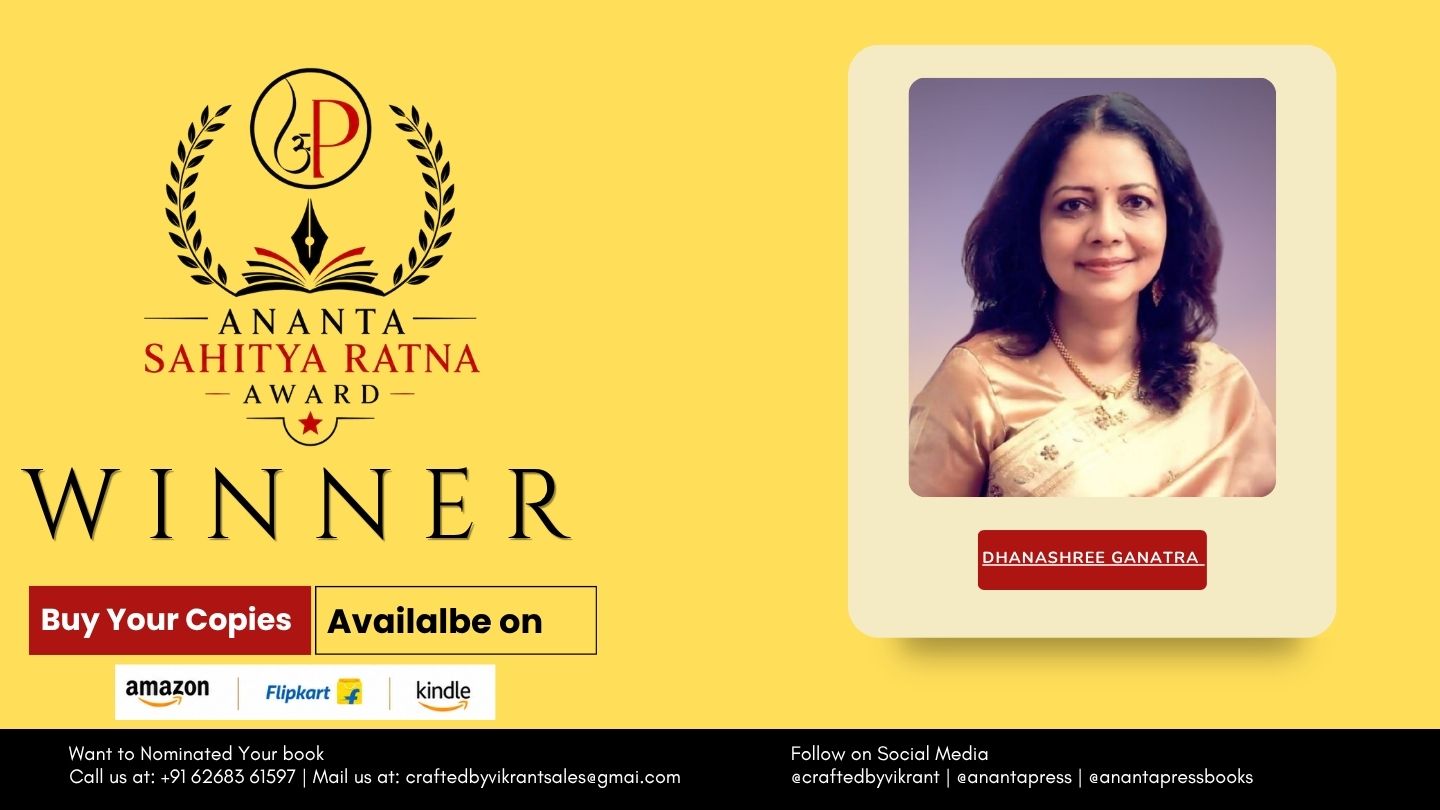
Ananta Press is delighted to congratulate author Dhanashree Ganatra on the official selection of her poetry collection, Ripples Of Tranquil, as a Winner of the Ananta Press Sahitya Ratna Award.
This recognition celebrates a work that brings together sensitivity, reflection, emotional depth, and a calm literary voice. Through a collection centred on silence, love, dreams, self-realisation, and the subtle movements of the mind, Ganatra offers readers a space to slow down and reconnect with their inner world. Ripples Of Tranquil arrives with a simple but meaningful purpose. In a world that rarely pauses, the book invites readers into the silence between thoughts, where emotions can be understood without noise or pressure. The poems are not written as loud declarations. They are shaped as soft reflections, fragments of feeling, shadows of thought, and quiet expressions that rise from personal awareness. This gives the collection a distinctive character. Rather than demanding attention, it earns attention through calmness. The Ananta Press Sahitya Ratna Award recognises literary works that show originality, reader value, meaningful expression, and the ability to contribute something lasting to literature. The award committee considers not only the subject of a book but also the way it communicates with readers, the strength of its central idea, the quality of its voice, and the emotional or intellectual impact it can create. Ripples Of Tranquil stood out because its literary purpose is closely connected with an important need of contemporary life: the need to pause, reflect, and understand oneself. One of the strongest qualities of the collection is the relationship it creates between poetry and inner stillness. The book explores familiar human experiences, including love, dreams, silence, thought, and self-discovery, but it approaches them with restraint and sensitivity. This makes the work accessible without reducing its depth. Readers can enter these poems through their own memories, questions, and emotions. The collection does not insist on one interpretation. It allows each poem to become a personal experience. The award committee also appreciated the originality of the book’s central image. The idea of a ripple is both simple and expressive. A ripple begins with a small movement, yet it travels beyond its point of origin. In the same way, a poem may begin with one thought or feeling and continue to move within the reader long after the page has been turned. Ripples Of Tranquil uses this idea effectively as the emotional foundation of the collection. Its poems aim to stir something deep without disturbing the calm from which they arise. Dhanashree Ganatra’s literary voice, as presented through this collection, is gentle, introspective, and attentive to emotional detail. Her writing recognises that some of the most important human experiences are not always dramatic. They may appear in a moment of silence, a private dream, an unspoken feeling, or a sudden understanding of oneself. By giving literary space to these quiet experiences, she creates poetry that can offer readers comfort, reflection, and companionship. The collection also carries a wider message. Modern life often rewards speed, constant activity, and immediate reaction. Ripples Of Tranquil offers another possibility. It reminds readers that there is value in stillness and that the mind can become clearer when we allow ourselves to listen inwardly. This message gives the poetry relevance beyond its individual themes. The book becomes an invitation to experience calm not as an escape from life, but as a way of understanding life more deeply. For these reasons, Ripples Of Tranquil was considered deserving of recognition by the Ananta Press Sahitya Ratna Award committee. Its literary value lies in the balance it creates between simplicity and depth, personal feeling and universal connection, softness and emotional impact. It demonstrates how poetry can speak quietly and still remain memorable. Ananta Press warmly congratulates Dhanashree Ganatra on this achievement and wishes her continued success in her literary journey. May Ripples Of Tranquil reach readers who find meaning in thoughtful poetry and may its quiet reflections continue to create ripples of peace, awareness, and self-discovery. Her contribution to poetry is recognised with respect and appreciation, and this award celebrates both the book she has created and the meaningful literary experience it offers to readers. Glenville Ashby Ripples Of Tranquil is a gentle and thoughtful collection that asks the reader to slow down and listen to the quieter movements of the mind. What I appreciated most is the sincerity of its emotional voice. The poems do not try to impress through complexity. Instead, they create meaning through simple observations about love, dreams, silence, reflection, and inner growth. Dhanashree Ganatra appears to understand that poetry can be powerful even when it speaks softly. Several ideas in the collection encourage readers to look within themselves and recognise feelings that are often ignored in a busy life. The book also carries a calm spiritual quality without becoming difficult or overly philosophical. Its strength lies in the way it creates a personal space between the poem and the reader. I found the collection suitable for readers who enjoy reflective poetry and writing that offers emotional comfort. Ripples Of Tranquil has a quiet identity of its own and leaves behind a sense of peace after reading. Kavya Pandey While reading Ripples Of Tranquil, I was drawn to the way the collection gives importance to emotions that are usually difficult to explain. The poems speak about love, dreams, silence, self-realisation, and the changing colours of the mind in a very accessible way. The writing feels personal, but the emotions are broad enough for many readers to connect with them. Dhanashree Ganatra does not make the poems unnecessarily heavy. She allows each thought to remain clear and gives the reader enough space to interpret it through personal experience. That quality makes the collection warm and inviting. I also appreciated the central idea of tranquillity. In a time when people are constantly surrounded by noise, information, and pressure, the book reminds us that silence can also carry meaning. The collection has literary value because it turns inward reflection into a shared experience. It is a sincere poetry book that can encourage readers to pause, feel, and understand themselves with greater patience. Apeksha Gupta What stands out in Ripples Of Tranquil is
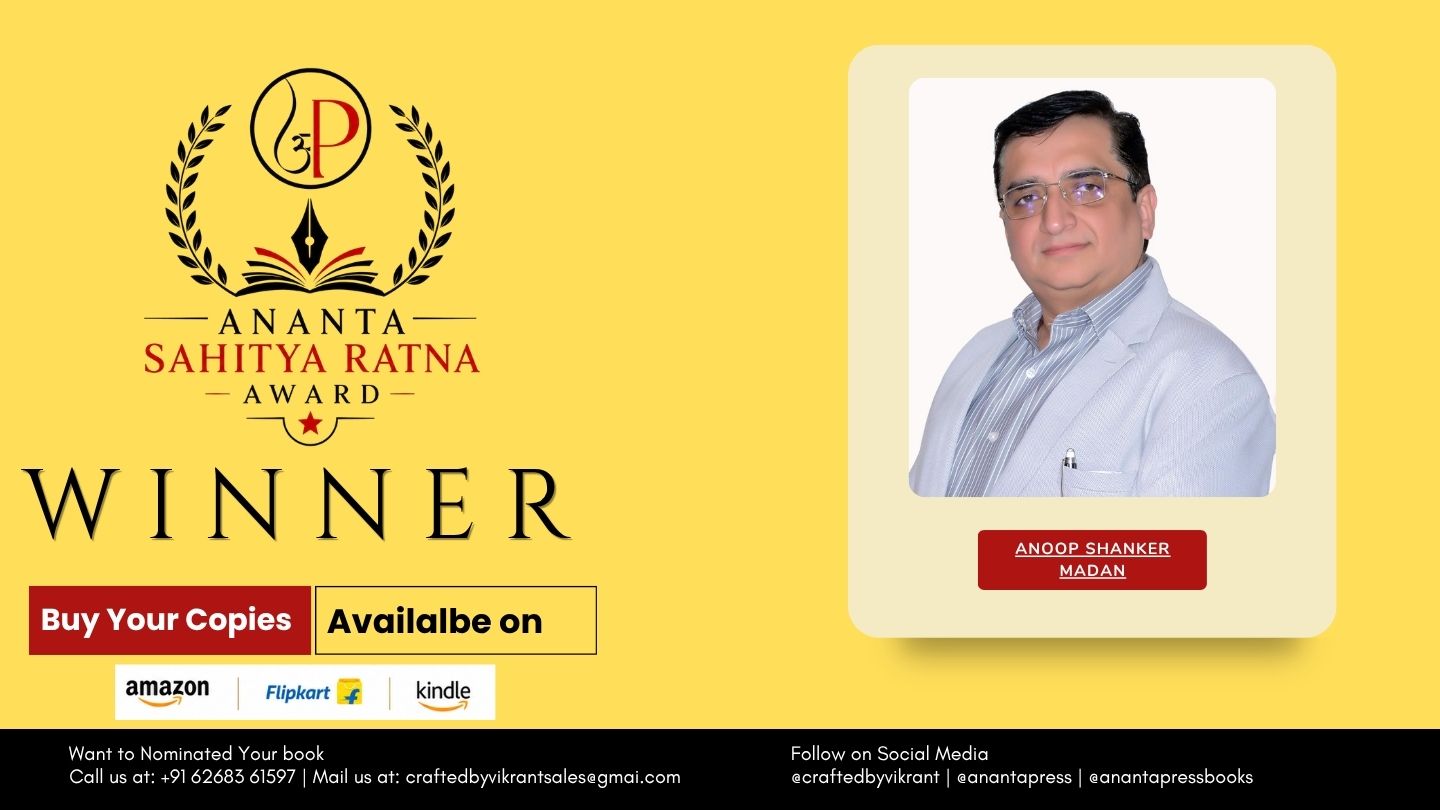
Anoop Shanker Madan Honoured as Winner of the Ananta Press Sahitya Ratna Award for BCD – Birth. Choice. Death: The Story of Life Between Two Certainties
Ananta Press proudly congratulates Anoop Shanker Madan on being officially selected as a Winner of the Ananta Press Sahitya Ratna Award for his non-fiction book, BCD – Birth. Choice. Death: The Story of Life Between Two Certainties. This recognition celebrates a work that takes one of the oldest questions of human existence and presents it through a clear, memorable, and deeply relevant idea: we do not choose our birth, and we cannot avoid death, but the choices made between these two certainties shape the meaning of our lives. At the heart of the book is the BCD framework of Birth, Choices, and Death. Its strength lies in its simplicity. Human life can often seem too complex to understand as a whole, yet the author gives readers an accessible way to look at it. Birth represents the beginning we are given. Death represents the certainty that awaits every person. Choices represent the space in which awareness, responsibility, growth, and transformation become possible. This framework gives the book a distinct identity and turns a philosophical subject into a practical question that every reader can relate to. The award committee found particular value in the way the book moves from circumstances that are beyond human control towards the decisions that remain within our control. Rather than asking readers to deny difficulties or ignore the influence of their starting point, the book acknowledges these realities and then asks an important question: what can we choose from here? This shift makes the work both reflective and empowering. It encourages readers to look at their responses, habits, relationships, fears, responsibilities, and attitudes with greater honesty. The book explores this idea through the body, mind, emotions, discipline, fear, courage, ego, relationships, responsibility, awareness, and spirituality. These subjects make the philosophy relevant to everyday life. The author does not restrict meaningful change to dramatic moments. Instead, the book suggests that life is shaped through repeated decisions, including how we think, how we react, how we treat others, how we handle fear, and how consciously we respond to the circumstances before us. This practical dimension is one of the reasons the work stood out during the nomination and final award consideration. Another notable quality is the way BCD connects spiritual symbolism with modern life. Shiva is approached as a symbol of inner stillness, while Krishna represents conscious action. These ideas create an important balance. Stillness without action can remain incomplete, while action without awareness can become directionless. By bringing these two qualities together, the author gives readers a thoughtful way to consider spirituality not as something separate from ordinary living, but as something that can influence everyday choices. The originality of BCD also lies in its ability to make a complex subject memorable without reducing its seriousness. “Birth is given, Death is certain, but Choices are ours” becomes more than a statement. It acts as the guiding philosophy of the book. It invites readers to examine the distance between circumstance and response and to recognize that personal agency often begins in that space. This is a message with broad relevance because it can speak to readers at different stages of life and from different backgrounds. The Ananta Press Sahitya Ratna Award seeks to recognize books and authors whose work demonstrates originality, meaningful thought, reader value, and a lasting contribution to literature and ideas. BCD reflects these qualities through its clear philosophical foundation, relatable structure, spiritual depth, and practical message. The award committee recognized the book not only for the subject it addresses, but also for the way it encourages readers to become more aware of the lives they are creating through their choices. Anoop Shanker Madan deserves special appreciation for presenting this philosophy in a form that is accessible to contemporary readers. Without relying on unnecessary complexity, the book brings together questions of identity, responsibility, inner awareness, emotional life, discipline, and conscious action. It invites reflection while also encouraging personal participation. The reader is not simply asked to think about life as an abstract idea, but to consider how life is being shaped through daily decisions. On behalf of Ananta Press, we warmly congratulate Anoop Shanker Madan on this well-deserved recognition as a Winner of the Ananta Press Sahitya Ratna Award. BCD – Birth. Choice. Death: The Story of Life Between Two Certainties offers readers a thoughtful reminder that although the beginning and end of life are not ours to decide, the space between them carries the possibility of awareness, responsibility, courage, and meaningful change. We extend our best wishes to Anoop Shanker Madan for the continued journey of BCD and for his future literary work. May this recognition help the book reach more readers, inspire deeper reflection, and strengthen its contribution to contemporary non-fiction and philosophical literature. Jury Member Feedback The following feedback is drafted as requested on the assumption that each jury member has read the book. It can be reviewed or approved by the respective members before being presented as their official comments. Glenville Ashby B.C.D – Birth, Choices, Death presents a thoughtful idea in a very simple and accessible way. What I appreciated most is the way the book takes two realities that no human being can control, birth and death, and places our attention on the choices that exist between them. This gives the reader a clear point of reflection without making the subject unnecessarily complicated. The discussions around the mind, emotions, relationships, fear, responsibility, and awareness make the philosophy practical rather than distant. I also found the use of Shiva as a symbol of inner stillness and Krishna as a symbol of conscious action meaningful because these ideas are connected with everyday living instead of being treated only as spiritual concepts. The BCD framework gives the book a distinct identity and makes its message easy to remember. It encourages readers to examine their own decisions with greater awareness. In my view, the book offers a useful and sincere contribution to reflective non-fiction. Kavya Pandey This book stands out because it begins with
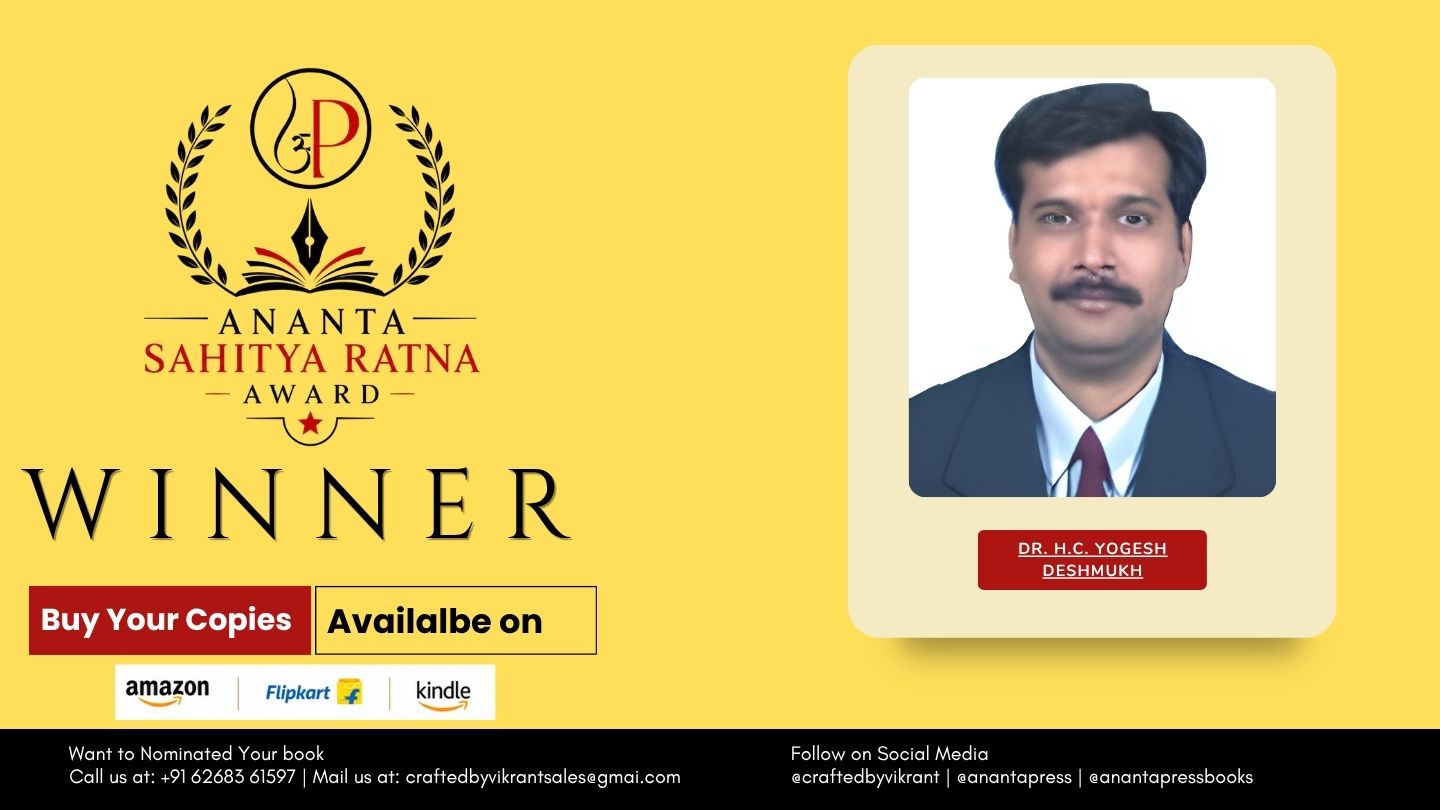
Dr. h.c. Yogesh Deshmukh Honoured as Winner of the Ananta Press Sahitya Ratna Award for “The CEO Mindset: Leading with Skills, Living with Soul”
Ananta Press is pleased to officially announce Dr. h.c. Yogesh Deshmukh as a Winner of the Ananta Press Sahitya Ratna Award for his insightful management book, “The CEO Mindset: Leading with Skills, Living with Soul.” This recognition celebrates a work that presents leadership not simply as a position of authority, but as a deeply human responsibility shaped by values, courage, empathy, knowledge, and continuous personal growth. We extend our heartfelt congratulations to Dr. h.c. Yogesh Deshmukh on this achievement. His book brings together professional wisdom and personal reflection in a way that makes the subject of leadership relevant not only to CEOs and senior executives, but also to managers, entrepreneurs, professionals, aspiring leaders, and anyone responsible for guiding people through change and uncertainty. “The CEO Mindset: Leading with Skills, Living with Soul” begins with a simple but important truth. Leaders are human beings. Behind business targets, major decisions, negotiations, policies, deadlines, and organizational responsibilities are people who must manage pressure, relationships, uncertainty, emotions, and their own personal development. The book challenges the traditional image of a leader as someone who must always appear invincible. Instead, it encourages readers to understand leadership as a balance between strength and sensitivity. This balance is beautifully reflected in the central idea of the book. Dr. Deshmukh brings together the analytical and the emotional, systems and soul, technical knowledge and human understanding. These combinations give the book its individual identity within the management category. Rather than presenting leadership only through strategies, formulas, or performance indicators, the author explores how leaders behave when teams are tired, projects face difficulties, people disagree, mistakes occur, and someone chooses to speak an uncomfortable truth. The professional experience behind these reflections adds great value to the book. With more than three decades of experience in complex and multidisciplinary projects across railways, renewable energy, software, and infrastructure, Dr. Deshmukh writes from a position shaped by real responsibilities. His exposure to major rail and metro projects, renewable energy systems, software development, and integrated infrastructure environments has allowed him to observe leadership across technical, organizational, and human situations. This practical foundation was one of the important reasons the award committee found the book worthy of recognition. The ideas are not presented as distant theories. They emerge from years of working with projects, professionals, systems, deadlines, risks, and teams. The author understands that technical knowledge may help a leader solve a problem, but trust, communication, emotional resilience, and integrity determine whether people are willing to follow that leader. The award committee also appreciated the book’s effort to redefine the modern CEO. The author accepts the importance of strategy, confidence, vision, financial understanding, and competitiveness, but he also explains that these qualities alone are incomplete. According to the philosophy developed throughout the book, today’s leaders must also become custodians of culture, builders of trust, mentors, responsible decision-makers, and champions of people. This message is particularly meaningful in a business environment shaped by constant innovation and disruption. Organizations are changing rapidly, and authority alone can no longer sustain effective leadership. Trust must be earned through transparency, ethical conduct, accountability, listening, and genuine commitment to purpose. Dr. Deshmukh places these qualities at the heart of sustainable leadership. The literary strength of “The CEO Mindset” lies in the clarity of its central message and the thoughtful connection it creates between management and humanity. The book does not attempt to present itself as a guaranteed formula for corporate success. Instead, it encourages reflection on what the author describes as sustainable significance. This makes the work different from many conventional leadership books. It asks not only how successful an organization becomes, but also what kind of people its leaders become while building it. The Ananta Press Sahitya Ratna Award recognizes works that demonstrate meaningful thought, originality, reader value, purpose, and contribution within their respective fields. Dr. Deshmukh’s work reflects these qualities by encouraging readers to examine leadership beyond titles, hierarchy, and external achievement. It communicates that leadership is a continuing practice of presence, courage, humility, integrity, learning, and responsibility. The committee found the concluding philosophy of the book especially meaningful. At its highest level, leadership is not only about building successful enterprises. It is also about nurturing humanity while building them. This idea gives “The CEO Mindset: Leading with Skills, Living with Soul” both professional relevance and lasting human value. On behalf of Ananta Press and the Ananta Press Sahitya Ratna Award committee, we congratulate Dr. h.c. Yogesh Deshmukh on being officially recognized as a Winner. We wish him continued success in his literary and professional journey. May his experiences, ideas, and reflections encourage many present and future leaders to pursue achievement without losing empathy, to develop authority without losing humility, and to lead organizations with both skill and soul. Jury Member Feedback Glenville Ashby After reading “The CEO Mindset: Leading with Skills, Living with Soul,” I found the book to be a thoughtful contribution to modern leadership literature. What impressed me most was the author’s decision to treat leaders as human beings rather than distant figures of authority. Dr. Yogesh Deshmukh explains that leadership is tested not only during successful presentations or major announcements, but also during pressure, disagreement, failure, and difficult conversations. His long professional experience gives credibility to these observations. The book speaks about technical skill, strategy, emotional intelligence, values, and empathy without making leadership unnecessarily complicated. I particularly appreciated the idea that a CEO should be a custodian of culture and a builder of trust. This makes the message relevant beyond corporate offices. Managers, entrepreneurs, project leaders, and young professionals can all benefit from it. The book encourages readers to think about not only what they achieve as leaders, but also how they treat people while achieving it. That is an important and lasting message. Kavya Pandey “The CEO Mindset” presents leadership in a very balanced and accessible manner. While reading the book, I appreciated how Dr. Yogesh Deshmukh connects professional expertise with emotional awareness. Many management books focus heavily on strategy, performance, profit, and
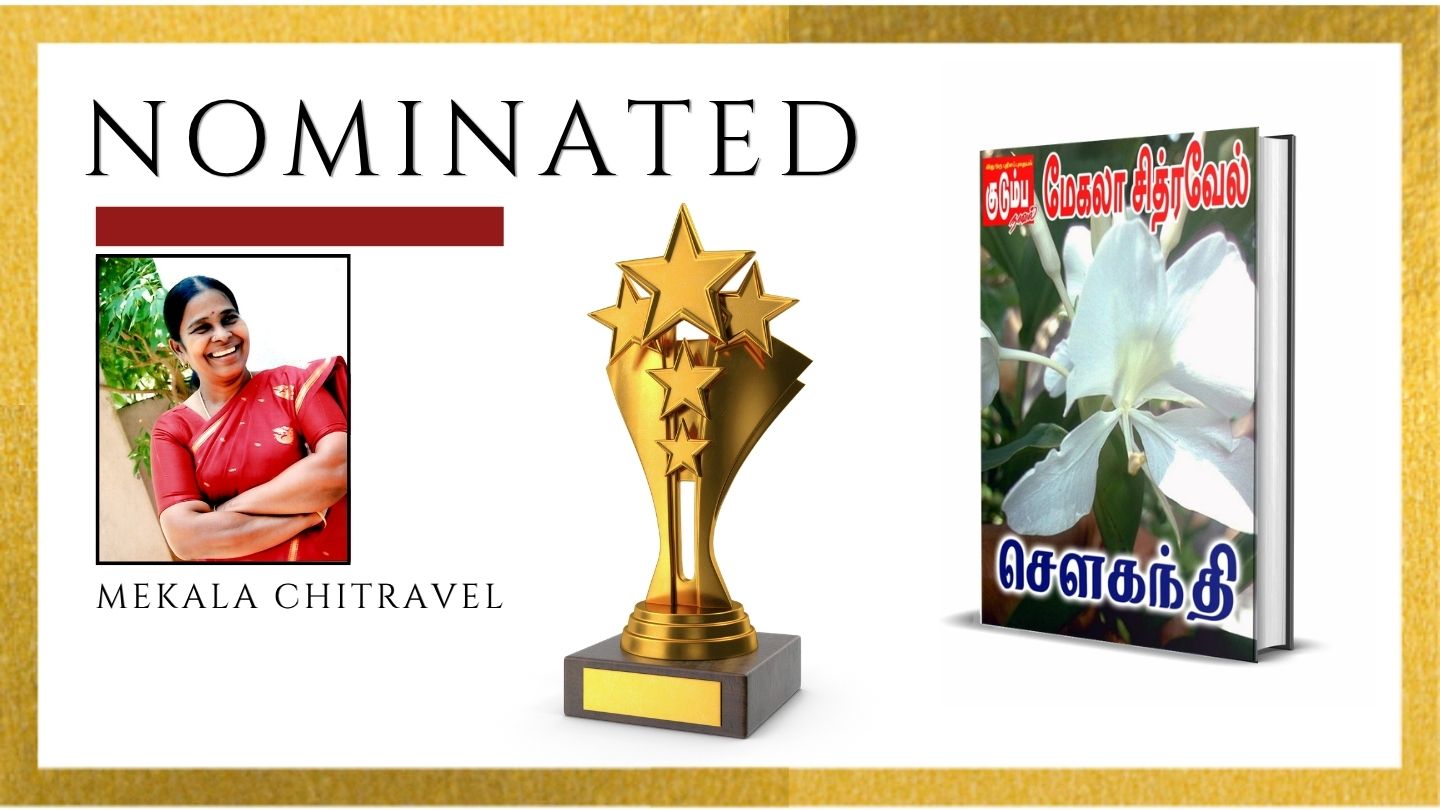
Celebrating a Distinguished Literary Journey: MEKALA CHITRAVEL Nominated for the Ananta Press Sahitya Ratna Award
Ananta Press is delighted to congratulate MEKALA CHITRAVEL, an accomplished Tamil novelist, educator, storyteller, and cultural contributor, on the official nomination of her novel சௌகந்தி… (SOWGANTHI) for the prestigious Ananta Press Sahitya Ratna Award. This nomination recognizes not only the emotional depth and literary significance of SOWGANTHI, but also MEKALA CHITRAVEL’s remarkable contribution to Tamil literature across an extraordinary body of work spanning novels, children’s literature, spirituality, biography, folk stories, cookery, and cultural writing. At the heart of SOWGANTHI lies one of the purest and most universal human relationships—the sacred bond between a mother and her son. Through the characters of Sowganthi and Rishi, the novel explores a mother’s natural longing for affection, respect, companionship, and care from her child. Sowganthi is portrayed as a fortunate mother because her son Rishi understands the value of her presence in his life. He does not merely love his mother in words; his affection is reflected through his care and emotional attachment to her. In an age when changing lifestyles, responsibilities, and distances can sometimes weaken family relationships, this theme acquires particular emotional relevance. The title itself carries a beautiful symbolic dimension. Sowganthi means a divine flower, associated with the Mahabharata, where the celestial flower is brought by Bhima for Panjali. By connecting the central character with this divine flower, the author adds a cultural and spiritual layer to the story. The name becomes more than an identity—it becomes a metaphor for the preciousness, grace, and sacred place of a mother within a family. It is this thoughtful combination of emotion, Indian cultural memory, mythology, and family values that attracted the attention of the award committee. The Ananta Press Sahitya Ratna Award seeks to acknowledge authors and literary works that make meaningful contributions to readers through originality, cultural relevance, emotional impact, thoughtful storytelling, and enduring values. The nomination of SOWGANTHI reflects the committee’s appreciation for a novel that places a deeply human relationship at the centre of its narrative while drawing inspiration from India’s literary and mythological heritage. The novel reminds readers that a mother’s greatest expectations are often not material. Love, respect, attention, and care can become the most meaningful gifts a child can offer. Through Rishi and Sowganthi, MEKALA CHITRAVEL gives literary expression to this simple yet powerful truth. The nomination becomes even more significant when viewed alongside the author’s exceptional literary journey. MEKALA CHITRAVEL is a Tamil novelist with an impressive record of completing 100 books on diverse subjects. Her writing portfolio includes novels, children’s books, cookery books, folk stories, spiritual works, and biographical writing, including a work on the life of Indira Gandhi. She has also written 11 works connected with the legendary MGR, demonstrating her sustained engagement with personalities and subjects of cultural importance. Her academic achievements further complement her literary career. With qualifications including M.A., B.Ed., and Ph.D., she represents a rare combination of scholarship, creativity, education, and public communication. Her contribution extends far beyond the written page. As an experienced stage debater who has participated on nearly a thousand stages, she has spent years engaging audiences through ideas and language. She is also a storyteller and is proficient in Tamil, English, and Malayalam, enabling her to appreciate literature and communication across linguistic traditions. Her life as an educator is equally inspiring. MEKALA CHITRAVEL previously ran a matriculation school and educated hundreds of students, many of whom have gone on to achieve respected professional positions. Her influence therefore exists not only through her books but also through the generations of students she has helped shape. Perhaps one of the strongest indications of the academic value of her literary work is that three scholars from different universities have undertaken Ph.D. research on her novels. Such scholarly engagement demonstrates that her writing has generated interest beyond general readership and has become worthy of serious academic study. Her creativity also extends into drawing, painting, embroidery, and cooking, reflecting a personality deeply connected with artistic expression in multiple forms. For the award committee, the nomination of SOWGANTHI therefore represents both recognition of an individual literary work and appreciation of the author’s wider contribution to Tamil letters. What distinguishes SOWGANTHI is its ability to transform an intimate family relationship into a broader reflection on gratitude, affection, responsibility, and emotional belonging. Rather than depending only on dramatic storytelling, the novel draws strength from an emotion familiar to almost every household—the unconditional love of a mother and the beautiful possibility of that love being returned by her child. Through its culturally resonant title and emotionally accessible subject, the novel has the potential to encourage readers to reconsider the importance of parents and family relationships in their own lives. Ananta Press warmly congratulates MEKALA CHITRAVEL on the official nomination of சௌகந்தி… for the Ananta Press Sahitya Ratna Award. Her extensive literary accomplishments, dedication to Tamil literature, contribution to education, and ability to combine culture with meaningful human emotions make this nomination especially noteworthy. We extend our heartfelt best wishes to MEKALA CHITRAVEL for the next stage of the award journey and for all her future literary endeavours. May SOWGANTHI continue to touch readers with its message of maternal love, gratitude, and devotion, and may her remarkable literary journey continue to inspire writers, students, scholars, and readers for many years to come. Congratulations to MEKALA CHITRAVEL on this well-deserved nomination and on her enduring contribution to Tamil literature.