
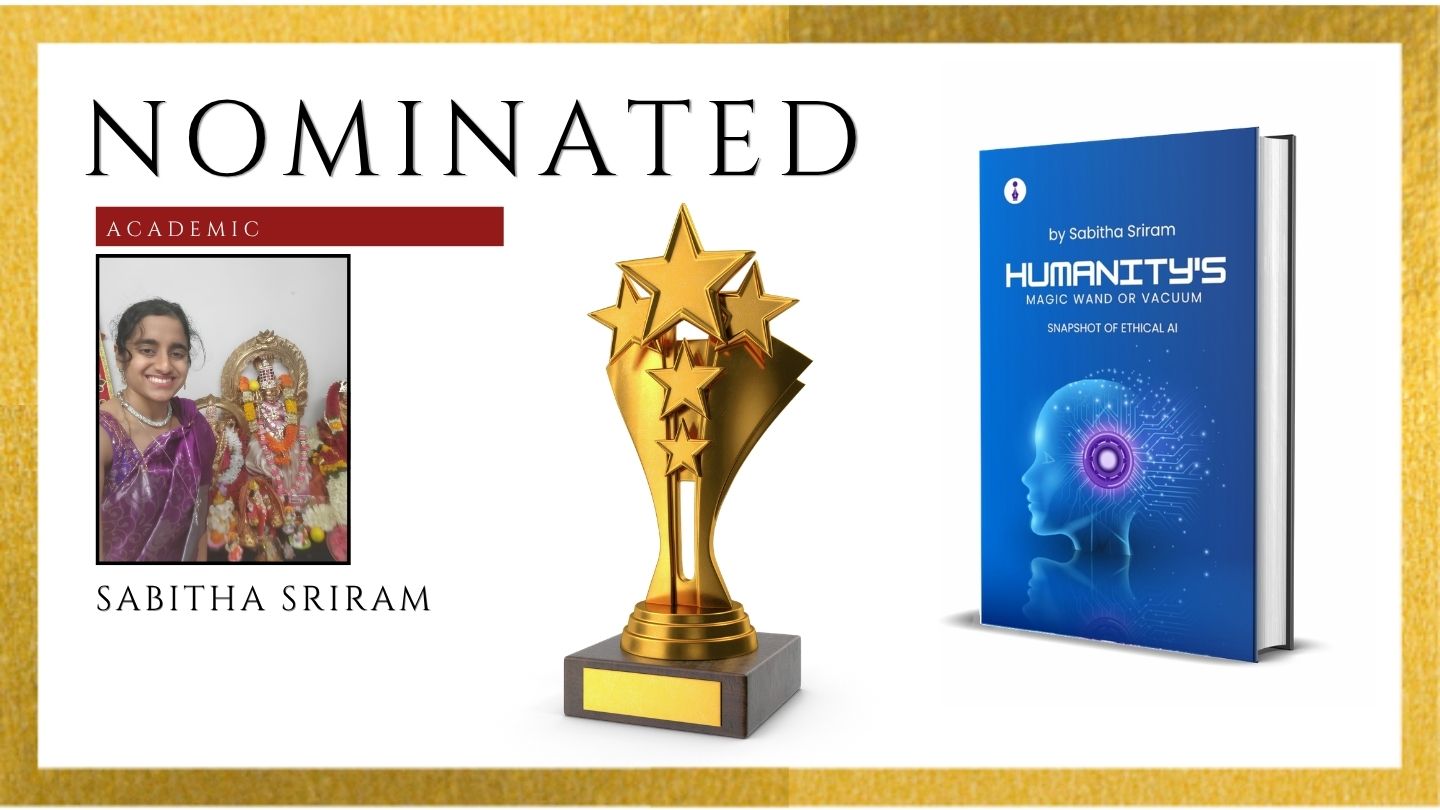
Ananta Press is delighted to congratulate author, technology risk ethicist, and AI governance researcher Sabitha Sriram on the official nomination of her thought-provoking academic work, Humanity Magic Wand, for the prestigious Ananta Press Sahitya Ratna Award. The nomination celebrates a work that addresses one of the most consequential questions of our time: as artificial intelligence becomes increasingly embedded within businesses, institutions, and everyday life, how can society ensure that technological progress continues to serve humanity rather than overshadow it? With Humanity Magic Wand, Sabitha Sriram brings together technology, ethics, governance, risk management, and social responsibility to present a powerful human-centered perspective on artificial intelligence. Rather than approaching AI simply as a tool of efficiency, automation, or commercial advancement, the book encourages readers to examine the deeper responsibilities associated with its development and implementation. At the heart of the work is an important idea: technology must remain accountable to humanity. A Timely Exploration of Ethical Artificial Intelligence Artificial intelligence offers extraordinary possibilities. It can support organizations, accelerate innovation, improve decision-making, and contribute to humanitarian and social-development initiatives. Yet its potential benefits come with substantial responsibilities. Humanity Magic Wand examines the importance of appropriate AI governance and risk management, particularly when organizations integrate intelligent systems into business strategies and decision-making processes. The book draws attention to concerns such as AI hallucinations, biased outputs, inadequate governance, and the potential harm that poorly managed technological systems may cause to individuals, organizations, and society. What makes Sabitha Sriram’s approach particularly relevant is that the discussion does not reject technological advancement. Instead, it advocates for responsible advancement. The book presents a vision in which artificial intelligence can become genuinely beneficial when ethical principles, regulatory frameworks, responsible governance, and human-centered decision-making remain at its foundation. This balance between innovation and responsibility is one of the principal reasons the award committee found Humanity Magic Wand worthy of nomination. Humanity Before Technological Dominance Among the strongest messages within the book is its emphasis on ensuring that humanity takes precedence over unchecked technological dominance. As major technology companies continue to influence the global development of artificial intelligence, Sabitha encourages readers and decision-makers to consider who ultimately benefits from technological progress. Her research argues for an AI ecosystem that contributes to inclusive and equitable growth, social welfare, ethical innovation, and broader public good. This gives Humanity Magic Wand significance beyond conventional academic or technology literature. It invites business leaders, professionals, researchers, policymakers, students, technology practitioners, and socially conscious readers to participate in a much larger discussion about the future they want technology to help create. The originality of the book lies in its insistence that innovation should not be measured only by technological capability. It should also be evaluated according to its effect on human beings. Progress becomes truly meaningful when it remains inclusive, accountable, safe, and aligned with human values. An Author Whose Professional Journey Strengthens the Book’s Message Sabitha Sriram brings considerable professional insight to this subject. An IT risk professional, cybersecurity enthusiast, and technology risk ethicist, she has dedicated her work to promoting responsible artificial intelligence and ethical technology practices capable of contributing to social good. Her professional interests encompass governance, digital ethics, technology risk, and human-centered approaches to emerging technologies—all subjects that naturally inform the ideas explored in Humanity Magic Wand. Her academic and professional credentials further demonstrate the depth behind her research. Sabitha holds a Master’s degree in Professional Business Analysis from Victoria Business School and a postgraduate qualification in Security Management from Swiss Business School. She is also a Certified Information Security Manager (CISM) and Financial Risk Manager (FRM). Her contributions to digital ethics and social impact have additionally been recognized through an Honorary Doctorate from Orange County University. Sabitha has also received recognition for her work in AI governance, including the AI for Social Good Excellence Award and the Infinity Achiever Award, reinforcing her commitment to examining technology through the lens of responsibility and social benefit. Yet her intellectual journey extends beyond technology. She is also an accomplished poet and creative thinker whose writing explores resilience, compassion, humanity, hope, and empathy. Her work Pearls, Paradox and Paradigm received the Poetry of the Year Award. This combination of analytical expertise and creative sensitivity gives Sabitha a distinctive perspective. She understands both technological systems and the human experiences those systems ultimately affect. Why Humanity Magic Wand Earned Its Nomination The Ananta Press Sahitya Ratna Award seeks to recognize authors and books that bring meaningful ideas, originality, intellectual contribution, and lasting value to readers. The nomination of Humanity Magic Wand acknowledges the relevance of its subject as well as the seriousness of its message. The award committee recognized the book for its thoughtful examination of ethical AI, its emphasis on responsible governance, its discussion of technological risk, and its consistent advocacy for human-centered innovation. At a moment when conversations surrounding artificial intelligence frequently focus on speed, scale, competition, and commercial opportunity, Sabitha’s work reminds readers that another question must remain equally important: How can technological advancement improve humanity without compromising human values? That question gives the book both contemporary relevance and enduring significance. Its contribution lies not simply in describing challenges associated with artificial intelligence, but in encouraging readers and organizations to rethink what responsible technological progress should look like. Celebrating a Meaningful Contribution The official nomination of Sabitha Sriram and Humanity Magic Wand for the Ananta Press Sahitya Ratna Award is a celebration of research that connects innovation with conscience. Through this work, Sabitha contributes to an essential global conversation about artificial intelligence, governance, ethics, inclusion, accountability, and social welfare. Her writing encourages readers to imagine a future where technological advancement and human progress are not competing priorities but complementary goals. Ananta Press warmly congratulates Sabitha Sriram on this well-deserved nomination. We extend our best wishes to her for the next stage of the Ananta Press Sahitya Ratna Award journey and commend her commitment to responsible technology, ethical thinking, and literature that encourages meaningful reflection. May Humanity Magic Wand continue to inspire professionals, researchers, decision-makers,
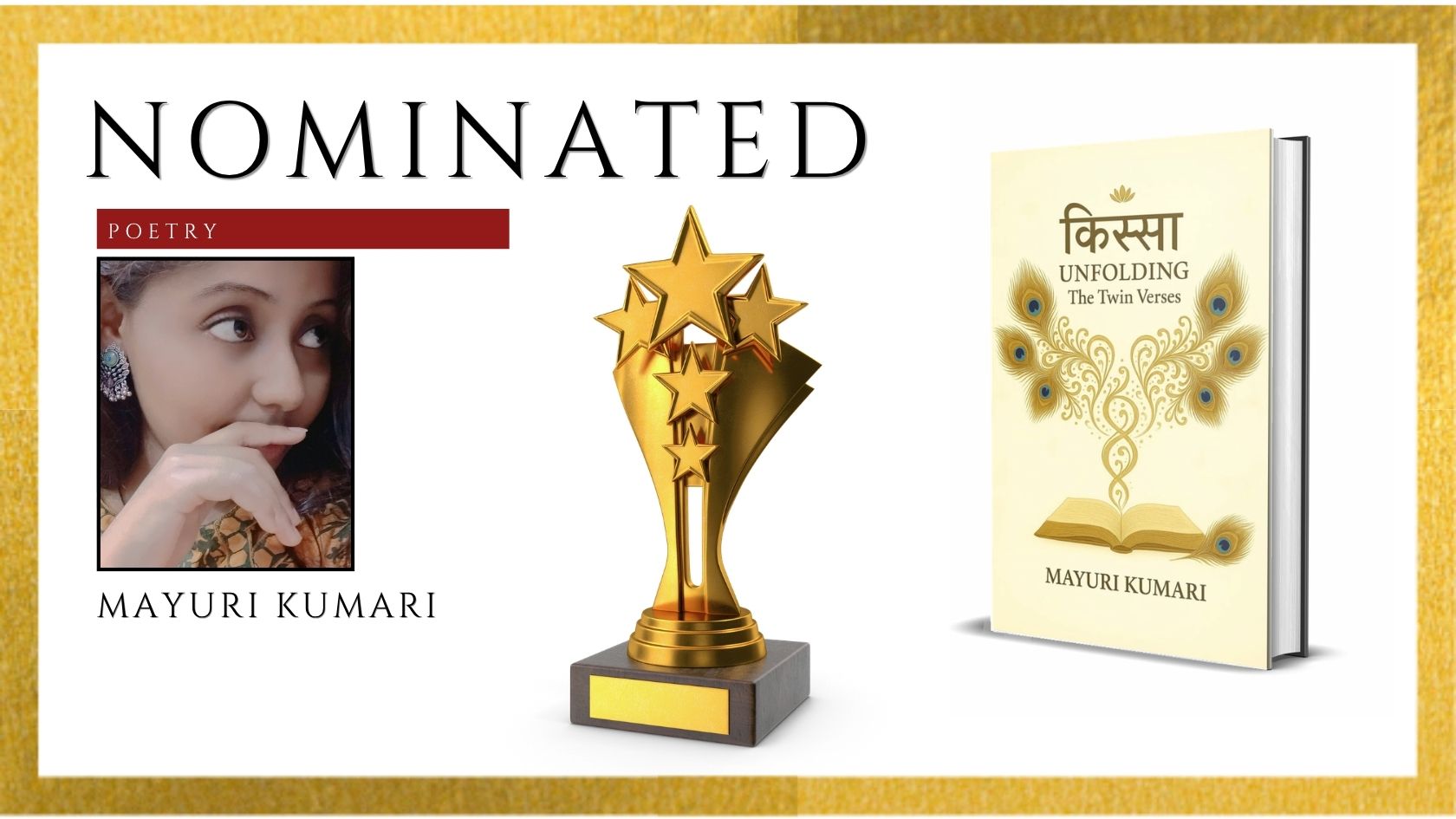
Mayuri Kumari Officially Nominated for the Ananta Press Sahitya Ratna Award for किस्सा Unfolding: The Twin Verses
Ananta Press is delighted to congratulate author Mayuri Kumari on the official nomination of her poetry collection, किस्सा Unfolding: The Twin Verses, for the prestigious Ananta Press Sahitya Ratna Award. This nomination recognizes a literary work that brings together language, emotion, contemporary experience, and introspection in a distinctive poetic form. Through किस्सा Unfolding: The Twin Verses, Mayuri Kumari presents readers with a collection that is not merely about poetry in two languages, but about experiencing the same human realities through two interconnected perspectives. Categorized under Poetry, the book takes readers on an evocative journey through 21 stories and poetic reflections centered on identity, relationships, family, resilience, technology, ambition, spirituality, emotional healing, self-worth, and self-discovery. These themes are deeply personal yet universally relatable, allowing readers from different backgrounds to discover fragments of their own lives within the verses. A Distinctive “Twin Verse” Literary Experience One of the most compelling qualities of किस्सा Unfolding: The Twin Verses is its innovative bilingual concept. The book introduces what the author describes as the “Twin Verse” format—English and Hindi expressions that offer complementary perspectives on shared emotions and experiences. Rather than functioning simply as translations of one another, the two languages interact creatively, allowing different shades of emotion and meaning to emerge. This approach gives the collection a distinctive literary identity. Mayuri Kumari demonstrates that bilingual writing can become more than the coexistence of two languages. In her work, it becomes a bridge between perspectives, generations, cultural experiences, and emotional worlds. English and Hindi exist naturally beside each other while remaining connected through the common thread of human experience. It is this originality that strongly contributed to the award committee’s decision to nominate the book for the Ananta Press Sahitya Ratna Award. Finding Poetry in Contemporary Life Another notable strength of Mayuri Kumari’s writing is her ability to discover poetry in the seemingly ordinary details of modern existence. The collection draws inspiration from workplaces, family responsibilities, friendships, mobile phones, digital communication, professional ambitions, emotional exhaustion, financial responsibilities, and everyday technology. Objects and ideas such as office lockers, Excel sheets, FASTag, ATM PINs, OTPs, mobile screens, drafts, and deadlines are transformed into metaphors for trust, emotional responsibility, distance, connection, struggle, and personal growth. This contemporary vocabulary gives the poetry a recognizable voice. In an era where human relationships are increasingly shaped by screens, digital communication, professional pressures, and rapidly changing lifestyles, किस्सा Unfolding reflects on what these changes mean emotionally. Poems such as “The Unsent Draft” explore the powerful emotions hidden behind words that are written but never sent, while “Lost Bonds, Screen-Bound Eyes” reflects upon the paradox of people being constantly connected through technology while sometimes becoming increasingly distant from one another emotionally. These observations allow the collection to speak directly to contemporary readers. A Journey Through Vulnerability, Identity, and Healing At the emotional center of the book lies an important exploration of identity and self-worth. In “The Architecture of Self,” the author reflects on rebuilding oneself after fractured relationships and gradually recognizing that personal identity does not need to depend entirely upon external validation. This idea resonates throughout the collection. The poems acknowledge difficult memories, changing relationships, family responsibilities, loneliness, unspoken emotions, ambition, exhaustion, and the complicated process of learning to accept and choose oneself. Importantly, Mayuri Kumari does not present healing as an instant transformation. Her poetry recognizes that life often contains contradictions, unfinished conversations, emotional burdens, and questions without immediate answers. That honesty gives the collection its emotional credibility. There are moments of vulnerability, but also moments of courage. There is introspection alongside humour, spirituality alongside contemporary reality, and emotional pain alongside the possibility of peace. Through these contrasts, the author presents human experience with sensitivity rather than simplification. Why the Award Committee Selected the Book for Nomination The Ananta Press Sahitya Ratna Award seeks to recognize literary voices and works that demonstrate creativity, meaningful expression, originality, reader impact, and a valuable contribution to contemporary literature. The nomination of किस्सा Unfolding: The Twin Verses reflects several qualities identified by the award committee: its innovative bilingual structure, its emotionally resonant subject matter, its imaginative use of contemporary metaphors, and its ability to transform everyday experiences into meaningful literary reflections. The collection stands out because it makes poetry accessible without diminishing its emotional depth. Mayuri Kumari writes about experiences that readers already know—family expectations, professional responsibilities, changing friendships, digital communication, personal disappointments, ambition, self-respect, faith, and healing—but encourages them to look at those experiences differently. Every ordinary “किस्सा” becomes an invitation to pause, reflect, and understand something deeper about oneself. Celebrating the Literary Voice of Mayuri Kumari As a bilingual poet and storyteller, Mayuri Kumari demonstrates a thoughtful ability to observe both the external world and the emotional realities hidden beneath it. Her writing gives expression to feelings that are frequently experienced but not always articulated. By bringing English and Hindi together within one creative framework, she also celebrates the richness of multilingual literary expression. किस्सा Unfolding: The Twin Verses ultimately invites readers to do more than read poetry. It invites them to recognize themselves within it—to revisit relationships, question assumptions, acknowledge emotions, and rediscover the importance of self-understanding, dignity, acceptance, and inner peace. Ananta Press warmly congratulates Mayuri Kumari on the official nomination of किस्सा Unfolding: The Twin Verses for the Ananta Press Sahitya Ratna Award. This nomination celebrates both the originality of her literary approach and her meaningful contribution to contemporary bilingual poetry. We extend our best wishes to Mayuri Kumari for the next stage of the award journey and look forward to seeing her poetic voice continue to reach, inspire, and connect with readers. Congratulations, Mayuri Kumari, on this well-deserved literary recognition and nomination.
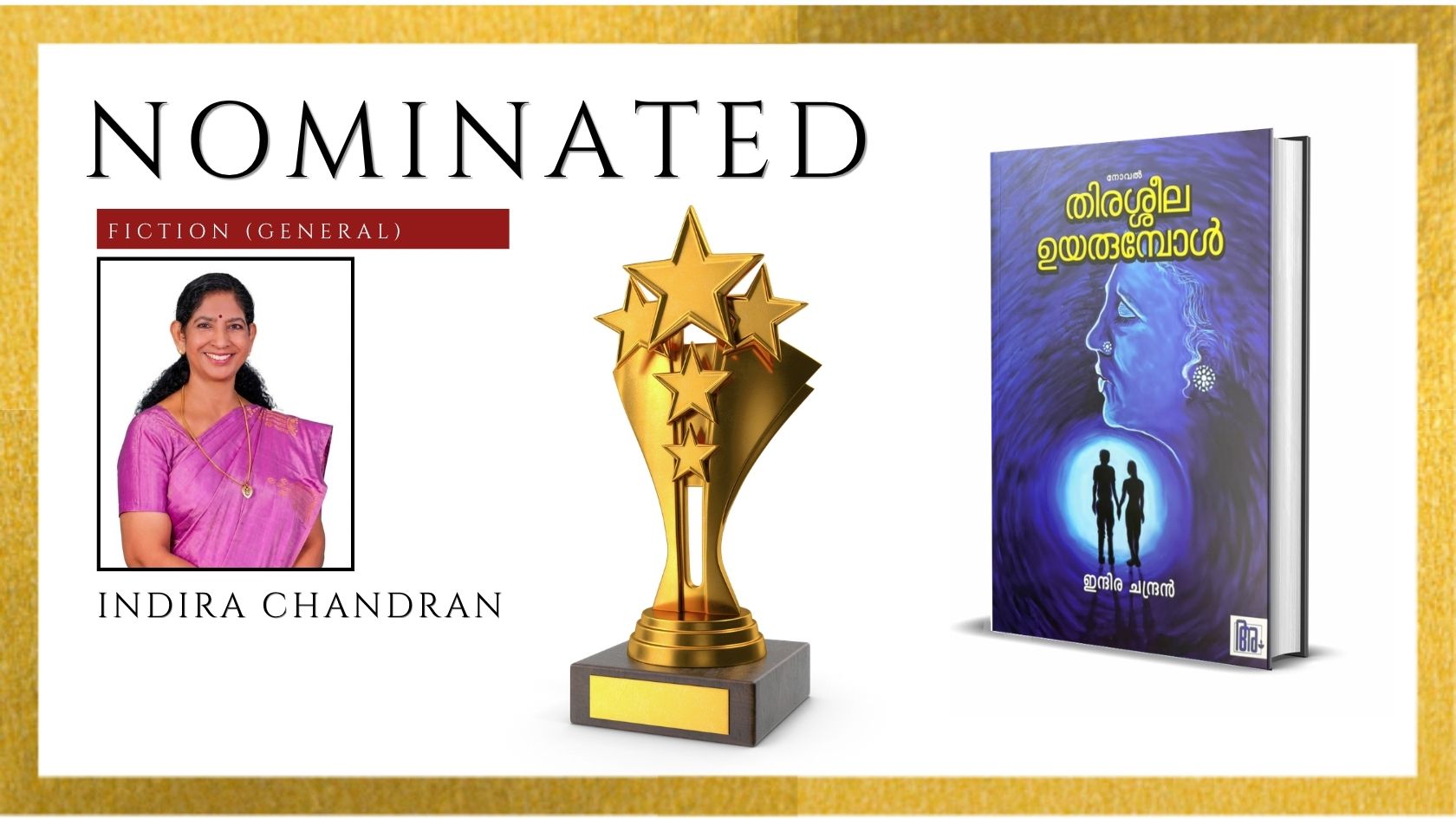
Indira Chandran Officially Nominated for the Ananta Press Sahitya Ratna Award for Thirasseela Uyarumbol
Ananta Press is delighted to congratulate Indira Chandran, author of the Malayalam fiction work Thirasseela Uyarumbol, on her official nomination for the Ananta Press Sahitya Ratna Award. This nomination recognizes a literary work that brings together family history, social values, resilience, relationships, education, and the quiet strength of an extraordinary woman living within the realities of early twentieth-century Kerala. Set in the early decades of the twentieth century, Thirasseela Uyarumbol presents the life of Lakshmikkutty, a young Hindu Nair woman from North Kerala who enters marriage at an early age. Her husband serves in the Railway Department and is portrayed as a supportive, responsible, and caring partner. Against this historical and social background, the novel follows Lakshmikkutty as she learns to manage the responsibilities of marriage, family, relationships, and household life with dignity and remarkable inner strength. One of the most compelling aspects of the book is that Lakshmikkutty’s strength does not depend on formal education, social power, or public recognition. Although she is not highly educated, she demonstrates intelligence through experience, emotional maturity, judgement, patience, and her ability to guide a family through difficult circumstances. Her journey reminds readers that wisdom can emerge from lived experience and that leadership within a family can be just as significant as leadership in public life. The Ananta Press Sahitya Ratna Award seeks to recognize literary works that possess meaningful storytelling, cultural value, emotional depth, originality, and the capacity to leave a lasting impression on readers. Through this nomination, the award committee acknowledges Thirasseela Uyarumbol as a work that goes beyond telling the story of one woman. It offers a wider picture of family life, social relationships, community bonds, education, and personal responsibility during an important period of social transition. A particularly significant element of the narrative is its portrayal of the joint family system. The book explores how a large family may remain united without allowing disagreement and personal differences to destroy relationships. Through its characters and situations, it reflects upon understanding, adjustment, communication, responsibility, and mutual respect. These values remain relevant even today, making the novel meaningful not only as a historical story but also as a reflection on contemporary family life. The relationship between husband and wife is another important strength of the book. Rather than presenting marriage only as a social institution, the story highlights cooperation, support, trust, and companionship. Lakshmikkutty’s husband stands beside her and his family, while she becomes an important source of stability within the household. Their relationship contributes to the novel’s emotional foundation and gives readers a thoughtful representation of partnership within marriage. The award committee also recognizes the book’s treatment of education as a force for social transformation. Lakshmikkutty’s son becomes the first person to establish a new school in a remote village, undertaking the effort despite considerable difficulties. His journey later leads him to become the Collector of the District. This progression gives the novel a larger social dimension. Education is portrayed not merely as personal achievement but as a means of bringing opportunity and change to an entire community. The establishment of a school in a remote region also makes the story particularly inspiring. It represents courage, vision, perseverance, and a belief in the possibility of progress. Through this part of the narrative, Thirasseela Uyarumbol pays tribute to individuals who work quietly to improve the lives of others and whose efforts may influence generations. The novel further gains depth through its depiction of neighbourhood relationships and community life. The interactions among families, relatives, and neighbours provide readers with a vivid sense of the social world in which the characters live. Such details help preserve memories of an earlier way of life and contribute to the book’s cultural and historical significance. For the Ananta Press Sahitya Ratna Award Committee, the nomination of Thirasseela Uyarumbol reflects the book’s ability to combine individual experience with broader social themes. The story celebrates the dignity of women, the importance of harmonious relationships, the value of education, the strength of family bonds, and the impact that ordinary individuals can have on their communities. Indira Chandran’s storytelling brings attention to a type of strength that is often understated in literature—the strength required to hold a family together, overcome difficult circumstances, nurture future generations, and preserve dignity through changing times. By placing such a woman at the heart of the narrative, the book gives meaningful literary recognition to countless women whose contributions to their families and communities may never have been publicly celebrated. The nomination of Thirasseela Uyarumbol for the Ananta Press Sahitya Ratna Award is therefore a recognition of its literary, emotional, social, and cultural contribution. It acknowledges a story rooted in Kerala’s history while carrying universal messages about resilience, relationships, responsibility, education, and human dignity. Ananta Press warmly congratulates Indira Chandran on this official nomination. We extend our best wishes to her for the next stage of the Ananta Press Sahitya Ratna Award and appreciate her contribution to Malayalam literature through a work that preserves the memory of an earlier generation while offering values and insights that continue to resonate with readers today. May Thirasseela Uyarumbol reach many more readers and inspire them through its celebration of courage, family, education, community, and the enduring strength of a woman’s spirit.
Before You Called Her Difficult by Tayaba Nasir Announced as Winner of the Ananta Press Sahitya Ratna Award
Ananta Press is delighted to congratulate Tayaba Nasir on the official selection of her book, Before You Called Her Difficult, as a Winner of the Ananta Press Sahitya Ratna Award. This recognition celebrates a young literary voice that has chosen to write about an important and deeply human subject. Before You Called Her Difficult explores the emotions, sacrifices, relationships, struggles, expectations, and inner strength that shape a woman’s life. Instead of simply discussing the labels often placed upon women, the book asks readers to look at the experiences and emotions that may exist behind those labels. Tayaba Nasir, an 18-year-old debut author with a passion for writing, begins her literary journey with a subject that carries both social and emotional importance. Choosing such a thoughtful theme for a first book reflects her willingness to observe life beyond its surface and to engage with questions that affect families, relationships, and individuals across generations. At the heart of Before You Called Her Difficult is a simple but powerful thought. Before calling a woman difficult, too emotional, selfish, weak, or even strong, one should first try to understand the experiences that shaped her actions and responses. The book explores sacrifice, freedom, love, letting go, family, motherhood, relationships, healing, identity, and strength. Through these themes, it presents womanhood as something that cannot be explained through a single definition. A woman can be soft while remaining strong. She can be emotional while showing remarkable resilience. She can value independence while remaining deeply connected to the people she loves. She can make mistakes and still deserve respect, compassion, and understanding. This balanced view of womanhood is one of the important reasons the book stood out during the award consideration process. The Ananta Press Sahitya Ratna Award recognizes books and authors whose work carries literary, social, emotional, or intellectual value and has the ability to leave a meaningful impression on readers. The recognition is not limited to one style of writing. It celebrates works that communicate an important idea, encourage reflection, offer originality of perspective, and contribute positively to contemporary literature. Before You Called Her Difficult reflects these qualities through its compassionate approach to a subject that is often discussed through judgment rather than understanding. The award committee found the central idea of the book particularly relevant. Society frequently uses labels without asking what happened before a person reached a particular emotional state or made a particular decision. By encouraging readers to look at the story behind the reaction, the book creates space for empathy. Its motivational value also comes from the way it approaches strength. Strength is not presented as the absence of pain, emotion, uncertainty, or vulnerability. Instead, the book suggests that these qualities can exist together. A woman can struggle and still move forward. She can need support and still be independent. She can experience pain without allowing that pain to define her entire identity. This message gives the book relevance not only for women but also for families, partners, young adults, and anyone interested in developing healthier and more understanding relationships. Another notable quality of the book is its accessibility. Its themes come from everyday emotional and social experiences. Readers may recognize their mothers, daughters, sisters, partners, friends, or even themselves within the situations and emotions being discussed. This ability to encourage personal reflection strengthens the book’s connection with its audience. For Tayaba Nasir, receiving the Ananta Press Sahitya Ratna Award at the beginning of her journey as an author is an encouraging achievement. It recognizes both the message of her debut work and the promise of a young writer willing to engage with subjects that deserve thoughtful conversation. Ananta Press warmly congratulates Tayaba Nasir on this achievement and wishes her continued success in her literary journey. May Before You Called Her Difficult reach readers who need its message, encourage meaningful conversations, and remind people that understanding should often come before judgment. We extend our best wishes to Tayaba Nasir for her future writing and proudly recognize her contribution through Before You Called Her Difficult as a Winner of the Ananta Press Sahitya Ratna Award. Jury Feedback Drafts for Approval Glenville Ashby Before You Called Her Difficult is a thoughtful book because it asks readers to look beyond quick judgments and understand the emotional story behind a woman’s actions. What I appreciated most was the simplicity of its central message. The book does not try to present women as perfect or without contradictions. Instead, it accepts that a person can be sensitive and strong, independent and deeply connected to family, or tired and still responsible. The sections dealing with sacrifice, identity, relationships, and healing give readers many points to reflect on in their own lives. I also found the book meaningful because it encourages empathy without making the subject overly complicated. Tayaba Nasir has chosen a theme that is relevant to families, young people, and society as a whole. For a debut author, the clarity of purpose is especially promising. This book can help readers think before they label someone and can encourage more patient, respectful, and humane conversations. Kavya Pandey What stayed with me after reading Before You Called Her Difficult was its focus on the emotions that often remain unseen. Women are frequently described with simple labels, but the book reminds us that every reaction may have a history, a sacrifice, a disappointment, or a struggle behind it. The chapters on love, freedom, family, motherhood, letting go, and healing give the book a broad emotional range. I particularly appreciated that the author does not present strength as the absence of emotion. She shows that vulnerability and resilience can exist together. That idea makes the book accessible to younger readers as well as adults. Tayaba Nasir’s age also makes the perspective interesting because she is beginning her literary journey with a subject that requires sensitivity and observation. The book has the potential to start conversations inside homes and relationships. Its value lies in asking readers to replace judgment with understanding, which
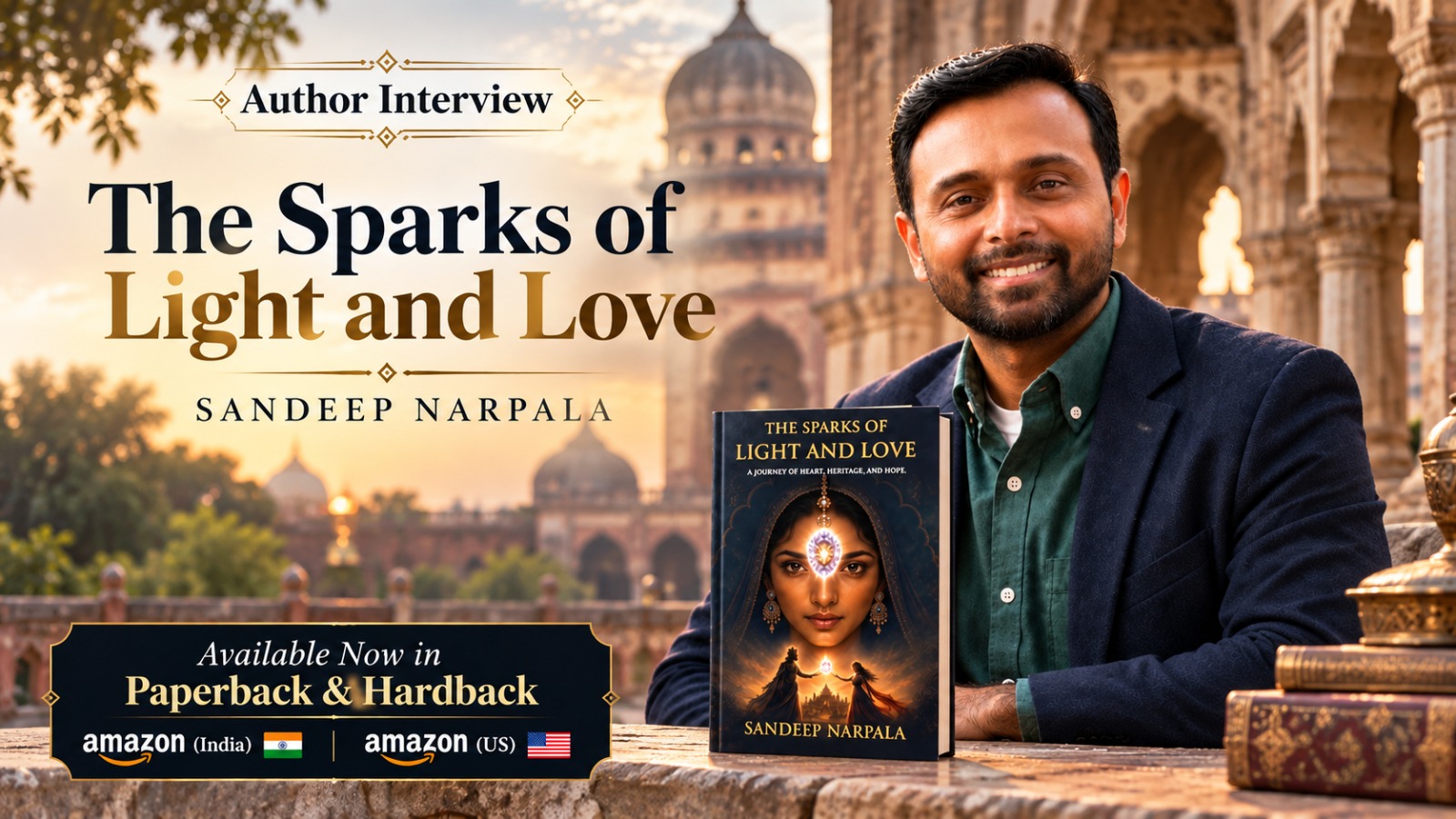
From a News Headline to a Decade-Long Dream: A conversation with Sandeep Narpala about ‘The Sparks of Light and Love’
Some stories begin with a character, some with a place, and some with a question that refuses to go away. For Sandeep Narpala, the starting point was a news report in 2016 about the Kohinoor diamond and India’s demand for its return. What stayed with him was not simply the diamond’s extraordinary history, but the larger question surrounding it: who gets to decide where a piece of history belongs? Nearly a decade later, that question has found its way into The Sparks of Light and Love: A Journey of Heart, Heritage, and Hope, Sandeep’s debut novel, where the Kohinoor becomes the centre of a story that moves between historical conflict, crime, romance and personal sacrifice. A scientist by profession, Sandeep wrote the novel alongside a demanding career and family life, with his wife, Bindhu, serving as his first and most exacting reader. The result is a book that uses a familiar historical object to explore questions of identity, belonging, love and the complicated ways in which the past continues to shape the present. We began by going back to the moment when the story first took hold. Your debut began with a news headline. What stayed with you strongly enough to become a novel? Sandeep Narpala: In 2016, I came across a report about India asking for the Kohinoor to be returned and Britain declining the request. The response suggested that returning contested objects would leave British museums empty. That idea stayed with me because it seemed to reduce a deep historical wound to a practical inconvenience. I wanted to explore the Kohinoor’s journey and the larger question of where it belongs, but I wanted to do it through fiction. I wanted the story to feel contemporary, non-linear and alive rather than read like a historical lecture. That starting point eventually led to a much larger story, one in which the diamond is not merely an object from history, but something capable of affecting the lives of people in the present. How would you introduce The Sparks of Light and Love to a reader encountering it for the first time? Sandeep Narpala: It is a historical novel that brings romance, crime and heritage together around the Kohinoor. The diamond has been stolen, and Prince Suryanarayana, a gemologist, becomes the prime suspect. Vajra, the woman he loves, is suffering from visions connected to the diamond’s violent past. Prince believes he can save her, but the very thing that might save her could also destroy them both. The chase drives the story forward, but the emotional and historical consequences matter just as much. The novel brings together history, romance and crime. Why did the story need all three? Sandeep Narpala: History gave me the diamond and the empires that claimed it. Crime gave the novel its engine and made the question urgent. Romance gave readers a reason to care about what Prince does and whether Vajra survives. I did not begin by choosing a market category. I wanted a story large enough to hold the India I know: emotional, complicated, historically aware and still moving forward. The title itself carries a sense of symbolism. What does The Sparks of Light and Love mean to you? Sandeep Narpala: The title arrived late. Sparks are small, but they are how fires begin. Light is what the diamond promises, and Koh-i-Noor itself means “Mountain of Light.” Light is also what Vajra’s visions take away from her. Love is the force that refuses to remain safely in the past. Put together, the words describe the movement of the novel: one spark, then another, until the story becomes impossible to ignore. The Kohinoor has been written about extensively. How did you approach researching a diamond with such a complicated history? Sandeep Narpala: I followed the public record: its origins, the kingdoms through which it passed, the colonial seizure and the long debate over its return. Research gave me the structure beneath the fiction. But I also had to keep asking whether the people in the story were alive. I talked through scenes with my wife, Bindhu for years. She was the first reader and the hardest critic, and she would not let the history become an excuse for losing the human pulse of the story. Was there a particular part of the writing process that proved especially difficult? Sandeep Narpala: Time and courage. I was writing while building a scientific career and raising a family. Chapters disappeared, and some months or even years produced very little. The other challenge was avoiding a lecture, travelogue or costume drama. I wanted Prince and Vajra to matter even if the diamond vanished from the plot. I finished through persistence, encouragement from Bindhu and a helpful nudge from a neighbour. You came to fiction without a formal literary background. How did you turn that insecurity into progress? Sandeep Narpala: At first, it felt like a real disadvantage. Eventually, I decided to use every responsible form of help available, including technology, AI, feedback, editing and a professional team, to move the story from my mind to the page. Tools can help, but they cannot finish the emotional work for you. You still have to decide what the story means, revise it and accept honest criticism. Finishing became more important than waiting to feel qualified. Editing, then, became an important part of that journey. When did you know the manuscript was finally ready? Sandeep Narpala: Editing was the second half of writing. The early drafts were rough because I was trying to capture the story. Revision asked whether a line made the reader turn the page or merely asked the reader to admire the author. If it was the second, I cut it. I knew the manuscript was ready when the middle turn could still surprise me, the last twist could still hurt, and I could give the book to a stranger without standing nearby to explain it. What do you hope readers carry away from the story? Sandeep Narpala: I want them to feel that history is not behind us; it is sitting at the
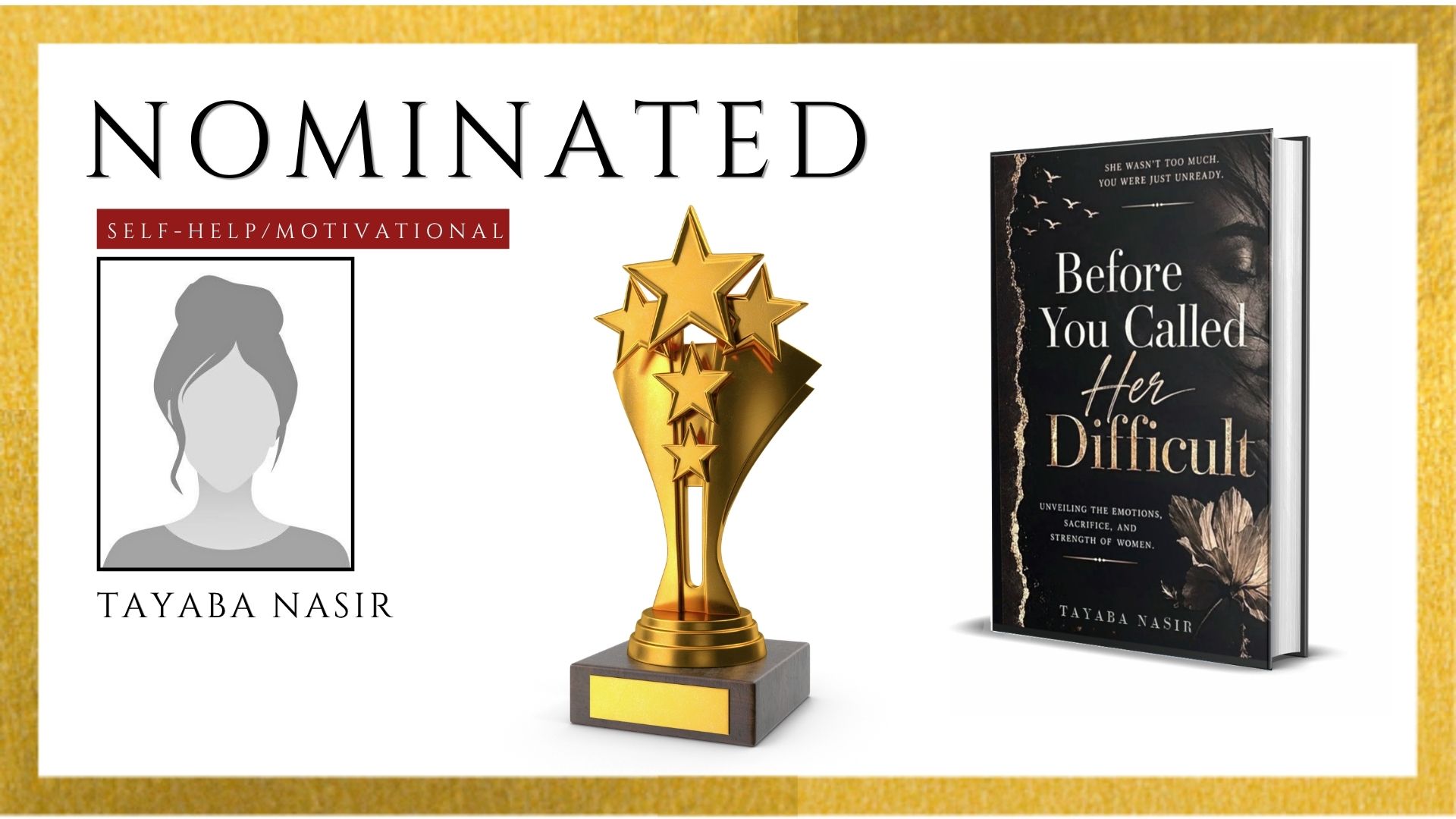
Tayaba Nasir Officially Nominated for the Ananta Press Sahitya Ratna Award for Before You Called Her Difficult
Ananta Press proudly congratulates young author Tayaba Nasir on the official nomination of her debut book, Before You Called Her Difficult, for the prestigious Ananta Press Sahitya Ratna Award. At just eighteen years of age, Tayaba Nasir has taken a remarkable first step into the literary world with a book that asks readers to reconsider something society often does too quickly—judge a woman without understanding the experiences behind her actions. Categorized under Self-Help/Motivational literature, Before You Called Her Difficult explores womanhood through emotion, observation, empathy, and reflection. Rather than attempting to define women through a single idea of strength or sacrifice, Tayaba presents womanhood in all its complexity. Her book speaks about love, family, freedom, motherhood, relationships, sacrifice, letting go, healing, identity, resilience, and the quiet emotional battles that may remain invisible to the outside world. At the heart of the book is an important question: What if, before calling her difficult, we tried to understand what made her feel, react, choose, or change? This thought gives the book its emotional and literary identity. Looking Beyond the Label Women are frequently described using convenient labels—“too emotional,” “selfish,” “difficult,” “strong,” “independent,” or “complicated.” Yet labels rarely tell the complete story. Before You Called Her Difficult attempts to move beyond these definitions. Through its exploration of different aspects of a woman’s life, the book reminds readers that strength and vulnerability are not opposites. A woman can be independent while still needing emotional connection. She can be deeply sensitive while possessing extraordinary resilience. She can choose herself without being selfish. She can let go and still care. She can be imperfect and remain deserving of love, dignity, and understanding. It is this compassionate perspective that stood out during the nomination process for the Ananta Press Sahitya Ratna Award. The award seeks to recognize literary voices and works that carry meaningful ideas, creative merit, emotional relevance, and the ability to contribute something valuable to readers. Before You Called Her Difficult reflects these qualities through a subject that is both deeply personal and socially relevant. Why the Award Committee Selected the Book for Nomination The nomination of Before You Called Her Difficult acknowledges the book’s ability to encourage empathy rather than judgment. Its value does not come from presenting womanhood as a perfect experience. Instead, it comes from recognizing contradictions as part of being human. The book makes room for softness and strength, attachment and independence, pain and healing, sacrifice and self-discovery. The Award Committee particularly recognizes the relevance of the book’s central message: before defining someone by their behaviour, we should make an effort to understand the experiences that may have shaped it. That idea extends beyond womanhood. It encourages readers to develop patience, compassion, and emotional awareness in their relationships with others. The book also has motivational value because it gives importance to emotions that are often dismissed. Through subjects such as healing, identity, personal freedom, relationships, and resilience, Tayaba encourages readers—particularly women—to recognize that their emotions and experiences deserve acknowledgement. Rather than offering simplistic answers, the book invites reflection. That reflective quality gives it the potential to connect with readers at different stages of life. An Inspiring Beginning for an Eighteen-Year-Old Author The nomination becomes even more meaningful when considered alongside Tayaba Nasir’s journey as a writer. Tayaba is an eighteen-year-old first-year college student and a first-time author whose connection with writing began much earlier in childhood. For her, writing became a space where thoughts and emotions that were difficult to express aloud could find a voice. Over time, that childhood interest developed into a deeper fascination with stories, human behaviour, emotions, relationships, and the unspoken thoughts people carry within themselves. With Before You Called Her Difficult, Tayaba has transformed that long-standing passion into her first published literary expression. Her age makes her achievement noteworthy, but it is her perspective that gives the achievement meaning. Tayaba’s journey demonstrates that literary expression does not necessarily depend upon age. A young writer can observe, question, listen, empathize, and contribute a perspective worthy of serious conversation. Her debut reflects a willingness to engage with themes that are emotionally layered and socially significant. She does not claim to have every answer. Instead, her writing asks readers to reconsider the questions they ask about women, relationships, emotions, and personal choices. That openness is one of the strengths of her emerging literary voice. A Book Rooted in Understanding One of the most compelling qualities of Before You Called Her Difficult is the simplicity of its underlying philosophy: understanding should come before judgment. The title itself carries this message. Before you called her difficult, did you understand what she had sacrificed? Before calling her emotional, did you understand what she had carried silently? Before calling her selfish, did you ask how often she had placed everyone else before herself? Before defining her as strong, did you consider whether she had ever been given the freedom to be vulnerable? These are the kinds of reflections that give Tayaba Nasir’s book its emotional impact. Its contribution lies not only in speaking about women but also in encouraging readers to listen more carefully to them. Celebrating a Promising New Literary Voice The official nomination of Tayaba Nasir for the Ananta Press Sahitya Ratna Award represents recognition of both a meaningful debut and a promising new literary voice. For a writer at the beginning of her journey, this nomination is an important milestone. Before You Called Her Difficult reflects the courage to transform years of personal passion for writing into a book capable of reaching a wider audience. Ananta Press warmly congratulates Tayaba Nasir on this achievement and wishes her the very best for the next stage of the Ananta Press Sahitya Ratna Award. May this nomination encourage her to continue observing, questioning, learning, and writing with sincerity. As she balances her college journey with her aspirations as an author, we hope this recognition becomes one of many milestones ahead. With Before You Called Her Difficult, Tayaba Nasir has begun her literary
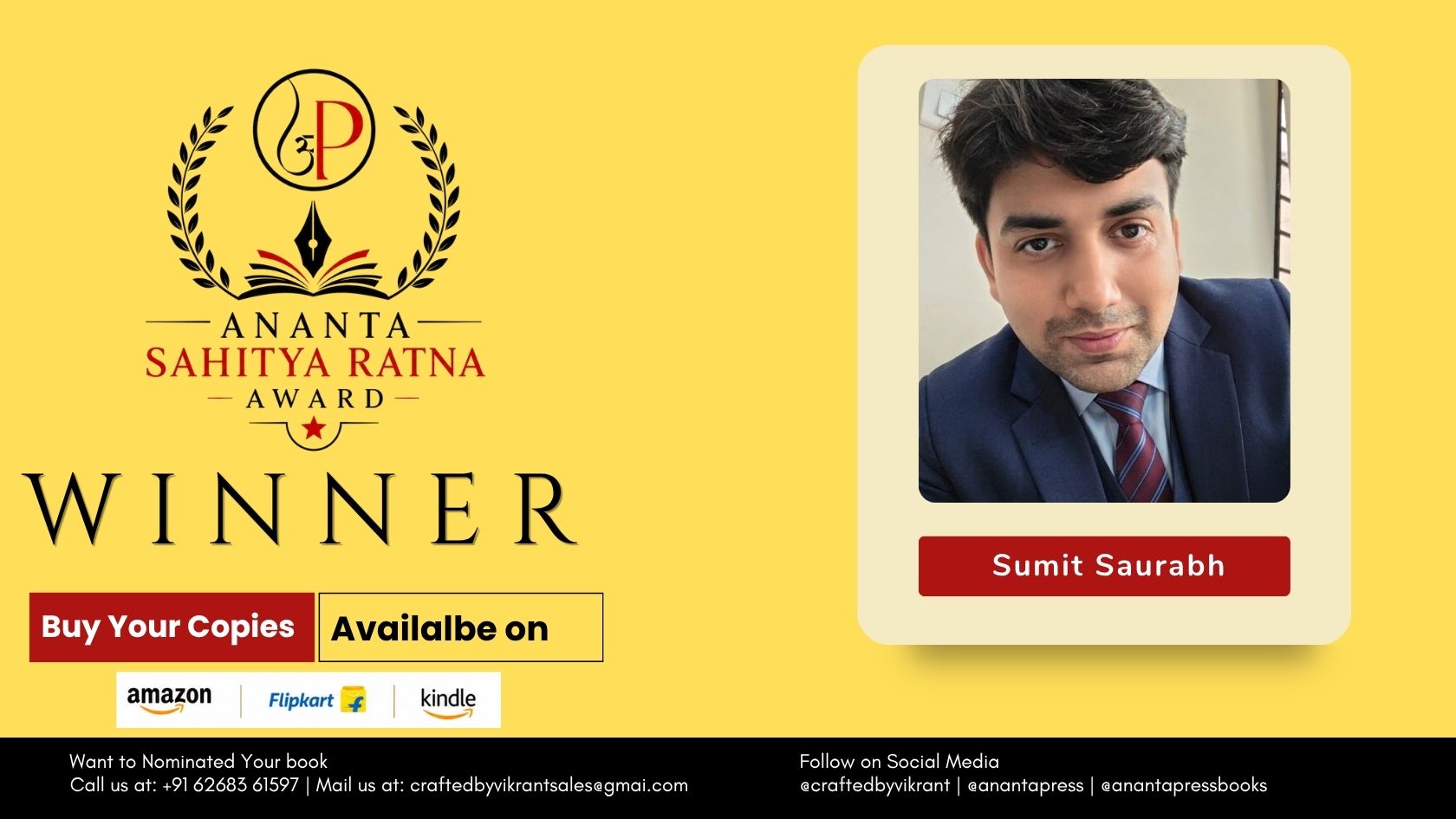
Official Winner Announcement: Sumit Saurabh Wins the Ananta Press Sahitya Ratna Award for The Room Remembers
Ananta Press is delighted to congratulate author Sumit Saurabh on being officially declared a Winner of the Ananta Press Sahitya Ratna Award for his novel The Room Remembers: A Novel. This recognition celebrates a work of fiction that combines mystery, psychological horror, emotional trauma, family secrets, and supernatural suspense within a distinctive and memorable narrative. The Room Remembers stood out before the award committee for its imaginative central idea, carefully layered mystery, emotional depth, and its ability to explore the consequences of buried truths through the language of horror. At the centre of the story are Ananya and Arjun, two strangers who find themselves trapped in the isolated Hillview Hotel during a violent storm. What initially appears to be an unfortunate night in an unfamiliar place gradually develops into something much darker. Separate rooms, strange encounters, hidden corridors and a forgotten diary begin revealing pieces of a disturbing history connected with Nisha, Asha, Sameer and illegal experiments conducted beneath the hotel. The strength of The Room Remembers lies in the way Sumit Saurabh uses a physical location as something more than a background. The hotel becomes an active presence within the novel. Rooms, passages and forgotten spaces seem to preserve the emotional weight of what happened inside them. The simple but unsettling idea that a room can forget nothing gives the novel its distinctive identity. The story also moves beyond conventional supernatural horror. Behind the disturbing events is a deeper examination of memory, silence, guilt and the consequences of allowing victims to disappear from collective memory. The supernatural elements therefore work not simply to frighten the reader, but to bring forgotten experiences back into the light. Ananya’s personal connection with the mystery adds another important emotional dimension. As hidden memories begin resurfacing, the investigation stops being only about discovering what happened at the hotel. It becomes a journey into identity, family history and experiences that have been deliberately buried. Her role in helping Sameer’s remaining humanity resist the entity gives the narrative an emotional conflict that brings compassion into an otherwise frightening world. This balance between fear and humanity was one of the qualities considered significant by the award committee. The horror in The Room Remembers is not dependent only on frightening appearances or unexplained events. Much of its impact comes from the understanding that silence itself can preserve injustice. The novel therefore carries a meaningful idea for readers. Things that society chooses not to discuss do not simply disappear. Pain, memory and unresolved wrongdoing can remain present until they are recognised and confronted. Through mystery and horror, the novel encourages readers to think about truth, remembrance, accountability and the importance of acknowledging people whose stories have been forgotten. Sumit Saurabh deserves appreciation for developing a premise that is both accessible and thought provoking. A mysterious hotel, a violent storm, secret corridors and supernatural experiences provide the suspense expected from the genre, while the deeper questions surrounding memory and trauma give the book additional literary value. The Ananta Press Sahitya Ratna Award recognises authors and books that demonstrate creativity, meaningful storytelling, originality and the potential to leave a lasting impression on readers. The selection process looks beyond a book’s genre and considers the strength of its concept, narrative value, emotional connection, message and overall contribution to contemporary reading. The Room Remembers was considered deserving of recognition because it successfully combines entertainment with a deeper purpose. Its mystery invites readers to search for answers, its horror creates atmosphere and tension, and its emotional foundation reminds readers that every hidden truth belongs to someone whose experience deserves to be remembered. The award committee especially appreciated the originality of the novel’s central thought: a room can forget nothing, especially what people desperately try to bury. It is a simple sentence, but it carries the essence of the entire story. It transforms the room into a witness and memory into a force that refuses to disappear. Through The Room Remembers, Sumit Saurabh contributes an intriguing voice to contemporary Indian fiction and demonstrates how mystery and supernatural storytelling can also engage with emotional and social themes. Ananta Press warmly congratulates Sumit Saurabh on becoming a Winner of the Ananta Press Sahitya Ratna Award. We hope this recognition encourages him to continue exploring powerful ideas, unusual stories and meaningful human experiences through literature. We wish Sumit Saurabh continued success in his literary journey and hope The Room Remembers reaches many more readers who appreciate mystery, horror and stories that remain in the mind long after the final page. Jury Feedback Glenville Ashby The Room Remembers interested me because its horror is connected closely with memory and human experience. The hotel is not treated simply as a frightening building where unusual events happen. It becomes a place that appears to have absorbed the experiences of the people who suffered there. I found this idea very effective. The use of the diary, hidden corridors and the history involving Nisha, Asha, Sameer and the experiments gives the story several layers for the reader to discover. I also appreciated that the mystery gradually becomes personal for Ananya. This gives the story emotional weight and prevents it from becoming only a sequence of frightening incidents. Sameer’s struggle is also important because it introduces the question of whether some part of humanity can survive even after terrible experiences. The novel has an interesting concept and uses horror to speak about silence, memory and the need to acknowledge forgotten victims. Kavya Pandey What I appreciated most about The Room Remembers is the combination of mystery with emotional storytelling. The beginning involving Ananya, Arjun, a storm and an isolated hotel immediately creates curiosity, but the story becomes more meaningful as the history of the place is uncovered. The forgotten diary and hidden corridors are familiar elements of mystery fiction, yet they are connected to a larger story involving family secrets, trauma and illegal experiments. This makes the novel more than a conventional haunted hotel story. Ananya’s connection with the events gives readers an
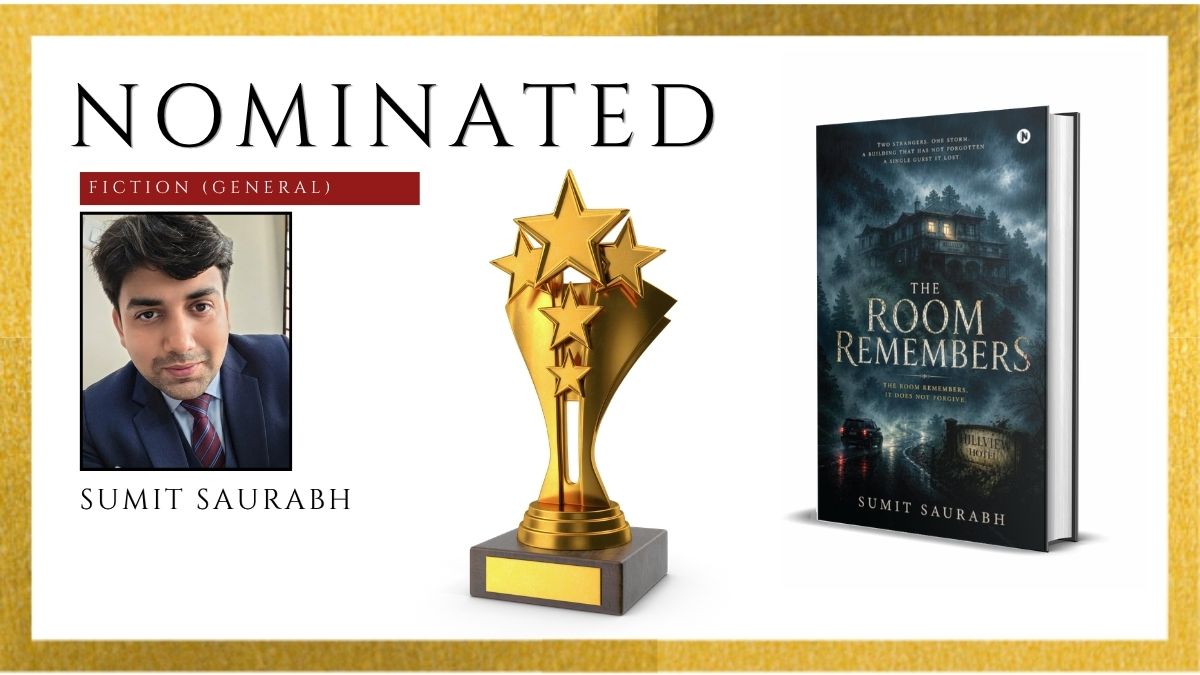
Sumit Saurabh Nominated for the Ananta Press Sahitya Ratna Award for His Mystery-Horror Novel The Room Remembers
Heartiest congratulations to Sumit Saurabh on being officially nominated for the prestigious Ananta Press Sahitya Ratna Award for his remarkable novel, The Room Remembers: A Novel. The Ananta Press Sahitya Ratna Award celebrates authors who bring meaningful, original, and impactful contributions to literature through their storytelling. The award recognises writers whose works demonstrate creativity, emotional depth, unique perspectives, and the ability to connect with readers through powerful narratives. Being nominated for this honour reflects the literary value and distinctive vision behind an author’s work. Sumit Saurabh’s The Room Remembers stands out as a gripping mystery-horror novel that blends psychological suspense, supernatural elements, emotional trauma, family secrets, and human resilience into a deeply engaging narrative. The story follows Ananya and Arjun, two strangers who find themselves trapped by a violent storm inside the isolated Hillview Hotel. What begins as a fight for survival gradually unfolds into a much larger mystery involving forgotten diaries, hidden corridors, unexplained encounters, and a decades-old conspiracy buried within the walls of the hotel. At the heart of the novel lies a haunting yet powerful idea — a room can remember everything that people attempt to forget. Through this unique premise, Sumit Saurabh explores how memories, secrets, guilt, and unresolved pain continue to influence lives even after years have passed. The novel goes beyond traditional horror by focusing not only on fear, but also on human emotions, hidden truths, and the consequences of silence. The award committee has recognised The Room Remembers for its originality, atmospheric storytelling, and its ability to combine mystery with deeper emotional themes. The involvement of characters such as Nisha, Asha, and Sameer adds layers of complexity to the narrative, revealing a story shaped by betrayal, forgotten suffering, and the search for truth. The exploration of illegal experiments conducted beneath the hotel introduces a compelling dimension of suspense, while the emotional journey of the characters creates a strong connection with readers. One of the novel’s strongest qualities is the way it transforms a supernatural mystery into a reflection on human experiences. The story examines how people carry hidden wounds, how memories shape identity, and how confronting the past can become the first step towards healing. Through Ananya’s journey and her connection to the mystery, the novel presents themes of courage, empathy, and the importance of acknowledging forgotten voices. Sumit Saurabh brings a unique perspective to literature through his diverse professional and personal journey. Born and raised in Bhagalpur, Bihar, he developed an early curiosity about learning, technology, and the possibilities created through education. His journey from engineering studies after qualifying through the All India Engineering Entrance Examination (AIEEE) to becoming a technology leader reflects dedication, adaptability, and continuous growth. With years of experience across software development, eCommerce, digital transformation, architecture, and technology leadership, Sumit has worked with complex systems and diverse teams across industries and cultures. Today, as Director of Delivery at NULogic, he continues to work at the intersection of technology, leadership, and innovation. However, beyond technology, Sumit has always been deeply interested in human emotions, relationships, memories, and the choices that define people’s lives. This curiosity has naturally found expression through storytelling. His writing reflects his fascination with the emotions people often hide, the secrets they protect, and the experiences that shape human behaviour. This combination of analytical thinking and emotional observation gives The Room Remembers its distinctive character. The novel reflects both the structured imagination of a technology professional and the sensitivity of a storyteller who understands the complexity of human nature. Through this nomination, Ananta Press celebrates Sumit Saurabh’s contribution to fiction and acknowledges his ability to create a story that entertains, challenges, and emotionally engages readers. The Room Remembers is not only a tale of mystery and horror but also an exploration of memory, truth, trauma, and the lasting impact of choices made in the past. We extend our warmest congratulations to Sumit Saurabh for this well-deserved nomination for the Ananta Press Sahitya Ratna Award. We wish him continued success in his literary journey and hope that his storytelling continues to inspire readers, encourage imagination, and contribute meaningfully to contemporary literature. May The Room Remembers continue to reach wider audiences and remain a memorable addition to the world of fiction.
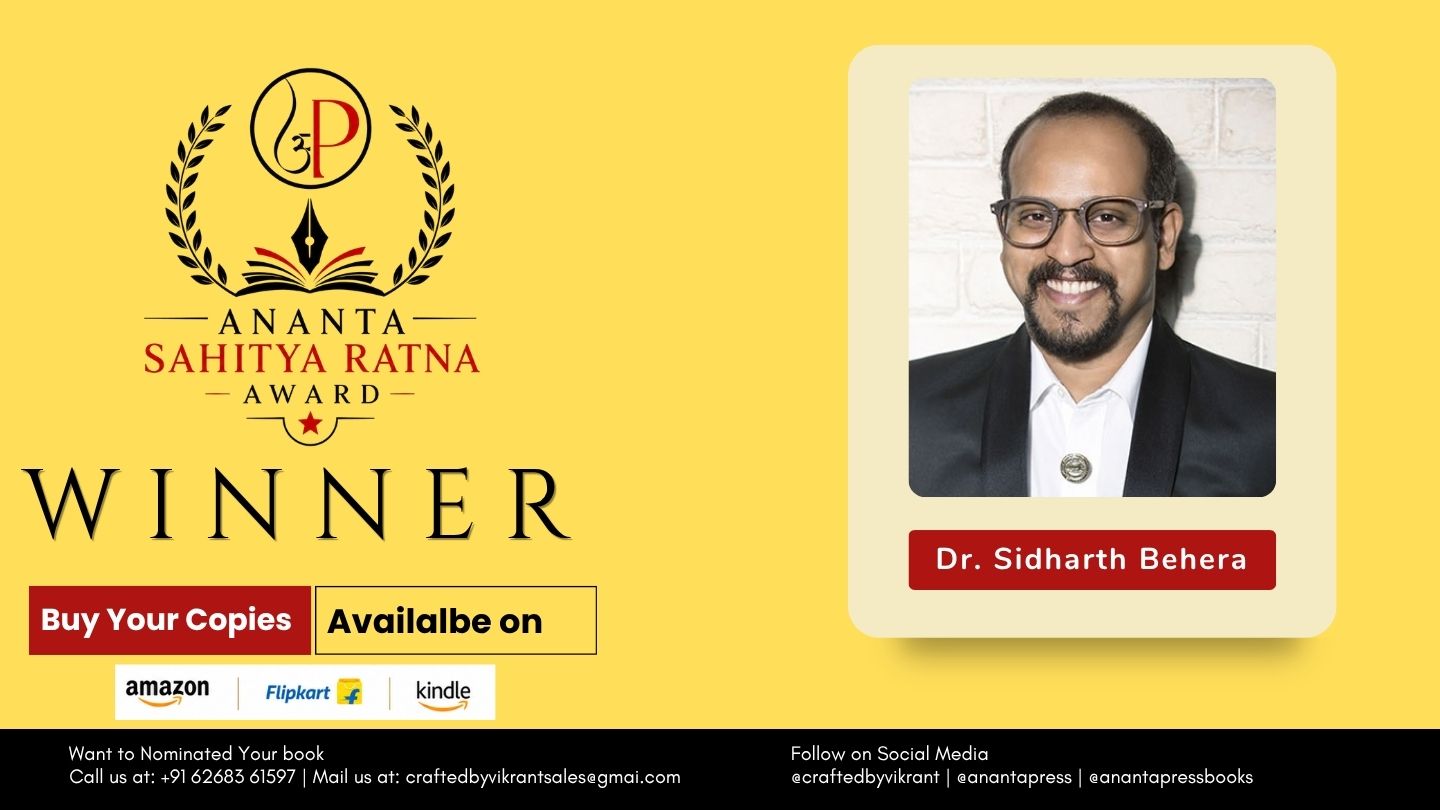
Dr. Sidharth Behera Declared Official Winner of the Ananta Press Sahitya Ratna Award for “Raaga Yuga: Awakening of Astras”
Ananta Press proudly announces Dr. Sidharth Behera as the Official Winner of the Ananta Press Sahitya Ratna Award for his remarkable historical fiction work, Raaga Yuga: Awakening of Astras. This prestigious recognition celebrates his creative vision, storytelling excellence, and contribution to contemporary literature through a unique blend of Indian mythology, fantasy, adventure, and timeless human emotions. Raaga Yuga: Awakening of Astras introduces readers to a world where ancient powers, forgotten legends, and hidden mysteries come together in an unforgettable epic journey. The story begins when an ancient Astra awakens beneath a cursed forest, bringing back echoes of a forgotten prophecy. The protagonist, Arhaan, marked by the Seal of Rudra, is drawn into a dangerous and extraordinary world filled with divine weapons, lost ragaas, hidden realms, and secrets capable of changing the very nature of reality. As gods, guardians, and powerful shadows come together, Arhaan’s mission becomes a battle not only against darkness but also against the forgotten forces that threaten existence itself. His journey to gather the legendary Astras before the forbidden Kaalastra rises creates a powerful narrative filled with adventure, mythology, courage, and discovery. The Ananta Press Sahitya Ratna Award recognizes authors whose works demonstrate originality, literary value, creativity, and the ability to create a meaningful connection with readers. The award committee carefully evaluates books based on their storytelling strength, uniqueness of concept, emotional depth, cultural relevance, and contribution to literature. After thoughtful consideration, Raaga Yuga: Awakening of Astras was selected for its imaginative world-building, engaging narrative, and innovative approach to Indian mythological fantasy. Dr. Sidharth Behera’s work stands out because it brings together the richness of Indian traditions with the excitement of modern epic fantasy. The concept of ragaas holding the power of weapons and memories transforming into sources of strength presents a fresh and original idea. Through this creative approach, the book explores themes of destiny, responsibility, courage, knowledge, and the eternal struggle between light and darkness. The award committee appreciated how the book introduces readers to a universe where mythology is not simply remembered but reimagined. Dr. Behera has created a narrative that respects cultural roots while presenting a story that appeals to readers who enjoy fantasy, adventure, and philosophical exploration. The detailed imagination behind the Astras, hidden realms, and ancient mysteries reflects the author’s dedication to creating a powerful literary experience. The selection committee believes that Raaga Yuga: Awakening of Astras carries significant literary value because it encourages readers to explore deeper ideas about heritage, identity, inner strength, and the choices that define humanity. Beyond its adventurous elements, the book presents a journey of self-discovery where characters must understand their responsibilities and the consequences of their actions. The book also represents an important contribution to the growing landscape of Indian fantasy literature. By combining mythology, history-inspired elements, and imaginative storytelling, Dr. Sidharth Behera has created a work that can inspire young readers and fantasy enthusiasts while introducing global audiences to the richness of Indian storytelling traditions. The Ananta Press Sahitya Ratna Award committee members shared their appreciation for the book after reviewing its themes, narrative style, and overall impact. Glenville Ashby appreciated the way Raaga Yuga: Awakening of Astras creates a vast and immersive fantasy world rooted in Indian mythology. He found the concept of Astras, ragaas, and ancient prophecies highly engaging because it gives a fresh perspective to traditional elements. According to his feedback, the book successfully balances action, mystery, and emotional moments. He admired Arhaan’s journey and the challenges he faces while discovering his purpose. The story presents powerful ideas about courage, destiny, and responsibility, making it meaningful beyond just an adventure tale. He highlighted that Dr. Sidharth Behera’s imagination and storytelling approach create a unique reading experience that keeps readers curious about the unfolding mysteries. He appreciated the effort taken to build a world where every element has significance and contributes to the larger narrative. Kavya Pandey shared that Raaga Yuga: Awakening of Astras impressed her with its originality and creative storytelling. She appreciated how the book combines mythology with fantasy in a way that feels fresh and accessible for modern readers. She found the idea of forgotten powers awakening and ancient secrets returning to the world very fascinating. The journey of Arhaan reflects themes of self-discovery, bravery, and understanding one’s true purpose. She mentioned that the book successfully captures the excitement of an epic adventure while also creating emotional connections with its characters. According to her feedback, Dr. Behera has carefully developed a story that encourages readers to imagine beyond ordinary possibilities. She appreciated the detailed world-building, the presence of mysterious forces, and the balance between action and deeper philosophical ideas. Apeksha Gupta appreciated the depth and imagination present throughout Raaga Yuga: Awakening of Astras. She found the connection between Indian mythology, divine weapons, and fantasy elements to be one of the strongest aspects of the book. She mentioned that the story creates curiosity from the beginning and continuously builds excitement through its mysteries and challenges. She admired how Arhaan’s journey represents more than a physical battle and becomes a journey of learning, courage, and responsibility. According to her feedback, the author has created a meaningful fantasy world where readers can experience adventure while also reflecting on important values. She appreciated Dr. Sidharth Behera’s ability to transform traditional inspirations into a unique fictional universe. She believes the book has the potential to connect strongly with readers who enjoy mythology-based stories. Kavita Kaushik expressed appreciation for the creative vision behind Raaga Yuga: Awakening of Astras. She found the storytelling approach interesting because it combines ancient concepts with a modern fantasy structure. She appreciated the presence of hidden realms, legendary Astras, and the conflict between powerful forces. According to her feedback, the book successfully creates suspense and encourages readers to continue exploring the mysteries within the story. She highlighted that the author’s understanding of mythology and imagination creates a distinctive reading experience. She also appreciated the deeper messages related to choices, strength, and the importance of protecting balance in the world. She
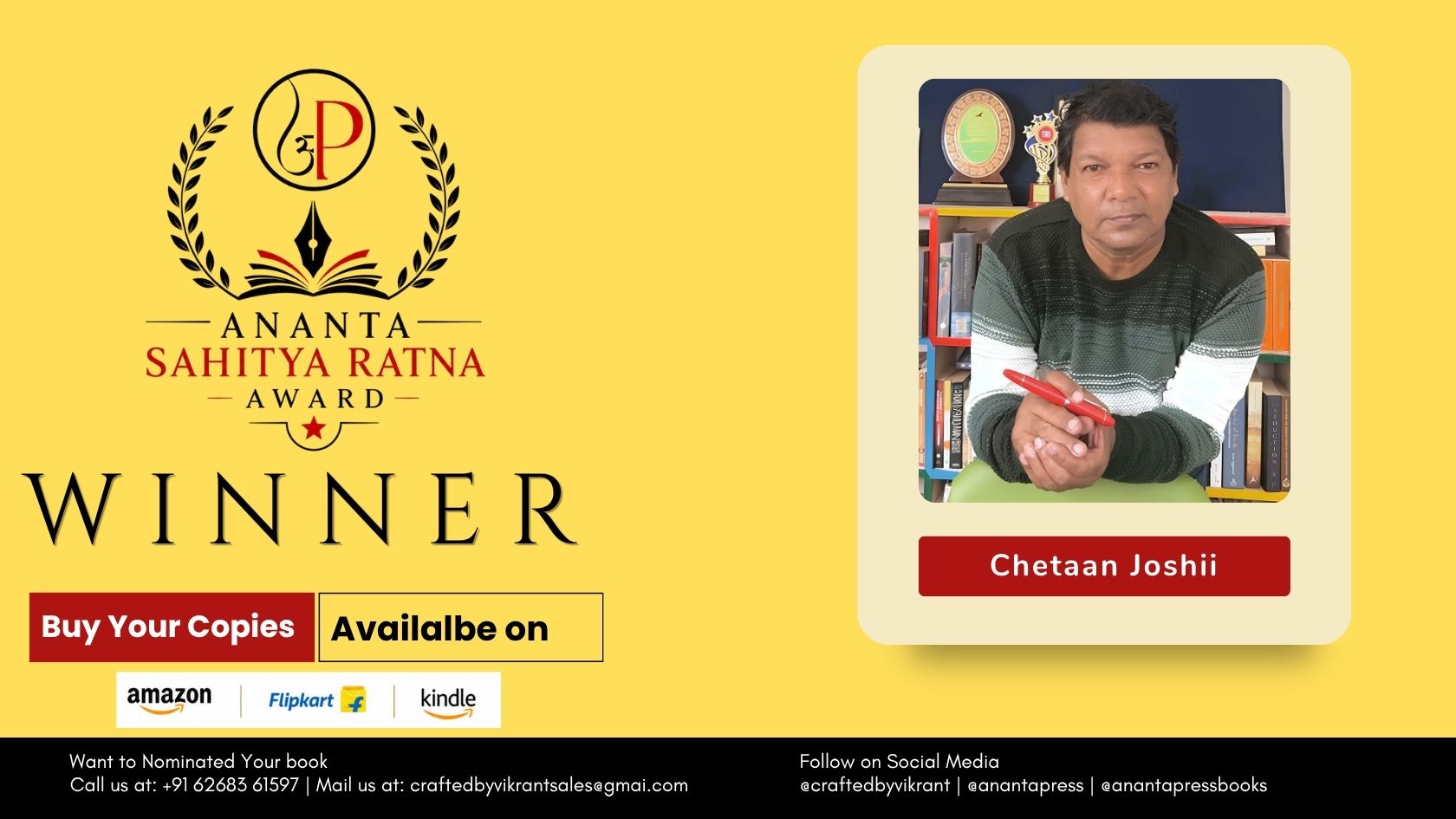
Chetaan Joshii’s CockTale Carnival Wins the Ananta Press Sahitya Ratna Award
Ananta Press is delighted to announce that CockTale Carnival by Chetaan Joshii has been selected as a Winner of the prestigious Ananta Press Sahitya Ratna Award. This recognition celebrates the book’s exceptional creativity, originality, and contribution to contemporary fiction by bringing together a remarkable variety of storytelling styles under one unique collection. The Ananta Press Sahitya Ratna Award honours authors whose works demonstrate literary excellence, creative vision, and the ability to connect deeply with readers. The award committee recognizes books that offer meaningful experiences, fresh perspectives, and memorable storytelling. After careful reading and evaluation by the jury members, CockTale Carnival has been selected for its distinctive approach to fiction and its celebration of imagination in multiple forms. Written by Chetaan Joshii, CockTale Carnival is a fascinating short story collection that explores an extraordinary range of genres including fantasy, surrealism, horror, humour, science fiction, realism, satire, and modern fables. The book is not limited by conventional storytelling boundaries. Instead, it creates a literary carnival where every story presents a different flavour, emotion, and perspective. The collection invites readers into a world filled with unusual characters and unexpected situations. From a man travelling on the same train every day in search of a mysterious place that appears only occasionally, to a composer who transforms a musical note into something extraordinary, each story introduces a fresh idea that challenges imagination. The book also explores the journeys of an actor willing to go to extreme lengths for a role, a writer who enters his own story to overcome writer’s block, a detective searching for a stolen heart, and a scientist who discovers love as a radioactive element. One of the strongest qualities of CockTale Carnival is its ability to move effortlessly between humour, emotion, mystery, and philosophical reflection. The stories are imaginative yet connected to human experiences. Through surreal situations and symbolic characters, Chetaan Joshii explores themes of identity, relationships, ambition, creativity, love, and the complexities of human nature. The award committee appreciated the book’s originality and its ability to appeal to a wide range of readers. By combining different genres into one collection, the author has created a unique reading experience where every story offers a new discovery. The collection does not follow a predictable pattern; instead, it keeps readers curious and engaged from one tale to another. The book’s strength also lies in its memorable characters. The author brings life to unusual personalities such as a duckling who questions the idea of being ugly, a peacock who discovers the true meaning behind confidence, and a mouse that redefines the concept of a mousetrap. These imaginative creations add charm to the collection while also carrying deeper messages about self-belief, perception, and transformation. The jury members found that CockTale Carnival represents the true spirit of storytelling, where creativity has no limitations. The book encourages readers to explore different emotions and ideas while enjoying stories that are entertaining, thought-provoking, and unpredictable. Through this award, Ananta Press celebrates Chetaan Joshii’s contribution to fiction and recognizes the artistic effort behind creating a collection that combines entertainment with literary exploration. CockTale Carnival stands as a reminder of the power of stories to surprise, inspire, and create lasting impressions. Ananta Press congratulates Chetaan Joshii on receiving the Ananta Press Sahitya Ratna Award. We wish the author continued success and hope that his imaginative storytelling continues to inspire readers and enrich the world of literature. Jury Feedback Glenville Ashby Reading CockTale Carnival was an enjoyable experience because the book successfully creates a space where imagination and storytelling come together in a very refreshing way. The collection stands out because every story carries a different mood, idea, and style. I appreciated how the author has explored multiple genres without losing the connection with readers. The stories move from humour to mystery, from fantasy to emotional reflections, making the reading journey unpredictable and exciting. The creativity shown in developing unusual characters and situations is one of the strongest aspects of the book. Each story feels like a new experience and encourages readers to look beyond traditional storytelling patterns. The author has demonstrated a strong understanding of imagination and human emotions. The ability to make readers smile, think, and feel different emotions within the same collection is a remarkable achievement. This book represents originality, creativity, and a genuine love for storytelling. Kavya Pandey CockTale Carnival is a unique collection that showcases the versatility and creative strength of Chetaan Joshii as a storyteller. While reading the book, I found the variety of genres and ideas especially impressive. The author has created stories that are not limited to one particular style but explore different dimensions of fiction. The collection has fantasy, humour, science fiction, satire, and emotional elements, which makes it suitable for readers with different interests. I enjoyed the way ordinary ideas are transformed into extraordinary situations through imaginative storytelling. The characters are unusual yet meaningful, and many stories carry deeper thoughts about human behaviour, relationships, and personal struggles. The writing style keeps the reader interested because every story brings a new surprise. The book reflects creativity, originality, and courage to experiment with different forms of fiction. It is a collection that celebrates the joy of reading and reminds us that stories can take us anywhere. Apeksha Gupta After reading CockTale Carnival, I found the book to be a wonderful celebration of imagination and creative storytelling. The author has successfully created a collection where every story has its own identity and emotional impact. What impressed me most was the ability of the writer to combine different genres while maintaining the interest of the reader. The stories are humorous, mysterious, emotional, and sometimes thought-provoking. The unusual characters and unique situations make the book different from traditional short story collections. The author has shown great creativity in presenting ideas that are surprising yet connected to human emotions. Behind the fantasy and surreal elements, there are meaningful observations about life, relationships, dreams, and personal challenges. The book encourages readers to think differently and enjoy the limitless