
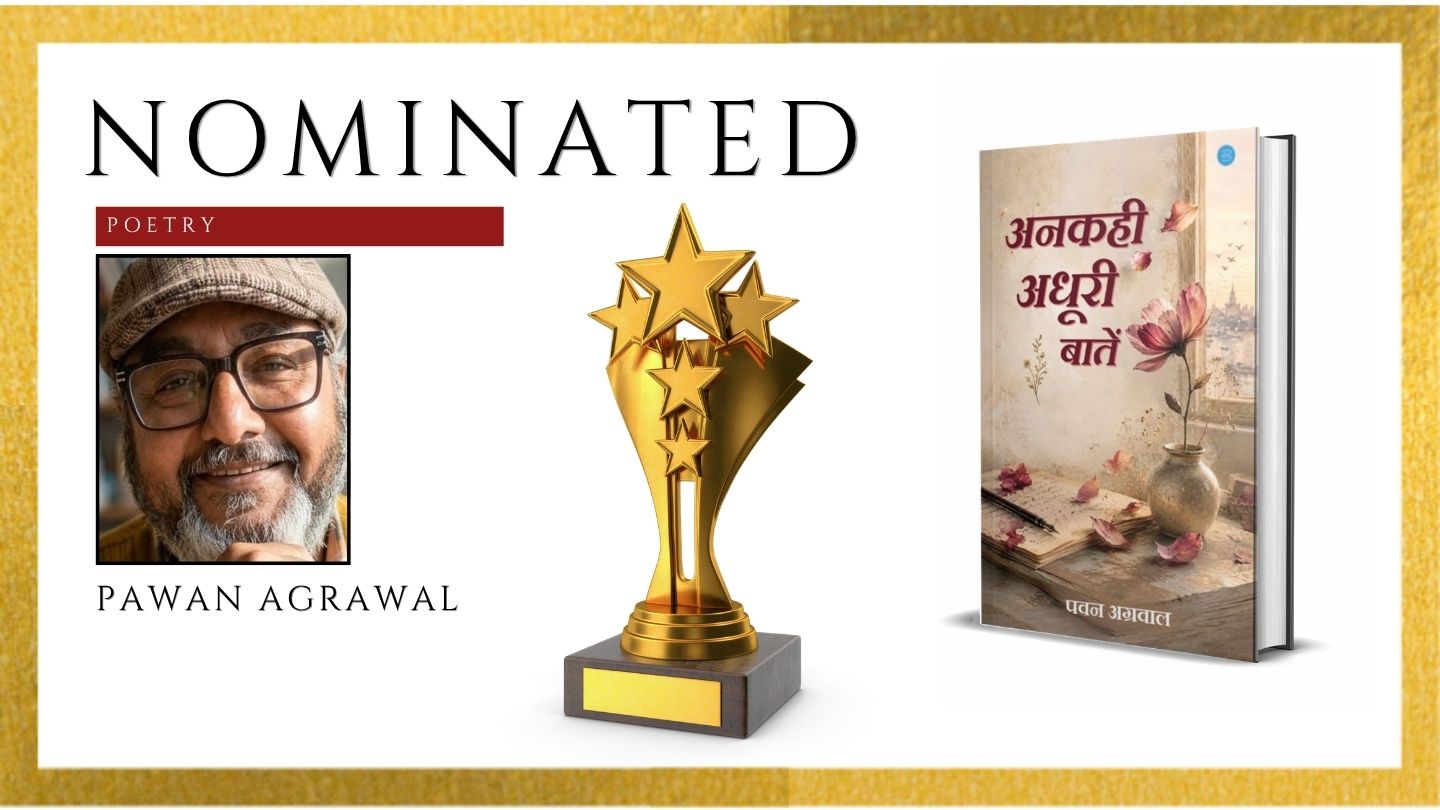
Ananta Press proudly announces the official nomination of Advocate Pawan Agrawal’s poetry collection “Ankahi Adhuri Baatein” for the prestigious Ananta Press Sahitya Ratna Award. This nomination celebrates the author’s heartfelt contribution to Hindi literature and recognizes his sincere effort to transform personal experiences, emotions, and observations of life into meaningful poetic expressions. The Ananta Press Sahitya Ratna Award is a distinguished literary recognition that celebrates authors whose works demonstrate originality, emotional depth, creative expression, and a valuable contribution to the world of literature. The award aims to honour writers who bring fresh perspectives, authentic voices, and impactful stories or ideas to readers across different genres. Pawan Agrawal’s “Ankahi Adhuri Baatein” is a remarkable collection of Hindi poems that reflects the many shades of human emotions experienced throughout life. Written over several years, the book captures moments of happiness, struggles, relationships, conflicts, and reflections that shape the human journey. Through his poetry, the author presents emotions and thoughts that often remain unspoken but deeply exist within every individual. The book explores various aspects of life, including marital relationships, sibling bonds, social realities, and the impact of a money-driven mindset on human values. With honesty and sensitivity, “Ankahi Adhuri Baatein” gives a poetic voice to feelings and experiences that many readers can relate to. The poems reflect simple yet powerful observations about everyday life, making the collection emotionally engaging and accessible. The Award Committee has recognized this book for its sincere portrayal of human emotions and its ability to connect personal experiences with universal feelings. The strength of “Ankahi Adhuri Baatein” lies in its authenticity—the poems are not written merely as literary compositions but as honest reflections of life, relationships, and inner thoughts. The book represents the beauty of expressing emotions through words and highlights how poetry can become a medium for self-expression and connection. Pawan Agrawal, an Advocate by profession, has nurtured a deep passion for Hindi literature alongside his professional journey. His writing emerges from personal experiences and the various circumstances that individuals encounter throughout life. For him, poetry is a way of shaping feelings into words, expressing thoughts that may not always be spoken aloud, and creating a meaningful dialogue between the writer and the reader. His approach towards writing is rooted in simplicity and honesty. Rather than focusing on complex philosophies, he brings forward genuine observations and emotions from everyday experiences. This ability to find literary value in ordinary moments adds a unique quality to his work and allows readers to discover their own emotions within his verses. Through “Ankahi Adhuri Baatein,” Pawan Agrawal has created a collection that encourages readers to pause, reflect, and connect with the emotions that define human relationships and experiences. The book serves as a reminder that behind every person’s journey, there are countless untold stories, incomplete conversations, and feelings waiting to be expressed. The nomination of “Ankahi Adhuri Baatein” for the Ananta Press Sahitya Ratna Award acknowledges not only the artistic value of the poetry collection but also the author’s dedication to preserving the emotional richness of Hindi literature. His work represents the power of words to heal, inspire, and bring people closer through shared experiences. Ananta Press congratulates Advocate Pawan Agrawal on this well-deserved nomination for the Ananta Press Sahitya Ratna Award. We extend our heartfelt wishes for his continued literary journey and hope that his poetry continues to inspire readers and contribute meaningfully to the world of Hindi literature.
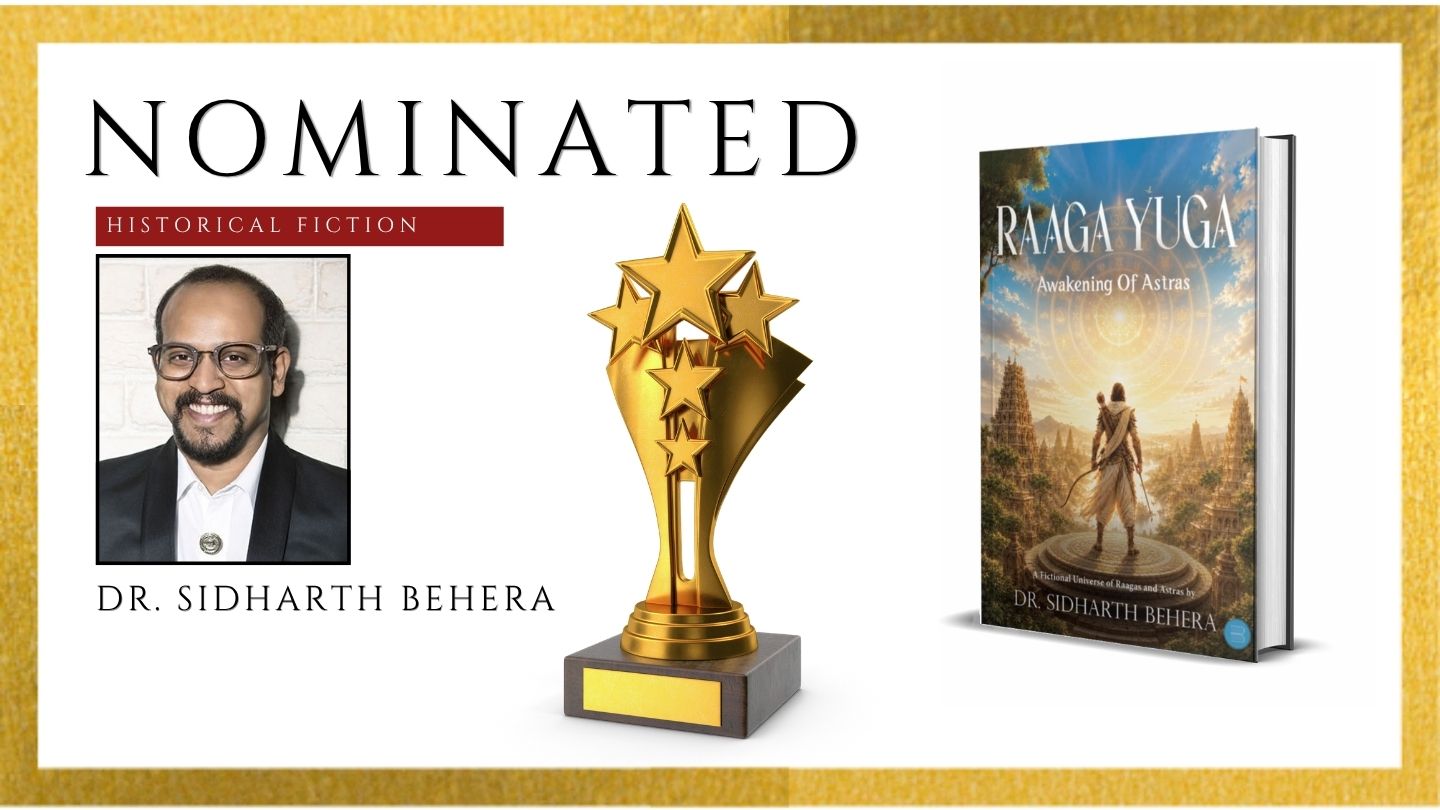
Dr. Sidharth Behera’s “Raaga Yuga: Awakening Of Astras” Officially Nominated for the Ananta Press Sahitya Ratna Award
Ananta Press is delighted to announce the official nomination of Dr. Sidharth Behera for the prestigious Ananta Press Sahitya Ratna Award for his remarkable work, “Raaga Yuga: Awakening Of Astras” under the category of Historical Fiction. We extend our heartfelt congratulations to Dr. Sidharth Behera on this significant recognition. Through his imaginative storytelling, deep connection with Indian mythology, and ability to transform ancient wisdom into a captivating modern narrative, Dr. Behera has created a work that reflects the power of literature to inspire, entertain, and transport readers into extraordinary worlds. The Ananta Press Sahitya Ratna Award celebrates exceptional literary contributions by recognizing authors whose works demonstrate originality, creativity, meaningful storytelling, and a lasting impact on readers. The award aims to honour writers who bring fresh perspectives to literature and contribute towards enriching the literary landscape through their dedication and vision. About the Book: “Raaga Yuga: Awakening Of Astras” “Raaga Yuga: Awakening Of Astras” introduces readers to a breathtaking world where mythology, adventure, mystery, and ancient knowledge come together in an epic fantasy experience. The story begins when an ancient Astra awakens beneath a cursed forest, setting into motion a forgotten prophecy that has the power to change the destiny of the universe. The protagonist, Arhaan, marked by the Seal of Rudra, finds himself drawn into a hidden world of divine weapons, lost raagas, mysterious realms, and powerful secrets that can rewrite reality itself. As gods, guardians, and shadows collide, Arhaan embarks on a journey to gather the legendary Astras before the forbidden Kaalastra rises and brings eternal darkness upon existence. The narrative beautifully explores the connection between sound, memory, power, and destiny, presenting a unique concept where every raaga-song carries the potential of a weapon and every memory holds the strength to shape reality. The book stands out for its imaginative world-building, its exploration of Indian mythological elements, and its ability to present traditional concepts through a contemporary storytelling approach. By combining ancient cultural references with a fast-paced adventure narrative, “Raaga Yuga: Awakening Of Astras” creates an immersive experience for readers who seek stories filled with wonder, mystery, and deeper meaning. Reason Behind the Nomination The Ananta Press Sahitya Ratna Award committee has recognized “Raaga Yuga: Awakening Of Astras” for its distinctive approach to storytelling and its contribution to the genre of historical fiction inspired by Indian heritage and mythology. The book demonstrates remarkable originality by reimagining the concept of Astras, divine energies, and forgotten legends within a fictional universe crafted for modern readers. Dr. Behera’s storytelling reflects a strong understanding of mythology, philosophy, and ancient wisdom while presenting these elements in a way that connects with contemporary audiences. The novel’s strength lies not only in its adventurous narrative but also in its underlying themes of responsibility, courage, destiny, and the relationship between knowledge and power. Through Arhaan’s journey, readers are encouraged to explore ideas of self-discovery, perseverance, and the importance of protecting wisdom that has been passed through generations. The committee acknowledges the book’s ability to create a bridge between India’s rich cultural imagination and modern fantasy storytelling. “Raaga Yuga: Awakening Of Astras” represents a creative effort to preserve the essence of ancient narratives while introducing them to a new generation of readers. About the Author: Dr. Sidharth Behera Dr. Sidharth Behera is an author, entrepreneur, and visionary storyteller whose creative work draws inspiration from Indian mythology, philosophy, and timeless wisdom. His passion for reimagining traditional legends for modern audiences is reflected in his approach to storytelling, where he combines epic adventures with spiritual depth and cinematic imagination. Through “Raaga Yuga: Awakening Of Astras,” Dr. Behera showcases his ability to build a vast fictional universe while maintaining a connection with India’s cultural roots. His work represents a commitment to exploring meaningful themes through engaging narratives and creating stories that remain memorable for readers. A Celebration of Literary Vision The nomination of Dr. Sidharth Behera for the Ananta Press Sahitya Ratna Award celebrates not only a remarkable book but also the creative vision behind it. “Raaga Yuga: Awakening Of Astras” reflects the possibilities of storytelling when imagination, heritage, and innovation come together. Ananta Press congratulates Dr. Sidharth Behera on this well-deserved nomination and appreciates his valuable contribution to literature. We wish him continued success in his literary journey and hope that his storytelling continues to inspire readers, encourage imagination, and bring the richness of Indian narratives to audiences across the world. Warmest congratulations to Dr. Sidharth Behera for his official nomination for the Ananta Press Sahitya Ratna Award.
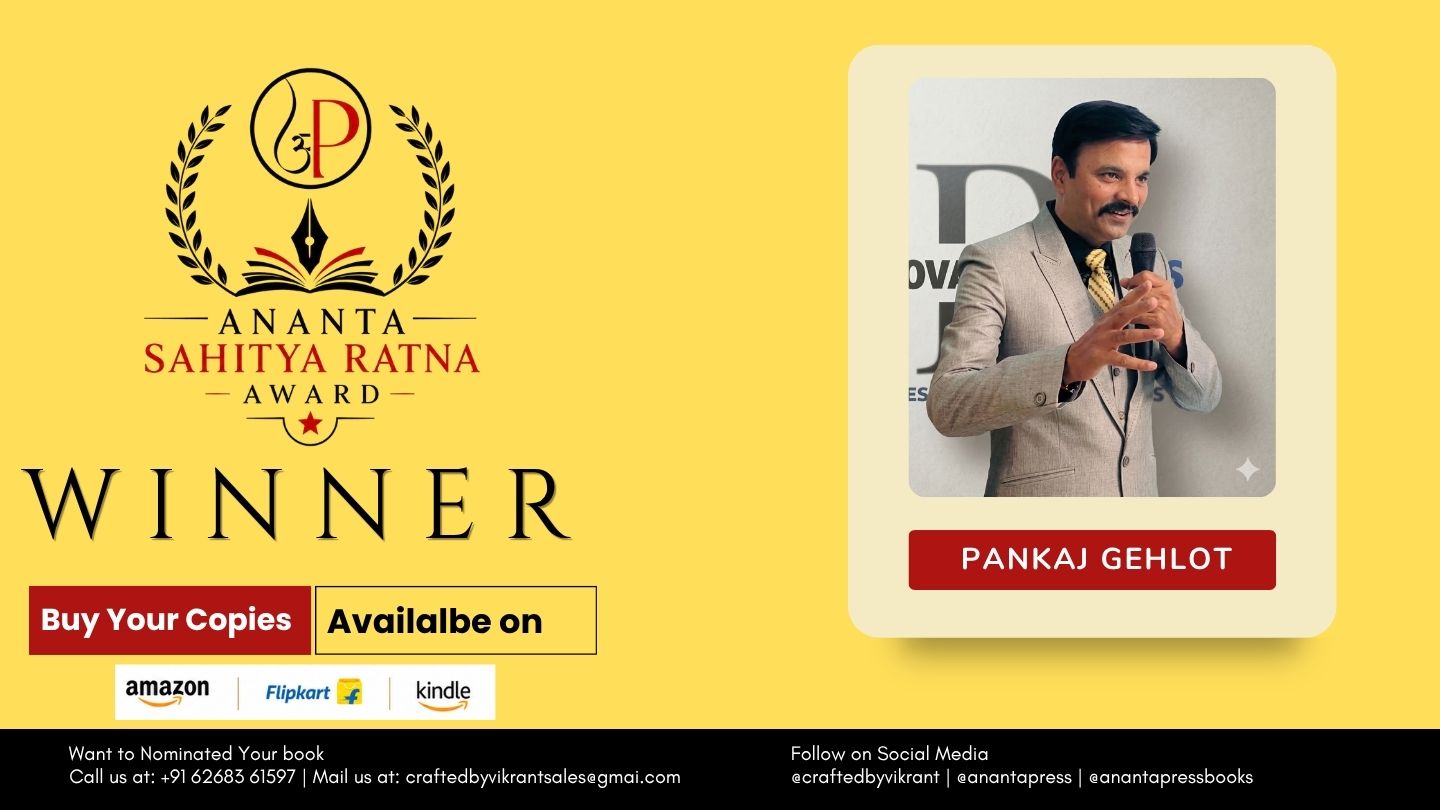
Pankaj Gehlot’s “Crossroad: Choosing Your Path” Wins Ananta Press Sahitya Ratna Award
Ananta Press proudly congratulates Pankaj Gehlot for being selected as the official Winner of the prestigious Ananta Press Sahitya Ratna Award for his insightful and impactful book, “Crossroad: Choosing Your Path.” This recognition celebrates his meaningful contribution to literature and his effort to address one of the most important decisions faced by students and families during their academic journey. “Crossroad: Choosing Your Path” is a thoughtfully written self-help and motivational book that focuses on the crucial stage when Grade 10 students stand at an important turning point in their lives. The decision of choosing the right academic stream often brings confusion, expectations, and pressure. Through this book, Pankaj Gehlot presents a guiding voice that helps students and parents understand the importance of self-discovery, personal interests, and informed decision-making. Unlike traditional career guidance books that mainly provide lists of options and information, “Crossroad: Choosing Your Path” takes a narrative-driven approach. The book uses real-life situations and relatable experiences to highlight the emotional challenges students and families face while selecting between Science, Commerce, Arts, or alternative career paths. It encourages young readers to understand themselves better and make choices that connect with their own abilities, dreams, and aspirations. The Ananta Press Sahitya Ratna Award recognizes authors whose literary works create meaningful conversations, inspire readers, and contribute positively to society. The award committee carefully evaluates books based on their originality, message, literary value, and the impact they create among readers. After reviewing “Crossroad: Choosing Your Path,” the committee appreciated the book’s practical relevance, emotional depth, and its ability to address a universal concern faced by students across different educational boards including CBSE, ICSE, IB, IGCSE, and State Boards. The selection committee found the book especially valuable because of its balanced approach. It does not simply focus on academic decisions but also explores the emotional and psychological aspects connected with career choices. The book encourages parents and children to communicate openly, understand each other’s perspectives, and move beyond social pressure while making important life decisions. Pankaj Gehlot’s writing reflects a strong understanding of student experiences and family dynamics. His approach transforms a complex decision-making process into an engaging and supportive journey of self-exploration. The book’s message of choosing authentically and confidently makes it a valuable resource for students, parents, educators, and anyone involved in guiding young minds. Through “Crossroad: Choosing Your Path,” Pankaj Gehlot has created more than just a guidance book. He has developed a conversation starter that encourages young individuals to discover their strengths, respect their individuality, and build a future based on their own potential. The book represents the importance of literature that connects with real-life challenges and provides positive direction to readers. Ananta Press celebrates Pankaj Gehlot’s achievement and acknowledges his dedication toward creating literature that carries a meaningful purpose. His work stands as an example of how writing can educate, motivate, and bring positive change to society. We extend our heartfelt congratulations to Pankaj Gehlot for this remarkable achievement and wish him continued success in his literary journey. May his words continue to inspire countless students and families, guiding them toward confidence, clarity, and self-belief. Jury Feedback for “Crossroad: Choosing Your Path” Glenville Ashby After reading “Crossroad: Choosing Your Path” by Pankaj Gehlot, I found the book to be a thoughtful and meaningful contribution to student guidance literature. The book successfully captures the confusion and emotional pressure that many students experience when they reach the stage of selecting their academic stream. The strength of this book is its ability to present serious concerns in a simple and relatable way. Instead of giving only theoretical advice, the author connects with readers through realistic situations and human experiences. The book creates awareness that choosing a career path should not be based only on external expectations but should involve self-understanding and personal interest. I appreciated the way the author included the perspective of both students and parents, making it useful for families as a whole. The writing style is engaging and easy to understand, which makes the message accessible to young readers. This book carries an important social message and encourages healthier conversations between parents and children. It deserves recognition for addressing a common challenge with sensitivity and practical wisdom. Kavya Pandey “Crossroad: Choosing Your Path” is a valuable book that addresses one of the most important phases in a student’s life. Pankaj Gehlot has presented the topic of stream selection with great understanding and emotional awareness. While many students face uncertainty after Grade 10, they often lack proper guidance that considers both their dreams and personal abilities. This book fills that gap by providing guidance through stories, experiences, and practical viewpoints. The most impressive aspect of the book is that it does not force readers toward any particular career option. Instead, it encourages students to explore themselves and make decisions with confidence. The author has beautifully highlighted the importance of communication between parents and children. The book also recognizes that every student has a different journey and should not be compared with others. I believe the book has strong relevance for today’s generation because academic choices are often influenced by pressure and expectations. Pankaj Gehlot’s work provides encouragement, clarity, and emotional support, making it a meaningful read for students, parents, and educators. Apeksha Gupta Reading “Crossroad: Choosing Your Path” was an insightful experience because the book focuses on a topic that affects millions of students and families. Pankaj Gehlot has approached the subject with sensitivity and understanding. The journey of choosing a stream after Grade 10 can be challenging, and the author has successfully explained the emotional struggles, doubts, and expectations connected with this decision. The narrative style of the book makes it different from ordinary career guidance resources. The use of relatable stories helps readers connect with the situations and understand that confusion during this phase is normal. The book provides a balanced perspective by discussing academic choices along with emotional and psychological factors. I found the message of self-discovery to be the strongest element of this book. It
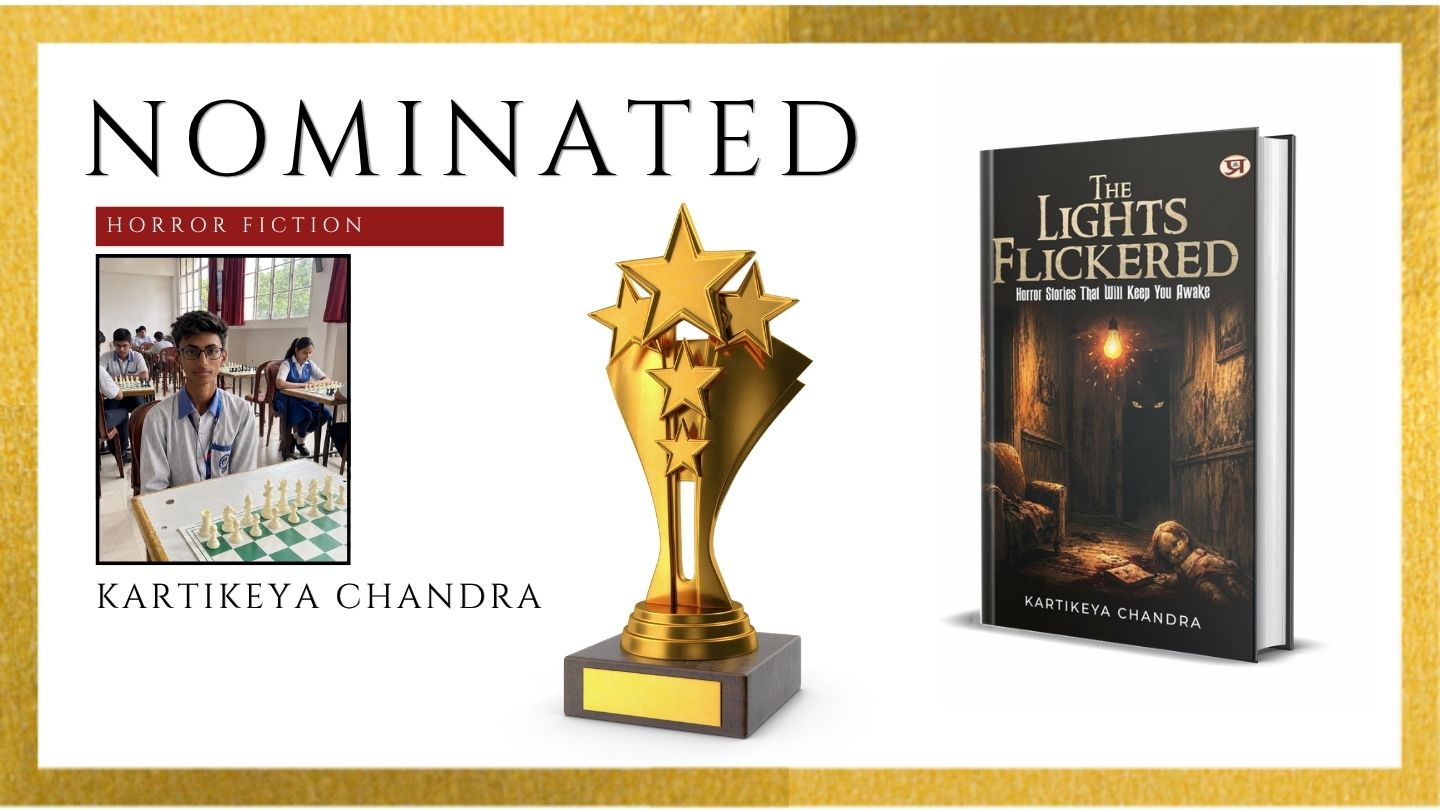
Kartikeya Chandra Officially Nominated for the Ananta Press Sahitya Ratna Award for The Lights Flickered
Ananta Press proudly congratulates author Kartikeya Chandra on the official nomination of his debut horror fiction collection, The Lights Flickered: Horror Stories That Will Keep You Awake, for the prestigious Ananta Press Sahitya Ratna Award. This nomination recognizes a promising new literary voice whose imagination, understanding of fear, and ability to transform ordinary situations into unsettling experiences have given his debut collection a distinctive identity within contemporary horror fiction. A Journey Into Fear, Mystery, and the Unknown The Lights Flickered is a collection of fictional horror stories that explores fear through different characters, settings, circumstances, and emotional experiences. Instead of limiting horror to conventional ghosts or supernatural creatures, Kartikeya Chandra expands the genre by examining the unsettling possibilities that exist within both the external world and the human mind. Readers are transported from abandoned houses and forgotten roads to seemingly ordinary places where reality suddenly begins to feel uncertain. Familiar surroundings become threatening, shadows become questionable, and simple moments can evolve into situations filled with suspense and dread. The collection combines supernatural horror, psychological suspense, mystery, atmospheric storytelling, and unexpected twists, creating stories designed not merely to frighten readers momentarily but to remain in their thoughts after the final page. The book’s haunting idea is captured effectively in its memorable line: “When the light flickers, not every shadow is imagined.” That single thought reflects the larger literary atmosphere Kartikeya creates throughout the collection—a world where readers are encouraged to question whether fear comes from what exists in the darkness or from what the human mind believes may be hiding there. Why The Lights Flickered Earned Its Nomination The Ananta Press Sahitya Ratna Award committee recognizes literary works that demonstrate creativity, originality, meaningful storytelling, reader engagement, and the ability to contribute something distinctive to their chosen genre. The Lights Flickered attracted the committee’s attention because of its broader interpretation of horror. The stories explore not only supernatural encounters but also deeply human emotions such as guilt, curiosity, isolation, uncertainty, loneliness, and fear of the unknown. By bringing psychological fears together with mysterious or supernatural situations, Kartikeya creates horror that works on more than one level. Fear becomes both an external threat and an internal experience. This approach gives the collection greater literary value because readers are invited not simply to observe frightening events but to experience the uncertainty surrounding them. The psychological element encourages readers to question perception, memory, imagination, and reality. Another notable strength of the collection is its variety. Every story introduces a different environment, new characters, and a new nightmare. This structure allows readers to encounter multiple forms of suspense while maintaining the larger atmosphere of darkness that unifies the book. The committee also appreciates the author’s commitment to creating suspenseful storytelling with haunting endings and unexpected turns. A successful horror story often depends upon atmosphere and anticipation rather than constant shock, and The Lights Flickered seeks to build precisely that sense of unease. A Promising Debut by Kartikeya Chandra For Kartikeya Chandra, The Lights Flickered represents more than the publication of a book—it marks the beginning of his journey as an author. His fascination with ghost stories, unexplained incidents, urban legends, mysteries, and events beyond ordinary human understanding gradually developed into a passion for storytelling. Through writing, he found a way to transform those interests into fictional worlds capable of entertaining readers while simultaneously disturbing their sense of certainty. Kartikeya’s philosophy toward horror is especially significant. He believes that true horror does not originate only from monsters or ghosts; some of the most powerful fears already exist within the human mind. This understanding shapes the identity of his debut collection. His effort to create suspenseful atmospheres, memorable characters, mysterious situations, and surprising conclusions demonstrates an awareness that effective horror must do more than provide frightening imagery. It must create anticipation, emotional tension, and questions that remain unanswered even after the story ends. As a debut author, Kartikeya Chandra shows the courage to enter a genre that depends heavily upon originality and atmosphere. His nomination acknowledges both the work represented by The Lights Flickered and the creative potential reflected in his developing literary voice. The Significance of the Ananta Press Sahitya Ratna Award Nomination The Ananta Press Sahitya Ratna Award celebrates authors and books that contribute meaningfully to literature across different genres and categories. The nomination process aims to recognize books that deserve wider literary attention while appreciating authors who bring imagination, dedication, individuality, and meaningful perspectives to readers. Being officially nominated is therefore an important milestone in an author’s literary journey. For Kartikeya Chandra, the nomination of The Lights Flickered in the Horror Fiction category recognizes his attempt to approach fear through multiple dimensions—supernatural, psychological, mysterious, and emotional. It also acknowledges the potential of emerging writers who are willing to experiment with atmosphere, storytelling, and the darker corners of human imagination. Celebrating a New Voice in Horror Fiction Horror literature has always allowed readers to confront the unknown from the safety of a page. Its strongest stories do not simply frighten—they create questions, challenge assumptions, and reveal how vulnerable ordinary life can become when certainty disappears. The Lights Flickered embraces this tradition while presenting Kartikeya Chandra’s own imaginative interpretation of fear. Ananta Press extends its heartfelt congratulations to Kartikeya Chandra on the official nomination of The Lights Flickered: Horror Stories That Will Keep You Awake for the Ananta Press Sahitya Ratna Award. We wish him continued success throughout his literary journey and hope this nomination becomes one of many important milestones in his career as a storyteller. May his imagination continue to lead readers into mysterious places, unexpected realities, and unforgettable stories—and may every flickering light remind them that sometimes the most powerful horror begins with the smallest uncertainty. Congratulations, Kartikeya Chandra, on this well-deserved literary recognition and nomination.
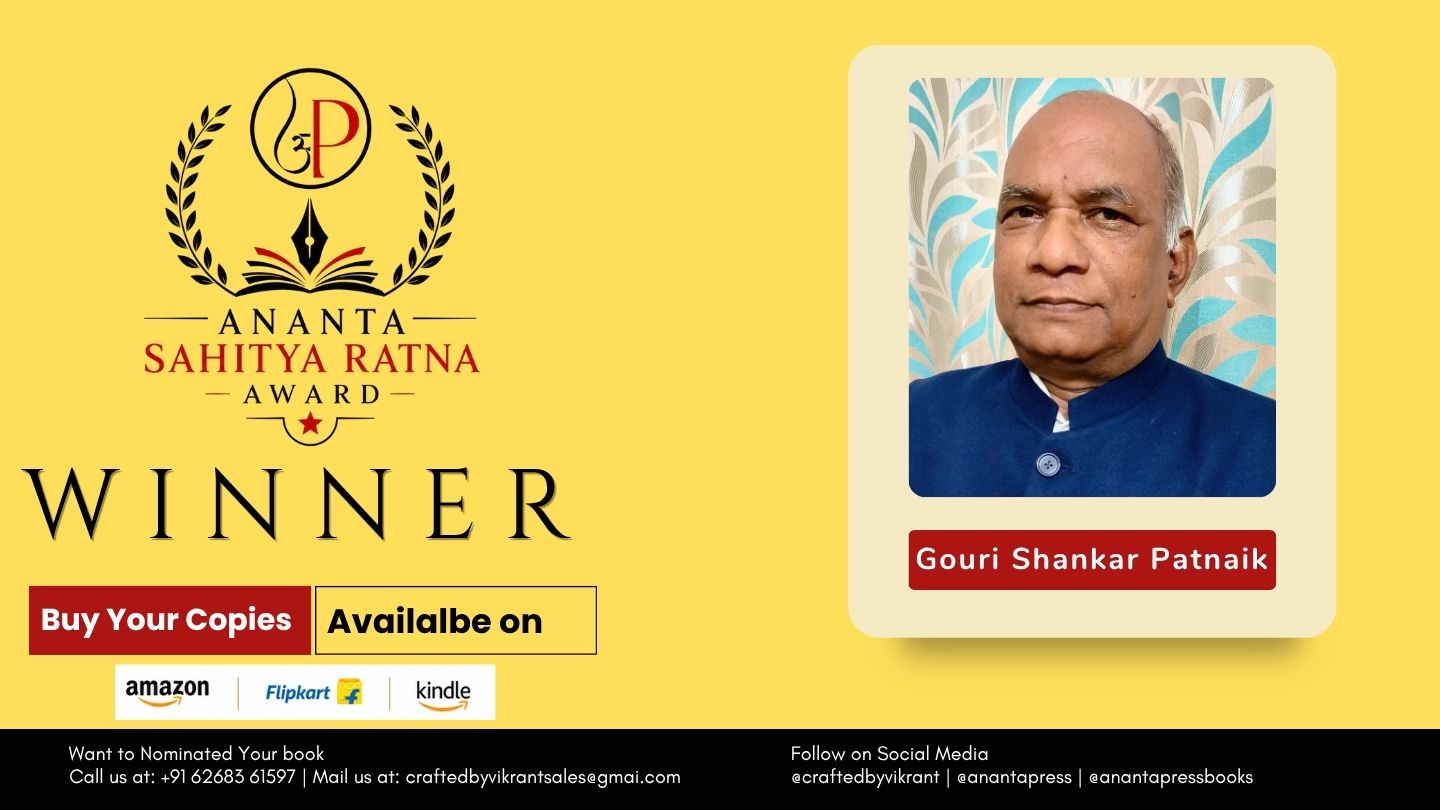
Relationship Revolution: Transforming Customers into Brand Ambassadors by Gouri Shankar Patnaik Wins the Ananta Press Sahitya Ratna Award
Ananta Press is delighted to congratulate Gouri Shankar Patnaik on being officially selected as a Winner of the Ananta Press Sahitya Ratna Award for his insightful non-fiction book, Relationship Revolution: Transforming Customers into Brand Ambassadors. The award recognizes meaningful literary and intellectual contributions that offer readers knowledge, perspective, originality, and lasting value. Relationship Revolution stands out as a thoughtful work that connects the principles of Customer Relationship Management with one of the most important goals of modern business: building relationships strong enough to transform satisfied customers into genuine supporters and ambassadors of a brand. At its heart, the book presents Customer Relationship Management not simply as a technology or business system, but as a wider managerial philosophy. It explains how organizations can understand customers more deeply, improve communication, build trust, deliver better experiences, and create stronger connections throughout the customer lifecycle. One of the important strengths recognized by the award committee is the balance between academic understanding and practical application. The book discusses CRM concepts, benefits, technologies, implementation approaches, marketing, sales, and service without allowing technical details to overshadow the human purpose of relationship management. This makes the work relevant to students who are learning the subject, professionals who want to apply CRM principles, and industry leaders who are responsible for customer-focused growth. The structure of the book also makes it approachable. Readers do not necessarily have to follow a strict sequence from the first chapter to the last. They can enter the discussion according to their interests and requirements. This flexibility increases the book’s usefulness as both an educational resource and a professional reference. Through Relationship Revolution, Gouri Shankar Patnaik contributes to an important conversation about how businesses should view customers. The book encourages organizations to move beyond transactions and focus on relationships, trust, service, understanding, and long-term value. This clear and relevant message was an important factor in its recognition by the Ananta Press Sahitya Ratna Award committee. Reviewer Feedback Glenville Ashby After reading Relationship Revolution: Transforming Customers into Brand Ambassadors, Glenville Ashby appreciated the clarity with which the book explains the wider meaning of Customer Relationship Management. In his feedback, he observed that the author does not treat CRM as only a software system or a collection of business tools. Instead, the book presents it as a long-term approach to understanding customers and building stronger relationships with them. He particularly valued the connection between customer experience, loyalty, trust, and brand advocacy. According to his assessment, the book succeeds because it remains informative without becoming unnecessarily complicated. The discussion can be useful to a student learning CRM for the first time and equally relevant to a professional looking for practical direction. He also appreciated the way the author connects marketing, sales, and service with the complete customer journey. He found the central idea of developing customers into brand ambassadors both timely and meaningful for modern organizations. Kavya Pandey Kavya Pandey found Relationship Revolution valuable because of its simple approach to a subject that can often become highly technical. In her feedback, she noted that Gouri Shankar Patnaik has created a book that gives importance to technology while keeping the customer at the centre of the discussion. She appreciated that the book explains how CRM can contribute to business growth when it is connected with customer understanding, communication, service, and relationship building. For her, one of the strongest aspects of the book is its usefulness for different categories of readers. Students can use it to understand important concepts, working professionals can relate the ideas to practical situations, and managers can use it to think more carefully about customer-focused strategies. She also liked the flexible structure of the book, which allows readers to explore individual chapters according to their interests. She felt that the book carries a clear message that lasting brands are built through meaningful relationships rather than transactions alone. Apeksha Gupta Apeksha Gupta described the book as a thoughtful contribution to the understanding of modern customer relationships and brand development. She appreciated the author’s decision to connect Customer Relationship Management with customer advocacy rather than limiting the discussion to customer acquisition or sales. In her reading, this gives the book a wider purpose. It encourages businesses to consider what happens after a customer makes a purchase and how continued service, communication, understanding, and trust can develop into long-term loyalty. She also noted that the book maintains a balanced tone and explains CRM from a managerial point of view. This makes complex ideas easier to understand and apply. The combination of academic relevance and practical usefulness was another quality she valued. She believed that the book can help readers understand why customer relationships have become an important part of brand strategy. According to her feedback, the author’s focus on turning satisfied customers into genuine brand ambassadors gives the book a clear identity and contemporary relevance. Kavita Kaushik Kavita Kaushik appreciated the strong relationship-focused message of Relationship Revolution. In her feedback, she observed that many business discussions focus heavily on acquiring customers, increasing sales, and implementing new technologies. This book goes further by asking how organizations can maintain relationships and create positive experiences that encourage customers to remain connected with a brand. She found this approach practical and relevant. She particularly appreciated the book’s coverage of the customer lifecycle and the relationship between marketing, sales, service, technology, and customer understanding. In her view, the author has presented these areas as connected parts of one larger strategy instead of treating them separately. She also found the language and organization suitable for readers with different levels of professional or academic experience. The idea that customers can become active supporters of a brand when they feel understood and valued was, for her, the strongest message of the book. She considered the work useful for anyone interested in customer-focused business growth. Neel Preet Neel Preet found the book’s central concept both relevant and easy to connect with contemporary business practices. In his feedback, he highlighted that Relationship Revolution explains why businesses must look
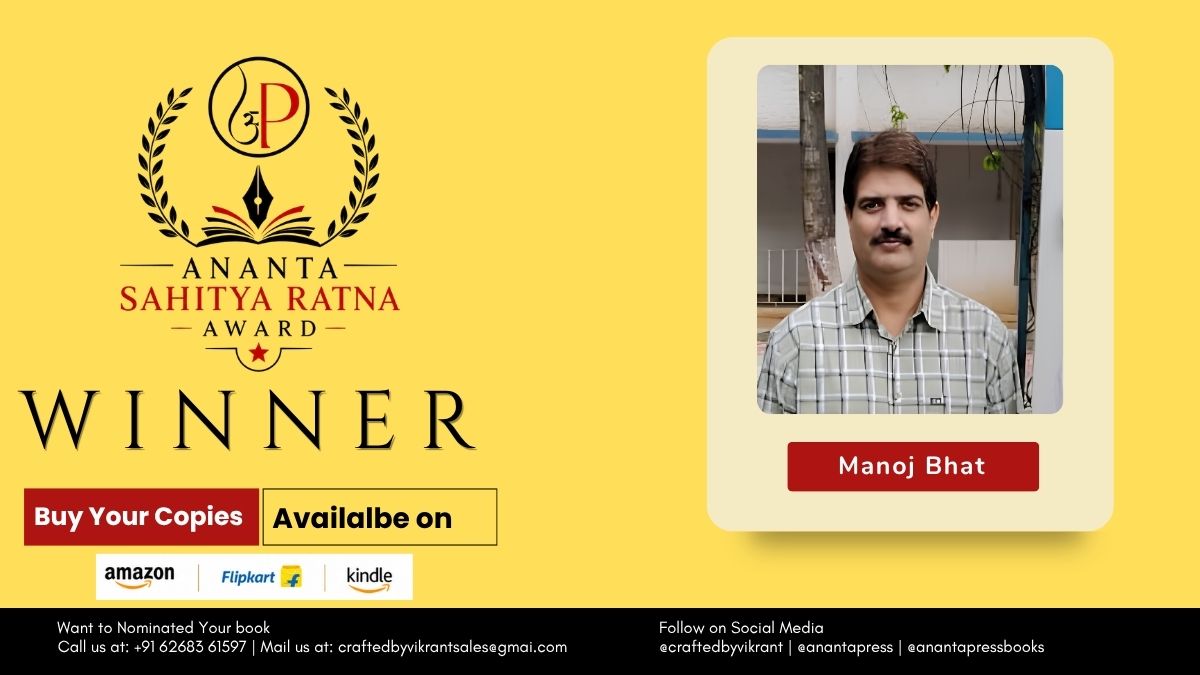
Mirth in Life by Manoj Bhat Wins the Ananta Press Sahitya Ratna Award
Ananta Press is delighted to congratulate author Manoj Bhat on being officially selected as a Winner of the Ananta Press Sahitya Ratna Award for his thoughtful fiction work, Mirth in Life. Mirth in Life is a story that looks beyond material success and explores a question that remains important for people of every generation: What truly makes a person happy? Through the journey of young Rohan and his close friends Gurdeep, Akriti, Irfan, and Tapas, Manoj Bhat creates a narrative centred on friendship, self-discovery, emotional struggles, regrets, hope, and the search for lasting peace. Rohan’s journey begins with an understanding of life that many people can easily relate to. Intelligence, achievement, and financial stability may appear to be signs of a successful life, but they do not always guarantee inner happiness. As the story develops, Rohan and his friends encounter different experiences that challenge their assumptions about success and fulfilment. These experiences gradually encourage them to look inward and understand the deeper values that shape a meaningful life. This emotional and philosophical foundation gives Mirth in Life its distinctive quality. Rather than presenting happiness as a simple destination, the book treats it as a process of understanding oneself, one’s relationships, one’s mistakes, and one’s values. The Ananta Press Sahitya Ratna Award recognises literary works that demonstrate meaningful storytelling, originality, reader value, thoughtful ideas, and the ability to contribute positively to contemporary literature. The award also aims to recognise authors whose work encourages readers to reflect, question, understand, and connect more deeply with the human experience. Mirth in Life was considered deserving of this recognition because of the way it combines an accessible fictional story with questions that carry wider emotional and philosophical significance. The central characters are not simply searching for pleasure or temporary excitement. Their journey is connected with the larger human desire for contentment, purpose, emotional balance, and peace. Another important element recognised by the award committee is the use of wisdom drawn from scriptures and meaningful messages throughout the characters’ journey. These elements allow the narrative to connect everyday struggles with deeper reflections about life. The book does not suggest that difficulties disappear once a person gains knowledge. Instead, it explores how understanding, determination, reflection, and meaningful values can influence the way people respond to hardship. The friendship among Rohan, Gurdeep, Akriti, Irfan, and Tapas also gives the book an important human dimension. Their shared experiences remind readers that the search for happiness is rarely an isolated journey. Conversations, relationships, disappointments, mistakes, support, and the lessons received from others can all contribute to personal growth. The selection committee also appreciated the relevance of the book’s central message in a time when achievement is often measured through money, status, intelligence, or external recognition. Mirth in Life invites readers to reconsider such definitions. It encourages them to ask whether success without emotional fulfilment can truly be called happiness. This makes the book more than a conventional fictional journey. Its literary value lies in its ability to use relatable characters and circumstances to introduce questions about happiness, purpose, regret, friendship, and inner peace. The simplicity of its central idea makes the message accessible, while the philosophical questions behind that idea allow readers to interpret the story according to their own experiences. Through Mirth in Life, Manoj Bhat has attempted to create a story that entertains while also encouraging reflection. Readers may recognise parts of their own struggles, ambitions, relationships, or unanswered questions within the experiences of Rohan and his friends. The Ananta Press Sahitya Ratna Award committee congratulates Manoj Bhat on this achievement and recognises Mirth in Life for its thoughtful message, emotional relevance, literary purpose, and contribution to readers seeking a deeper understanding of happiness. We extend our sincere best wishes to Manoj Bhat for his future literary journey. May Mirth in Life reach a wide readership, encourage meaningful conversations, and inspire readers to discover that genuine happiness may often be found not only in what we achieve, but also in what we understand, value, share, and become. Jury Feedback Glenville Ashby After reading Mirth in Life, I found its central question about happiness to be the strongest part of the book. Rohan and his friends are not presented as people who have all the answers. They experience confusion, regret, emotional difficulty, and the pressure to understand what makes life meaningful. This makes their journey relatable. I particularly appreciated the idea that intelligence and financial success do not automatically create inner peace. It is a simple thought, but the story gives readers enough situations to think about it seriously. The friendship between Rohan, Gurdeep, Akriti, Irfan, and Tapas also adds warmth to the narrative because their search is shared rather than completely individual. The references to scriptures and meaningful messages give another layer to the story without taking away from its human emotions. In my view, the book succeeds because it encourages readers to examine their own understanding of achievement, happiness, and fulfilment. It leaves behind questions that remain with the reader even after the story ends. Kavya Pandey What I appreciated most about Mirth in Life is the emotional simplicity with which Manoj Bhat approaches a very large subject. Happiness is something everyone desires, but people often define it differently. Through Rohan and his friends, the book explores how our ideas about happiness can change after facing disappointment, regret, struggle, and difficult experiences. The characters’ journey shows that growth does not happen only through success. Sometimes it comes from uncomfortable situations that make a person question earlier beliefs. I also liked the way friendship becomes an important part of this search. Gurdeep, Akriti, Irfan, Tapas, and Rohan have individual experiences, but their connection gives the story emotional strength. The spiritual and thoughtful messages included in the narrative encourage reflection without making the story dependent only on philosophy. For me, this book has value because it communicates an important message in an understandable form. Readers from different age groups can connect with its questions about peace, relationships, success,
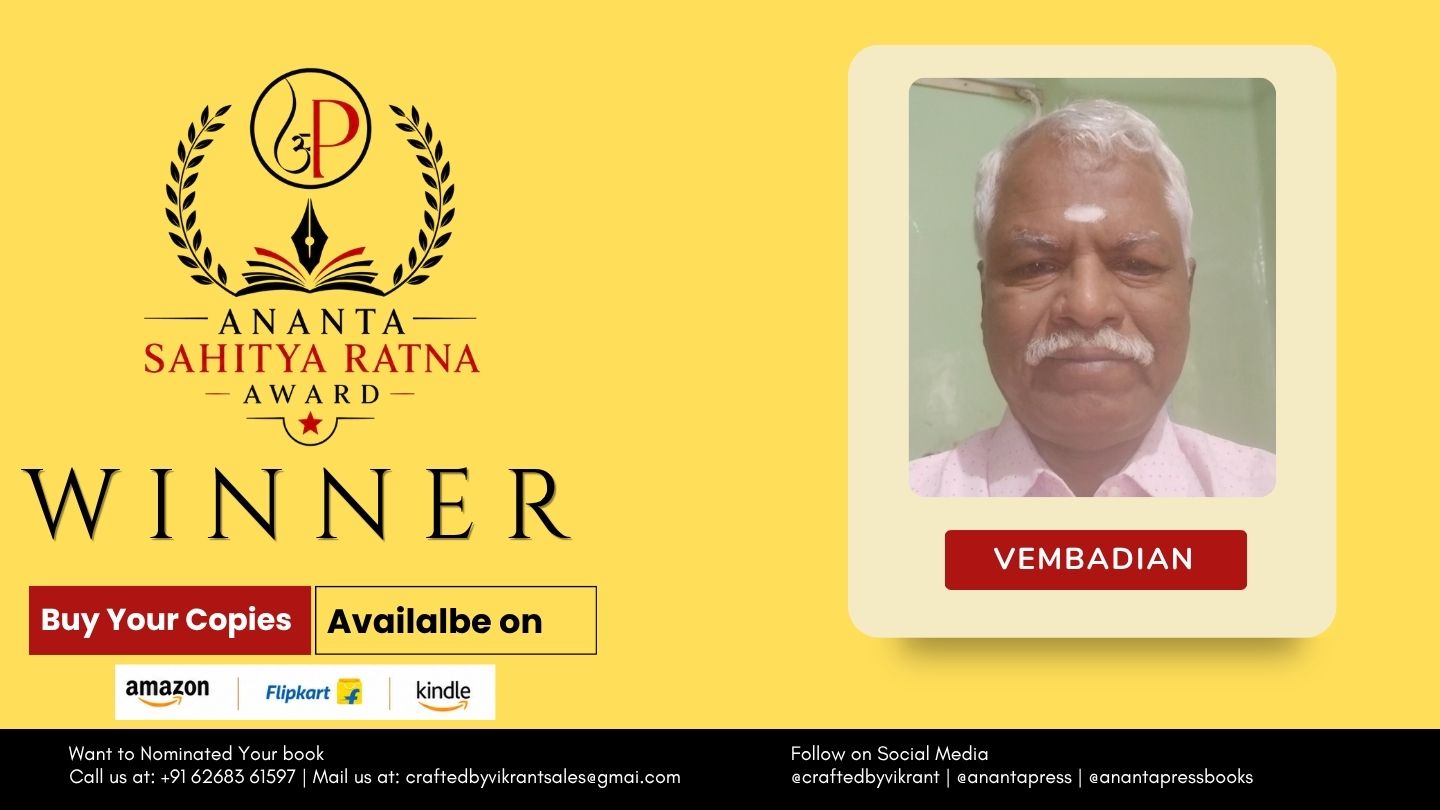
Justice Restored by VEMBADIAN Wins the Ananta Press Sahitya Ratna Award
Ananta Press is pleased to congratulate author VEMBADIAN on being officially selected as a Winner of the Ananta Press Sahitya Ratna Award for the novel Justice Restored in the Fiction (General) category. This recognition celebrates a work that combines a compelling human story with a thoughtful examination of responsibility, compassion, justice, and ethical leadership within public administration. Justice Restored tells the story of Mahesh Gupta, a sincere last-grade employee whose life is changed after a serious workplace accident. While receiving treatment, his medical condition becomes more complicated and he is transferred to Ranchi Mental Hospital. Because important information about his continued treatment does not reach the salary-drawing office, his absence is wrongly treated as unauthorised. His salary is stopped, he is eventually removed from service, and his family is pushed into prolonged financial and emotional hardship. The novel becomes especially powerful when the case reaches a newly appointed HRD Chief, Mohan. Instead of accepting old records and previous decisions without question, Mohan studies the matter closely. With the support of Senior HR Manager Mishra, he orders an on-ground investigation and discovers that Mahesh Gupta’s absence was connected to medical treatment rather than deliberate misconduct. The investigation exposes a serious communication failure and shows how administrative negligence can deeply affect an ordinary family. The award committee found the central idea of Justice Restored both socially relevant and emotionally meaningful. The novel does not treat bureaucracy only as an institution of files, rules, and procedures. It shows that every administrative decision can affect a real person, a family, an education, an income, and a future. Through Mahesh Gupta’s suffering, the story gives a human face to the consequences of delay, incomplete inquiry, and mechanical decision-making. Another important strength of the novel is its portrayal of ethical leadership. Mohan is not presented as someone who changes the system through dramatic power. He restores justice by asking questions, examining facts, understanding the human situation, and taking responsibility for correcting an earlier wrong. His approach reflects the book’s larger message that meaningful reform often begins when a responsible person chooses to act with both intelligence and empathy. The committee also appreciated the novel’s focus on accountability. Justice Restored demonstrates that an incorrect official decision should not become permanent merely because it has already been recorded. When new facts emerge, institutions have a duty to reconsider, correct mistakes, and protect fairness. The final decision to cancel Mahesh Gupta’s removal, retire him on medical grounds, settle his rightful benefits, and provide a compassionate appointment to his son gives the story a strong sense of moral closure. As a work of general fiction, Justice Restored stands out because it draws its conflict from an area of life that is rarely explored with such directness. Its subject is not distant from everyday society. It concerns the experience of ordinary citizens who often depend on administrative systems for salary, pension, retirement benefits, medical support, and family security. This makes the novel accessible, relevant, and capable of encouraging readers to think more deeply about the responsibilities attached to public service. The selection of Justice Restored for the Ananta Press Sahitya Ratna Award reflects the award’s purpose of recognising books that offer literary value along with meaningful ideas and social contribution. The work was considered for its clear message, distinctive subject, human concern, and its belief that justice is possible when determination, empathy, careful investigation, and responsible leadership come together. Ananta Press warmly congratulates VEMBADIAN on this achievement. Justice Restored is a reminder that fairness must be actively protected and that even a delayed wrong can be corrected when people are willing to examine the truth. We extend our best wishes to the author for continued literary success and for future works that engage readers with socially meaningful stories, thoughtful characters, and a strong sense of human values. Jury Feedback Drafts Glenville Ashby Justice Restored impressed me because it takes an administrative problem and turns it into a deeply human story. Mahesh Gupta’s suffering is not shown only through official records or procedural language. The reader sees how one communication failure affects his salary, dignity, family, and son’s education. I found the role of the new HRD Chief particularly effective because he does not accept the previous decision simply because it is already on file. He asks questions, orders an investigation, and tries to understand what actually happened. This gives the story a strong message about responsible leadership. The novel also reminds readers that rules should serve justice and not become an excuse for ignoring human circumstances. The final restoration of Mahesh Gupta’s rights and the compassionate appointment for his son provide meaningful closure. In my view, the book deserves recognition for combining social concern, emotional depth, and a clear belief that ethical action can correct institutional mistakes. Kavya Pandey What stayed with me most in Justice Restored was the emotional impact of administrative negligence on an ordinary family. Mahesh Gupta is a sincere worker who suffers an accident while performing his duty, yet circumstances beyond his control lead to his absence being misunderstood. The tragedy becomes greater because the system fails to connect his medical treatment with his employment record. The author presents this situation in a simple manner that makes the injustice easy to understand. I also appreciated the contrast between careless decision-making and the thoughtful approach of the new HRD Chief. Mohan’s willingness to investigate the matter shows how empathy and responsibility can change the outcome of a case. The novel carries a useful message for readers in every profession: decisions should be made only after understanding the complete facts. It is not merely a story about pension or service rules. It is about dignity, accountability, family hardship, and the importance of correcting a wrong. Apeksha Gupta I found Justice Restored meaningful because its central conflict grows from a realistic situation rather than an artificial dramatic event. A worker suffers a serious injury, enters prolonged medical treatment, and then becomes a victim of a communication gap between institutions.
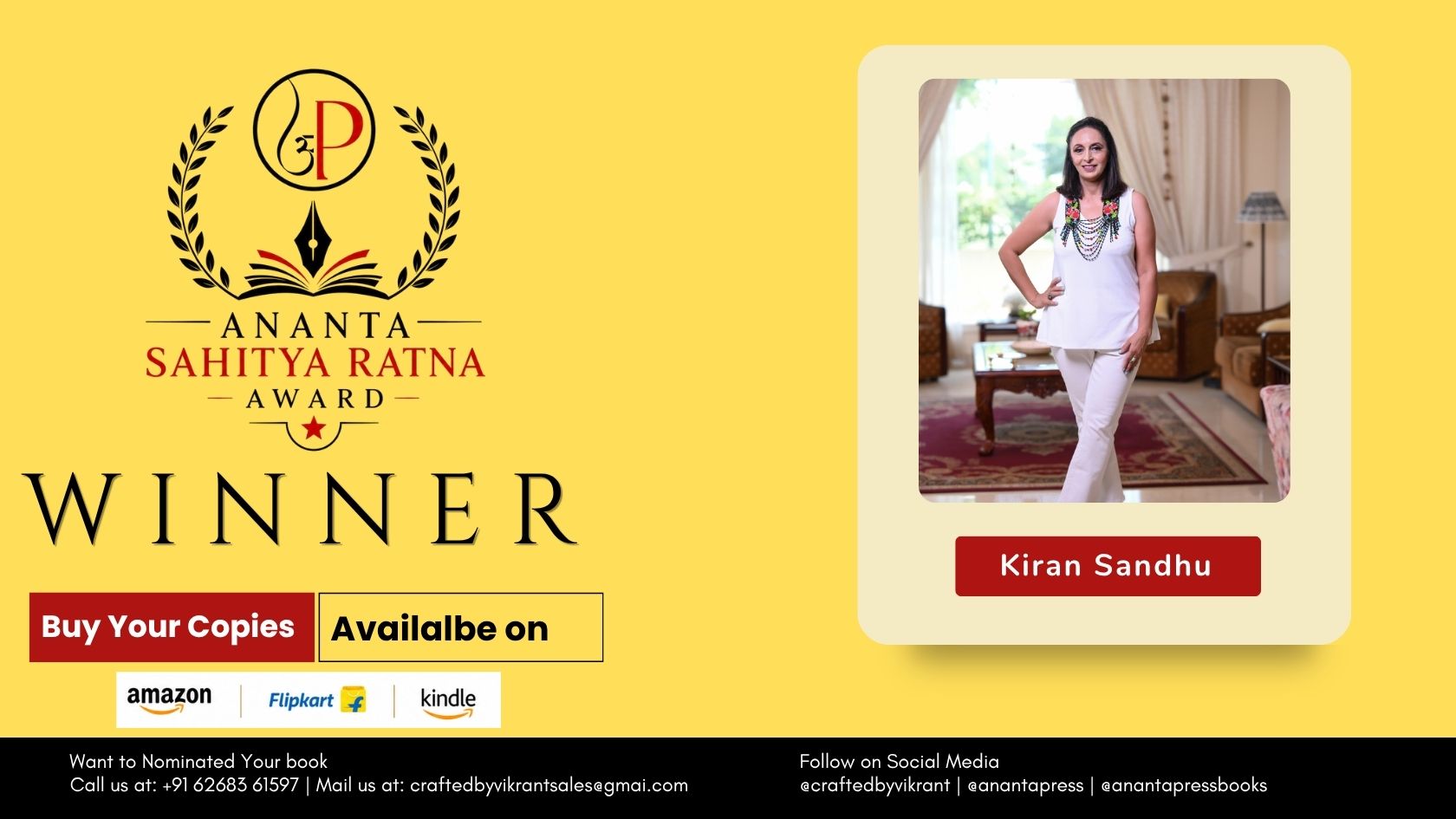
Congratulations to Kiran Sandhu on Winning the Ananta Press Sahitya Ratna Award for Customize Your Beauty
Ananta Press is delighted to announce Kiran Sandhu as an official Winner of the Ananta Press Sahitya Ratna Award for her book Customize Your Beauty, selected in the Non-Fiction (General) category. This recognition celebrates a book that approaches beauty from a thoughtful, practical and highly personal perspective. Instead of asking readers to follow every new beauty trend, Kiran Sandhu encourages them to first understand themselves. This simple but meaningful philosophy forms the heart of Customize Your Beauty and gives the book its distinctive character. The Ananta Press Sahitya Ratna Award recognizes authors and books that make a meaningful contribution to readers through originality, relevance, clarity of thought and the ability to create a lasting impact. Each selected work is considered for the value of its ideas, the quality of its message and its potential to connect with readers. Customize Your Beauty stood out because it does not treat beauty as a fixed formula. It teaches readers that personal care should begin with awareness and understanding. Kiran Sandhu’s interest in beauty began when she was around thirteen or fourteen years old. Over the years, she developed her understanding through personal experience, observation, experimentation with home remedies and the use of commercially available beauty products. Her book brings together this accumulated knowledge in an accessible form, allowing readers to use it according to their own individual requirements. One of the strongest qualities of Customize Your Beauty is its central message of knowing yourself before making beauty choices. The book asks readers to understand their skin type, facial features, eye characteristics, body shape and colouring. It then explains how this understanding can help them make better decisions about skincare, cosmetics, clothing, makeup and personal styling. This approach gives readers greater independence. Instead of simply recommending products, the book encourages people to understand why a particular ingredient or product may be suitable for their skin. In a market filled with advertisements, trends and constantly changing products, this ability to make informed choices can be especially valuable. The book also expands the meaning of beauty beyond skincare. Kiran Sandhu discusses how different body shapes can be complemented by different styles and cuts of clothing. The intention is not to encourage readers to feel uncomfortable about their bodies. Instead, it helps them understand their natural proportions and choose clothing that creates balance and confidence. Similarly, the discussion of facial features helps readers understand how makeup can work with the natural structure of the face. The book considers face shape, eye shape and other individual characteristics while explaining how certain techniques may emphasize attractive features or create visual balance. Colour selection is another useful part of the book. Readers are introduced to the idea of understanding their colouring and determining whether certain shades are more suitable for their natural appearance. This practical guidance connects beauty with personal styling and encourages readers to make more thoughtful choices about their clothes and overall presentation. The inclusion of home remedies and beauty recipes adds another practical dimension. These sections provide readers with accessible options for self-care while continuing the book’s main principle that beauty routines should be selected according to personal needs. The book also discusses weight management as part of an individual’s broader beauty and lifestyle journey. Importantly, the same principle of personalization continues here. Rather than presenting one fixed plan for every reader, the book encourages individuals to consider their own needs and create an approach suitable for themselves. The award committee found the book’s overall philosophy particularly relevant. Its progression can be understood through four simple ideas: understand, customize, choose and apply. This turns beauty from passive trend-following into an informed and personal process. Customize Your Beauty makes a valuable contribution to practical non-fiction because it attempts to give readers knowledge they can use in everyday life. It combines personal experience with guidance on skincare, cosmetics, makeup, clothing, colour selection and self-care. Its strength lies in helping readers understand that looking and feeling their best does not require copying another person’s routine. The Ananta Press Sahitya Ratna Award proudly recognizes Kiran Sandhu for presenting this individualized approach to beauty and personal care in a reader-friendly manner. Her work encourages awareness, thoughtful decision-making and confidence in personal choices. Ananta Press congratulates Kiran Sandhu on this achievement and wishes her continued success as an author. May Customize Your Beauty reach many more readers and continue encouraging them to understand themselves, make informed choices and develop a beauty routine that truly belongs to them. Jury Feedback Glenville Ashby After reading Customize Your Beauty, I found its greatest strength to be the clear idea that beauty cannot be reduced to a single formula for everyone. Kiran Sandhu repeatedly encourages readers to understand themselves before choosing products, clothes or beauty routines. This makes the book practical because it gives the reader a method of thinking rather than simply presenting a list of recommendations. I especially appreciated the attention given to skin type, facial structure, body shape and personal colouring. These subjects help readers understand why something that works beautifully for one person may not produce the same result for another. The author’s long personal interest in beauty can be felt throughout the book. Her experience gives the writing a personal and approachable quality. The book can be useful for readers who feel confused by changing beauty trends because it brings the focus back to individual needs. Overall, I found it informative, accessible and strongly connected to everyday life. Kavya Pandey Customize Your Beauty offers a refreshing way of discussing personal beauty because it begins with understanding rather than correction. I liked the fact that the book does not simply tell readers what they should buy. Instead, Kiran Sandhu explains why it is important to understand skin type, ingredients and personal requirements before selecting cosmetic products. This gives the reader greater confidence and independence while making choices. Another useful feature is that the book connects skincare with makeup, clothing, body shape and colour selection. As a result, beauty is presented as a
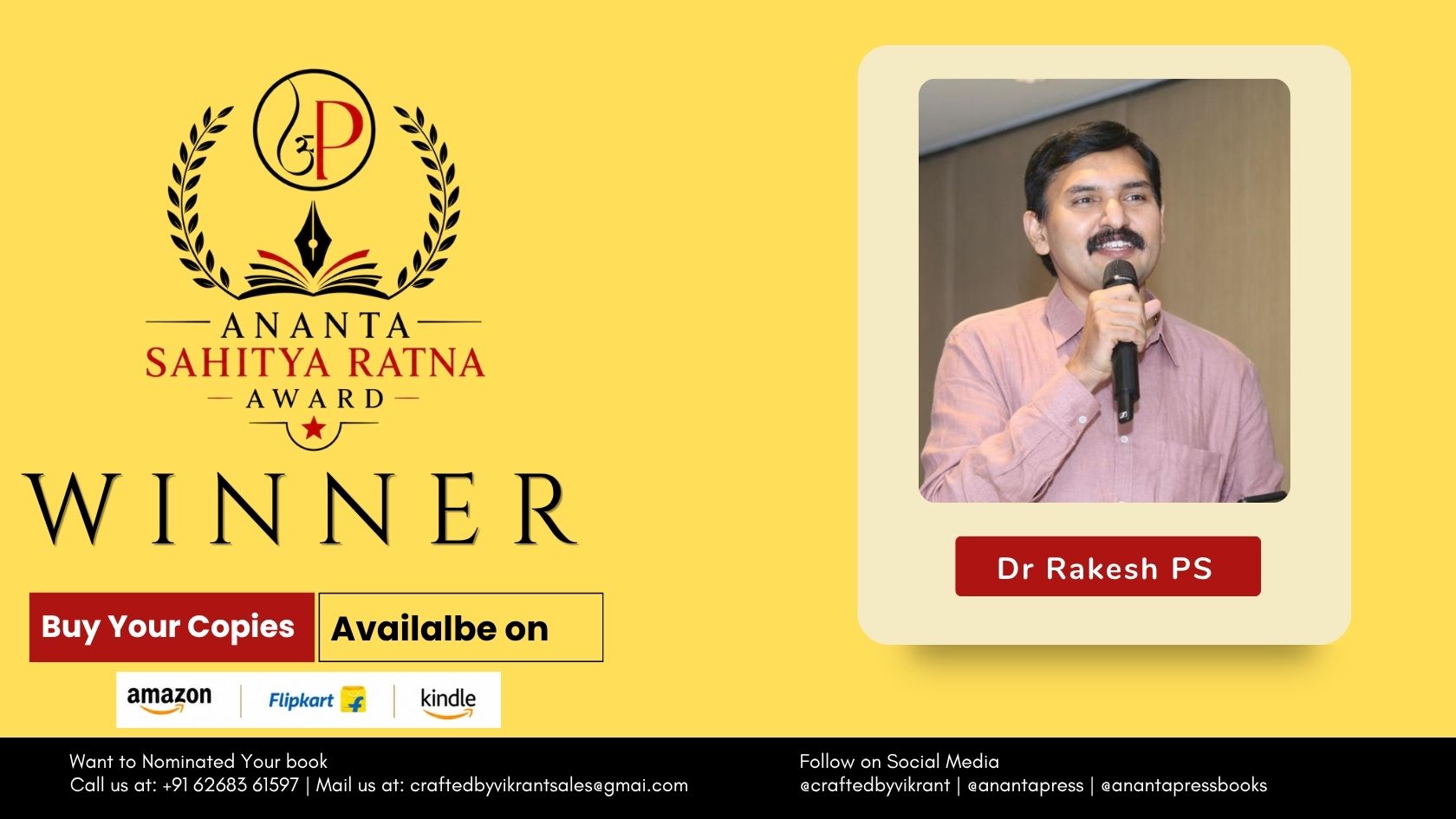
Dr Rakesh PS Wins the Ananta Press Sahitya Ratna Award for Echoes from the Atoll
Ananta Press is delighted to congratulate Dr Rakesh PS on being officially selected as a Winner of the Ananta Press Sahitya Ratna Award for his remarkable book, Echoes from the Atoll: Inside India’s First TB-Free Islands. This recognition celebrates a book that succeeds not only as a public health narrative, but also as a sensitive literary memoir about people, place, identity, belonging and social change. Set in Lakshadweep, the book emerges from Dr Rakesh PS’s years of experience as a public health professional during the islands’ journey towards TB-Free certification under India’s sub-national certification initiative. What makes Echoes from the Atoll especially distinctive is the way it moves beyond conventional accounts of public health achievements. Instead of presenting tuberculosis elimination mainly through programme data, statistics or technical frameworks, Dr Rakesh PS brings readers close to the people who made this achievement possible. Health workers, ASHAs, families and community leaders become the centre of the narrative. Their efforts show how a health programme can become a shared community aspiration when people begin to believe that disease does not have to remain a permanent part of their lives. The Ananta Press Sahitya Ratna Award recognises literary works that demonstrate originality, meaningful contribution, reader value and the ability to leave a lasting impression. Echoes from the Atoll strongly reflects these qualities. The award committee found the book especially noteworthy because it brings together public health, travel writing, personal reflection and social observation within one deeply human narrative. Lakshadweep itself becomes an important character in the book. The sea, changing weather, geographical distance and movement between islands influence not only everyday life but also the way healthcare must be planned and delivered. The reader begins to understand that solutions designed for mainland settings cannot always be transferred unchanged to island communities. Another important quality recognised by the committee is the book’s exploration of tradition and modernity. Dr Rakesh PS observes a society negotiating change while trying to preserve its cultural identity. Questions about development, aspiration, memory and heritage appear naturally throughout the narrative. These reflections give the book significance far beyond the subject of tuberculosis. At an even deeper level, Echoes from the Atoll asks what it means to belong somewhere. It examines how people respond when the place they consider home begins to change and how communities move towards the future while trying to retain a sense of who they are. The international release of the book on July 29, 2026 by Dr Lucica Ditiu, Executive Director of the Stop TB Partnership hosted by the United Nations Office for Project Services in Geneva, in the presence of global health leaders, further reflects the relevance of its central story. Through Echoes from the Atoll, Dr Rakesh PS has transformed an important public health achievement into an accessible human story. TB provides the backdrop, Lakshadweep provides the setting, but the people remain at the heart of the narrative. The Ananta Press Sahitya Ratna Award committee warmly congratulates Dr Rakesh PS on this recognition and wishes him continued success in his literary and professional journey. His work demonstrates how lived experience, careful observation and compassionate storytelling can bring important social achievements closer to readers and preserve the stories of communities for future generations. Review Committee Feedback Glenville Ashby Echoes from the Atoll impressed me because it approaches public health through the lives of ordinary people rather than through technical language. Dr Rakesh PS allows the reader to understand the TB-Free journey of Lakshadweep by showing the effort of health workers, families, ASHAs and community leaders. This makes the achievement feel real and personal. I particularly appreciated the role of geography in the narrative. The sea, distance between islands, uncertain travel and weather are not simply background details. They influence how people live and how healthcare reaches them. The book therefore gives the reader a clear sense that public health solutions must respond to the realities of the community they serve. At the same time, the writing remains reflective and accessible. A reader does not need a medical or public health background to connect with the book. Its greatest strength is its humanity. It records an important health achievement while ensuring that the people behind that achievement are never forgotten. Kavya Pandey What stayed with me while reading Echoes from the Atoll was its strong sense of place. Lakshadweep is presented not as an attractive location added to a public health story, but as a living environment that shapes every part of the narrative. Dr Rakesh PS helps readers experience something of the distance, sea journeys, relationships and rhythms of island life. The book also succeeds in connecting these observations with larger questions about identity and belonging. I found the sections dealing with tradition and modernity especially thoughtful. Communities naturally change with time, but change also creates questions about what should be preserved and what may slowly disappear. The author treats this subject with sensitivity rather than giving easy answers. The TB-Free achievement gives the book an important social foundation, but the narrative reaches much further. It becomes a story of communities adapting, protecting their identity and working together. This combination of personal reflection, social observation and public health gives the book its distinctive literary value. Apeksha Gupta I found Echoes from the Atoll valuable because it makes a subject that could easily become technical very easy to understand and emotionally engaging. Tuberculosis elimination is a major public health issue, yet Dr Rakesh PS does not overwhelm the reader with statistics or complicated programme descriptions. Instead, he introduces us to the people who carried the mission from one household to another. Through health workers, ASHAs, families and local leaders, readers understand that major health achievements are built through trust, patience and community participation. Another strength is the author’s ability to connect his professional experience with personal reflection. His time in Lakshadweep clearly changed the way he understood the islands and perhaps also the meaning of his own work. That personal dimension gives warmth to the narrative.
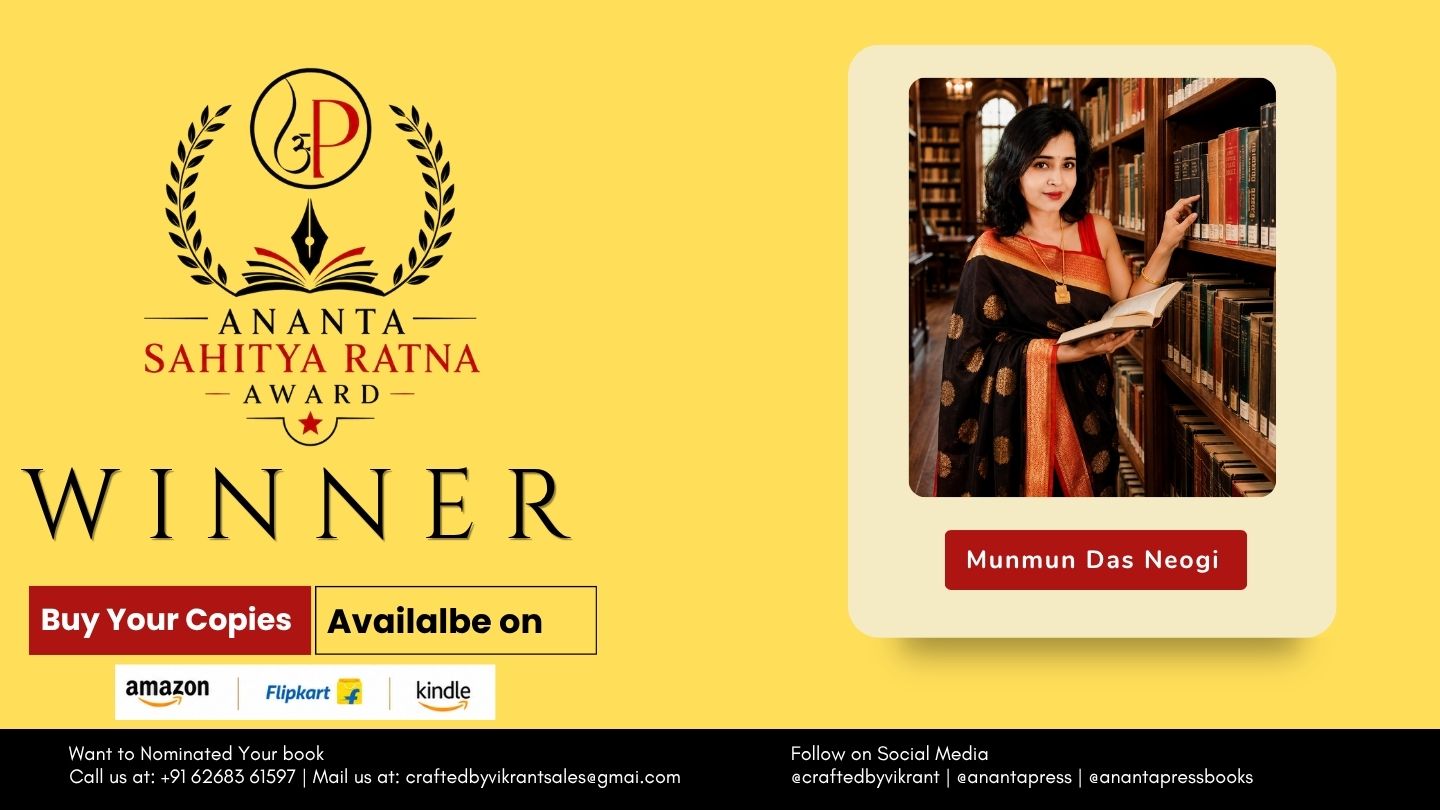
Munmun Das Neogi Honoured as Winner of the Ananta Press Sahitya Ratna Award for Ahamasmi Yodha
Ananta Press is delighted to congratulate author Munmun Das Neogi on being officially recognised as a Winner of the Ananta Press Sahitya Ratna Award for the book Ahamasmi Yodha. This recognition celebrates a work that brings together spiritual reflection, motivation, philosophy, and the timeless idea of Dharma in a form that can speak directly to the modern reader. Ahamasmi Yodha begins with a powerful question: what if divinity did not always choose the flute, but sometimes chose the battlefield? Through this thought, the book invites readers to look beyond the familiar image of Krsna as the divine flute-player and explore another important dimension of his character. It presents Krsna as a strategist, protector, guide, and force of clarity who understood when peace should be pursued and when decisive action became necessary in the service of Dharma. Munmun Das Neogi, through Ahamasmi Yodha, brings forward a thoughtful interpretation of strength and spiritual responsibility. Rather than limiting the idea of a warrior to physical conflict, the author uses it as a symbol of the courage required to face difficult choices, inner doubts, moral responsibilities, and moments when remaining silent is no longer the right option. The Ananta Press Sahitya Ratna Award recognises literary works that demonstrate meaningful thought, originality, reader value, and the ability to make a lasting contribution through literature. During the consideration of Ahamasmi Yodha, the award committee found its central philosophy especially relevant because the book does not glorify war or aggression. Instead, it presents the warrior as someone who acts with awareness, purpose, responsibility, and control over the self. One of the strongest qualities of Ahamasmi Yodha is its interpretation of Kurukṣetra as more than a historical battlefield. The book presents Kurukṣetra as something that continues to exist within every human heart. Fear stands against courage. Silence stands against truth. Comfort stands against Dharma. Confusion stands against clarity. These are battles that almost every reader can recognise within their own life. This approach gives the book considerable value within the Self-Help and Motivational category. It encourages the reader to understand courage not as aggression, domination, or the absence of fear, but as the ability to act correctly despite uncertainty. The warrior described in the book acts without ego, protects without attachment, and fights without hatred. Such ideas give the work a deeper philosophical foundation than conventional motivational writing. The committee also appreciated the originality of exploring Krsna through the philosophy of the divine warrior. For centuries, Krsna has been remembered through love, wisdom, compassion, diplomacy, and the music of the flute. Ahamasmi Yodha brings greater attention to the strategist and protector who stood firm when peace failed and who guided others through moments of fear and hesitation. By focusing on diplomacy, silence, courage, purpose, and decisive action, the book builds a bridge between ancient spiritual wisdom and contemporary personal struggles. Readers are not simply asked to observe the choices made by Krsna. They are encouraged to examine their own choices and ask what courage, responsibility, and Dharma mean in their own lives. The literary impact of the book comes from this movement from the divine to the deeply personal. Its central message, “Ahamasmi Yodha, I am the Warrior,” becomes more than a declaration. It becomes an invitation to recognise the source of courage within oneself. For its meaningful concept, spiritual depth, motivational relevance, originality, accessible philosophy, and ability to encourage self-reflection, Ahamasmi Yodha was considered a deserving work for recognition by the Ananta Press Sahitya Ratna Award committee. The book contributes to inspirational literature by reminding readers that true strength is not measured by conquest, but by the ability to choose what is right with courage, awareness, and clarity. Ananta Press warmly congratulates Munmun Das Neogi on this achievement and wishes the author continued success on the literary journey ahead. May Ahamasmi Yodha reach many more readers, inspire meaningful conversations about courage and Dharma, and encourage individuals to discover the warrior within themselves. Reviewer Feedback Drafts Glenville Ashby Ahamasmi Yodha presents a thoughtful and engaging interpretation of courage through the figure of Krsna. What I appreciated most is that the book does not glorify battle or aggression. Instead, it explains that the true warrior is guided by clarity, responsibility, and Dharma. The idea that Kurukṣetra also exists within the human mind gives the book a strong motivational value. Readers can easily connect the ancient setting with present-day struggles involving fear, difficult choices, truth, and personal responsibility. The writing carries a spiritual message without losing its practical relevance. The treatment of Krsna as a strategist, guide, and protector adds an interesting dimension to a familiar figure. I also found the central message, “I am the Warrior,” effective because it encourages readers to recognise strength within themselves rather than wait for external rescue. Overall, this is a meaningful book with a clear purpose and the ability to inspire reflection and personal courage. Kavya Pandey What stands out in Ahamasmi Yodha is its simple but powerful idea of the inner battlefield. The book takes episodes and qualities associated with Krsna and connects them with the conflicts that ordinary people face in life. This makes the subject feel relevant rather than distant. I liked the way the book presents courage as something deeper than physical strength. It is shown as the ability to remain clear when emotions are strong, to speak when silence becomes wrong, and to act when responsibility cannot be avoided. The focus on action without ego and protection without hatred gives the book a balanced and mature message. It can be valuable for readers who enjoy spiritual literature as well as those looking for motivation and self-development. The book also encourages readers to think about Dharma in a personal way. Its message is not simply to fight, but to understand why one acts. That gives the work depth and lasting value. Apeksha Gupta Ahamasmi Yodha offers a fresh motivational approach to a subject that has been discussed for generations. Instead of focusing only on Krsna as the symbol