
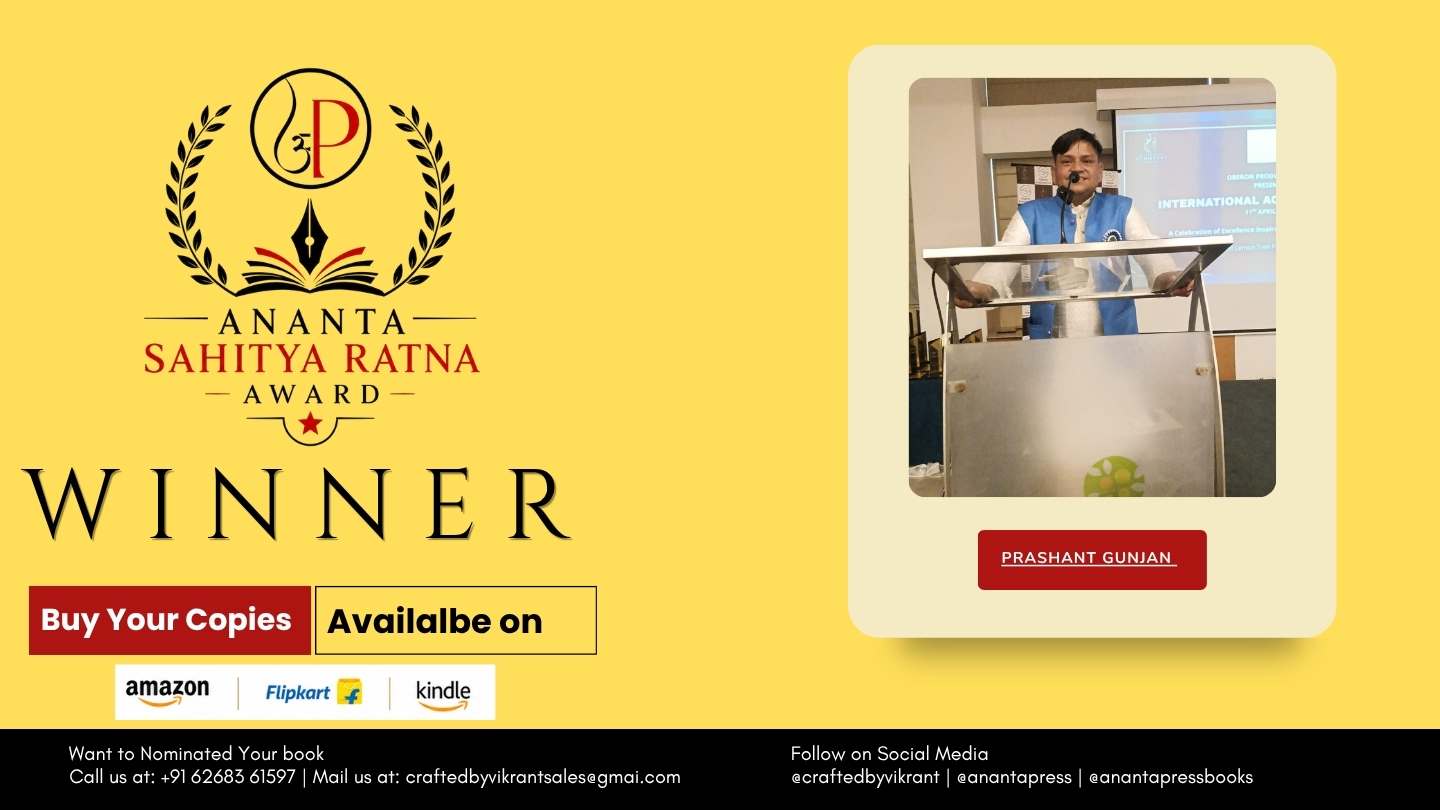
Ananta Press is proud to announce Prashant Gunjan as the official winner of the Ananta Press Sahitya Ratna Award for his powerful thriller and mystery novel, KAAM: The Desire That Destroys. This recognition celebrates a work that explores desire, love, social pressure, betrayal, violence, and guilt through an intense and emotionally disturbing story.
The novel follows Suraj and Sonam, two people whose love is rejected by society because of caste, family honour, and rigid traditions. Their relationship is broken before it can grow, but the feelings they once shared remain alive. Years later, Sonam is trapped in a loveless marriage with Ajay, while Suraj continues to live with obsession, loneliness, and the pain of what was taken from him. When Suraj and Sonam meet again, hidden conversations soon turn into betrayal, violence, murder, and fear.
The award committee selected KAAM because it does not present desire as a simple romantic feeling. It shows how suppressed emotions, social restrictions, obsession, and uncontrolled passion can combine to destroy lives. The book also raises important questions about caste, family honour, marriage, personal choice, responsibility, and the consequences of secret relationships. Its strength lies in the way it connects emotional conflict with suspense and crime.
The Ananta Press Sahitya Ratna Award recognises literary works that offer originality, emotional depth, social meaning, and a lasting impact on readers. Prashant Gunjan’s novel stands out because it enters the darker side of human emotion without making the story shallow or ordinary. It reminds readers that love without freedom can become pain, desire without control can become destruction, and guilt can continue long after a crime has been hidden.
Glenville Ashby’s Feedback
KAAM: The Desire That Destroys is a bold and intense story that examines how love, rejection, and desire can slowly turn into obsession. I found the relationship between Suraj and Sonam emotionally powerful because their tragedy begins long before the crime takes place. Society, caste, family honour, and fear separate them, but the feelings remain unresolved. This gives the later events a strong emotional base. The novel also shows that desire is not dangerous by itself, but it becomes destructive when mixed with secrecy, anger, loneliness, and a lack of moral control. Ajay is not presented only as a husband, but as a symbol of status, reputation, and social pressure. The discovery of the affair and the violence that follows create a strong turning point. What stayed with me most was the idea that hiding a body cannot hide guilt. The story is suspenseful, but it also carries a serious warning about choices and consequences. Prashant Gunjan has written a thriller that can disturb readers and make them think.
Kavya Pandey’s Feedback
While reading KAAM: The Desire That Destroys, I felt that the novel’s greatest strength is its emotional conflict. Sonam is caught between her past love, her present marriage, and the expectations placed upon her by family and society. Suraj carries years of pain and turns that pain into obsession. Their reunion feels dangerous from the beginning because both characters are carrying wounds that were never healed. The book does not treat their relationship as a simple love story. It shows how a forbidden bond can become more complicated when time, marriage, guilt, and physical desire enter the picture. The murder gives the story the shape of a crime thriller, but the real mystery lies inside the minds of the characters. Readers keep wondering how far they will go and whether they can escape the consequences of what they have done. The language and theme are direct, and the message is clear. Uncontrolled passion can damage not only one person, but every life connected to it. This makes the book meaningful and memorable.
Apeksha Gupta’s Feedback
KAAM: The Desire That Destroys presents a difficult subject with courage. It explores the point where love ends and possession begins. Suraj and Sonam were separated because their relationship did not fit within the social rules around them. This makes their pain understandable, but the novel does not use that pain to excuse their later actions. That balance is important. It allows readers to feel sympathy for the characters while also judging the choices they make. Sonam’s loveless marriage, Suraj’s loneliness, Ajay’s anger, and the pressure of reputation all come together in a tense and tragic way. The story becomes more powerful after the murder because fear and guilt take control of the characters. Police investigation adds suspense, but the emotional punishment begins even before the law reaches them. I appreciated the book’s message that every desire carries responsibility. A person may hide a relationship, a crime, or a secret, but the mind continues to remember. Prashant Gunjan has created a dark thriller with psychological depth and a strong moral impact.
Kavita Kaushik’s Feedback
The title KAAM: The Desire That Destroys is suitable because the novel focuses on desire as a force that can control judgment and break moral boundaries. Suraj and Sonam’s love begins under social pressure and ends in separation, but the emotional bond does not disappear. When they meet again, the past becomes stronger than the present. Sonam’s marriage to Ajay gives the story another layer because she is divided between duty, memory, and personal longing. Suraj’s obsession also shows how loneliness can change love into something unhealthy. The novel creates tension through secret conversations, hidden meetings, suspicion, and finally violence. Ajay’s discovery changes the direction of the story and leads to a crime that cannot be undone. I found the guilt after the murder especially important. It shows that punishment is not limited to police, courts, or prison. A person can also be punished by fear, memory, and regret. This book deserves recognition for combining suspense with a serious study of human weakness and emotional consequences.
Neel Preet’s Feedback
KAAM: The Desire That Destroys is not only a thriller about an affair and a murder. It is also a story about the damage caused by social control and emotional suppression. Suraj and Sonam are denied the freedom to choose their relationship because of caste and family honour. Their separation creates pain, but instead of healing, they carry that pain into the future. This is where the novel becomes tragic. Sonam enters a marriage without love, Suraj becomes consumed by the past, and Ajay becomes part of a conflict he did not fully understand. The story makes the reader question whether the disaster could have been prevented if the characters had been allowed honesty and choice earlier in life. At the same time, it clearly shows that suffering does not justify betrayal or violence. The crime brings suspense, while the investigation increases fear and pressure. The emotional consequences are even stronger than the physical danger. Prashant Gunjan has written a story that warns readers about obsession, secrecy, and the cost of refusing responsibility.
Deepak Seth’s Feedback
What impressed me about KAAM: The Desire That Destroys was the way it connects personal desire with social reality. The novel begins with a love that is rejected because of caste, tradition, and family honour. This gives the story a believable foundation. Many readers can understand how social pressure can silence people and force them into lives they did not choose. However, the novel moves beyond social criticism and examines personal responsibility. Suraj and Sonam are victims of earlier circumstances, but they later become responsible for the decisions they make. Their secret relationship creates betrayal, and the discovery of the truth leads to rage and murder. The line between victim and offender becomes difficult to separate. This complexity gives the book depth. The police investigation brings the expected tension of a thriller, but the strongest part is the inner fear of the characters. They know that the truth cannot remain buried forever. The novel offers a clear message that uncontrolled desire can destroy dignity, relationships, peace, and life itself. It is a deserving award-winning work.
The six-member award committee recognised KAAM: The Desire That Destroys for its originality, emotional intensity, social relevance, and strong psychological message. The book combines the pace of a thriller with the seriousness of a moral and social tragedy. It does not simply entertain readers through crime and suspense. It encourages them to think about suppressed love, forced choices, unhealthy obsession, betrayal, and the lasting burden of guilt.
Ananta Press warmly congratulates Prashant Gunjan on winning the Ananta Press Sahitya Ratna Award. His work makes a valuable contribution to contemporary thriller and mystery writing by showing the dangerous consequences of desire when it is separated from responsibility, honesty, and self-control.
We wish Prashant Gunjan continued success in his literary journey. May KAAM: The Desire That Destroys reach a wide audience, begin meaningful conversations, and remain in the minds of readers long after they have finished its final page. His contribution to literature and his courage in exploring the darker and more complicated parts of human emotions deserve sincere appreciation and recognition.