
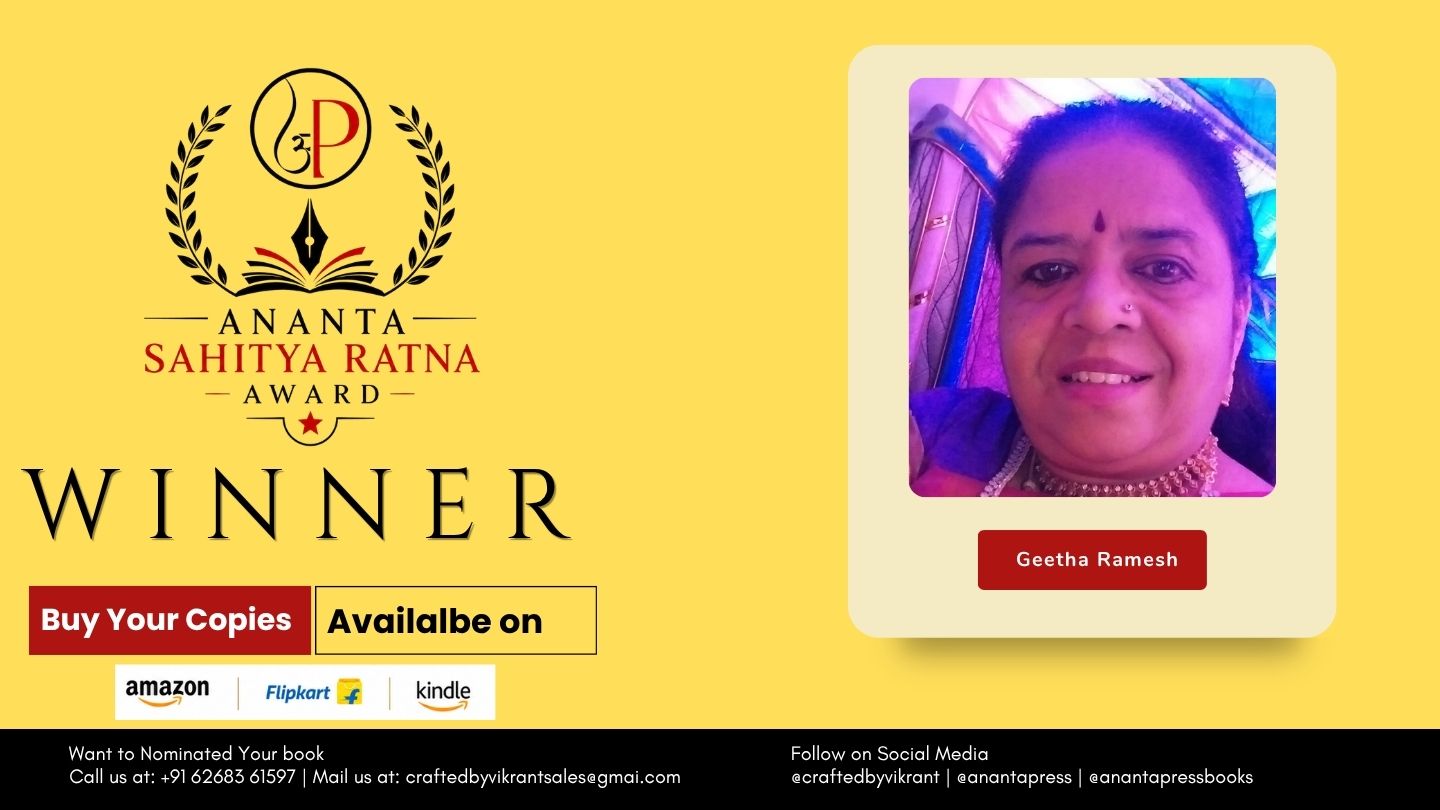
Ananta Press is pleased to congratulate author Geetha Ramesh on being officially selected as a Winner of the Ananta Press Sahitya Ratna Award for her fiction novel Return Of The Soul. This recognition celebrates a work that combines historical experience, romance, memory, reincarnation, family responsibility, and the enduring power of human connection. The award committee found the novel notable for its imaginative concept and for the emotional questions it raises about love, destiny, and the possibility that some bonds may continue beyond one lifetime.
Return Of The Soul begins against the troubled background of World War II and follows an Indian family settled in Burma. Through this setting, the novel places its characters inside a period marked by danger, uncertainty, displacement, and personal sacrifice. At the centre of the story is Roopini, the eldest daughter of the family, who supports her father in managing the family business. Her role gives the story an important sense of responsibility and strength before the romantic journey begins.
During the war, Roopini meets Amudhan, a South Indian soldier and poet. Their relationship grows in extraordinary circumstances, where the fear of loss is always present. Their love becomes deeply significant when Amudhan dies in Roopini’s lap, but not before assuring her that he will return to live with her again. This promise becomes the emotional heart of the novel and carries the reader from a historical love story into a larger exploration of reincarnation and unfinished relationships.
The next phase of the story adds originality and emotional complexity. Roopini is reborn as Sreeja in the same family, as one of the daughters of her own sister. From childhood, Sreeja remembers events from her previous birth. As she grows older, however, she begins to doubt those memories and wonders whether they are only imagination. Life moves forward, and under the influence of family pressure and gratitude, she marries someone else. This creates an important conflict between memory and present reality, between what the heart remembers and what circumstances demand.
Amudhan also returns in another life as Sridhar. When he appears again, he is in his mid-forties and remains unmarried. As the story develops, Sridhar too begins to recall his previous birth. Their meeting gives the novel its central emotional and philosophical tension. The question is no longer only whether two people can meet again, but what happens when they do. They have returned to a different time, with different identities, responsibilities, relationships, and choices. This makes Return Of The Soul more than a simple reincarnation romance.
The Ananta Press Sahitya Ratna Award recognizes literary works that demonstrate meaningful storytelling, originality, reader value, and a sincere contribution to literature. Return Of The Soul was selected because it brings several themes together in a way that invites both emotional involvement and reflection. Its World War II background adds historical weight, while its exploration of rebirth gives the novel a spiritual and imaginative dimension. At the same time, the family pressures, personal duties, sacrifices, and difficult decisions faced by the characters keep the story rooted in recognizable human experience.
The award committee also appreciated the character of Roopini and her later life as Sreeja. She is presented not merely as someone waiting for love, but as a daughter carrying responsibility, a woman facing loss, and later a person trying to understand memories that do not fit easily into her present life. Amudhan and Sridhar similarly represent the idea of love changed by time. Their journey raises questions about identity, loyalty, destiny, and whether emotional truth can survive the changes brought by death and rebirth.
Geetha Ramesh deserves special appreciation for developing a story with a distinctive central idea while keeping emotion at its core. The novel has the ability to appeal to readers who enjoy romance, family drama, historical settings, spiritual themes, and stories that explore the mysteries of human existence. Its central message is not limited to reincarnation. It also reminds readers that love, memory, responsibility, and choice can shape a life in ways that are not always simple or predictable.
On behalf of Ananta Press and the Ananta Press Sahitya Ratna Award committee, we warmly congratulate Geetha Ramesh on this achievement. The selection of Return Of The Soul as a winning work recognizes her imaginative storytelling and her contribution to fiction that encourages readers to feel, question, and reflect. We extend our best wishes to her for continued literary success and hope that her work reaches many more readers in the years ahead.
Jury Feedback
Glenville Ashby
Return Of The Soul left a strong impression on me because it brings together history, love, memory, and rebirth in a very natural way. The background of World War II gives the story seriousness, while the relationship between Roopini and Amudhan gives it emotional warmth. I especially liked the promise made by Amudhan before his death, because it becomes the emotional foundation of everything that follows. The later journey of Sreeja adds another layer to the story. Her childhood memories of a previous life are handled in a way that creates curiosity without making the story difficult to follow. The return of Amudhan as Sridhar in middle age also gives the novel a mature emotional tone. The book asks readers to think about whether love can survive time, death, social expectations, and new responsibilities. Geetha Ramesh has created a story that is imaginative but also deeply connected to human emotions, and that balance makes the book memorable.
Kavya Pandey
What I appreciated most in Return Of The Soul is the way the novel places a personal love story inside a difficult historical period. The Burmese setting during World War II gives the beginning of the book a sense of danger, uncertainty, and movement. Roopini is not shown only as a romantic character. She is also an eldest daughter who supports her father in the family business and carries responsibility during a difficult time. That makes her character more believable and meaningful. Her bond with Amudhan, a South Indian soldier and poet, grows in the middle of war, which adds both tenderness and tragedy to the story. When the narrative moves into the next birth, the novel becomes more unusual and thought provoking. Sreeja’s memories, her doubts, her marriage under family pressure, and Sridhar’s later realization create an emotional conflict that feels very human. The book has originality, emotional depth, and a strong sense of destiny.
Apeksha Gupta
Return Of The Soul stands out because it takes a difficult idea such as reincarnation and presents it through a simple emotional journey. The story does not depend only on the mystery of a previous birth. It also explores duty, family, gratitude, marriage, memory, and the choices people make when life does not follow their deepest wishes. I found Sreeja’s character especially interesting because she remembers another life from childhood, but later questions whether those memories are real or only imagination. This creates an inner conflict that many readers can understand, even if they do not personally believe in reincarnation. Sridhar’s return as the reborn Amudhan adds another moving dimension, especially because he reaches this realization later in life and remains unmarried. The novel therefore becomes more than a reunion story. It becomes a reflection on time, missed chances, emotional truth, and the lasting effect of love. Geetha Ramesh has handled these themes with sincerity and imagination.
Kavita Kaushik
The strongest quality of Return Of The Soul is its emotional continuity across two lives. Roopini and Amudhan meet in a time of war, where life is uncertain and relationships can be cut short without warning. Amudhan’s death in Roopini’s lap and his promise to return give the story a powerful emotional turning point. What follows is not a simple repetition of the same love story. Roopini is reborn as Sreeja inside the same family line, and her new life brings new duties, pressures, and choices. This gives the novel a deeper moral and emotional dimension. I liked that Sreeja does not simply wait for the past to return. She grows, doubts her memories, and takes decisions shaped by family circumstances. When Sridhar enters the story, the past and present begin to connect in an emotionally satisfying way. The book has a strong dramatic idea and offers readers a thoughtful story about love, destiny, memory, and the consequences of human decisions.
Neel Preet
I found Return Of The Soul engaging because it combines historical fiction with a spiritual and romantic idea without losing its human centre. The World War II setting gives the novel a wide background, but the story remains focused on a family and the emotional life of its characters. Roopini’s role as the eldest daughter, her responsibility in helping her father, and her love for Amudhan make her a strong central figure. The tragedy of Amudhan’s death could have ended the story, but instead it becomes the beginning of the novel’s larger question about whether a soul and its deepest attachments can return. Sreeja’s later life makes the book more layered because she carries memories that she is not sure she should trust. The meeting with Sridhar brings emotional tension as well as philosophical interest. I believe the novel has value because it encourages readers to think about love, identity, memory, and destiny while still giving them a moving and accessible story.
Deepak Seth
Return Of The Soul has a distinctive story idea and a strong emotional foundation. I was drawn to the way the novel begins with displacement and hardship during World War II and then gradually moves toward questions of rebirth and unfinished love. The relationship between Roopini and Amudhan is important not only because it is romantic, but because it is shaped by sacrifice, uncertainty, and the reality of war. Amudhan’s promise that he will return creates a clear thread that connects the two lives in the novel. Sreeja’s journey is equally important because she must live in the present while carrying memories of a past she cannot fully prove. Her marriage, family pressure, and sense of gratitude create real emotional complications. Sridhar’s return later in life makes the reunion more complex and mature. Geetha Ramesh has created a novel that offers both an engaging story and a thoughtful reflection on whether love can remain meaningful across time, identity, and changing circumstances.