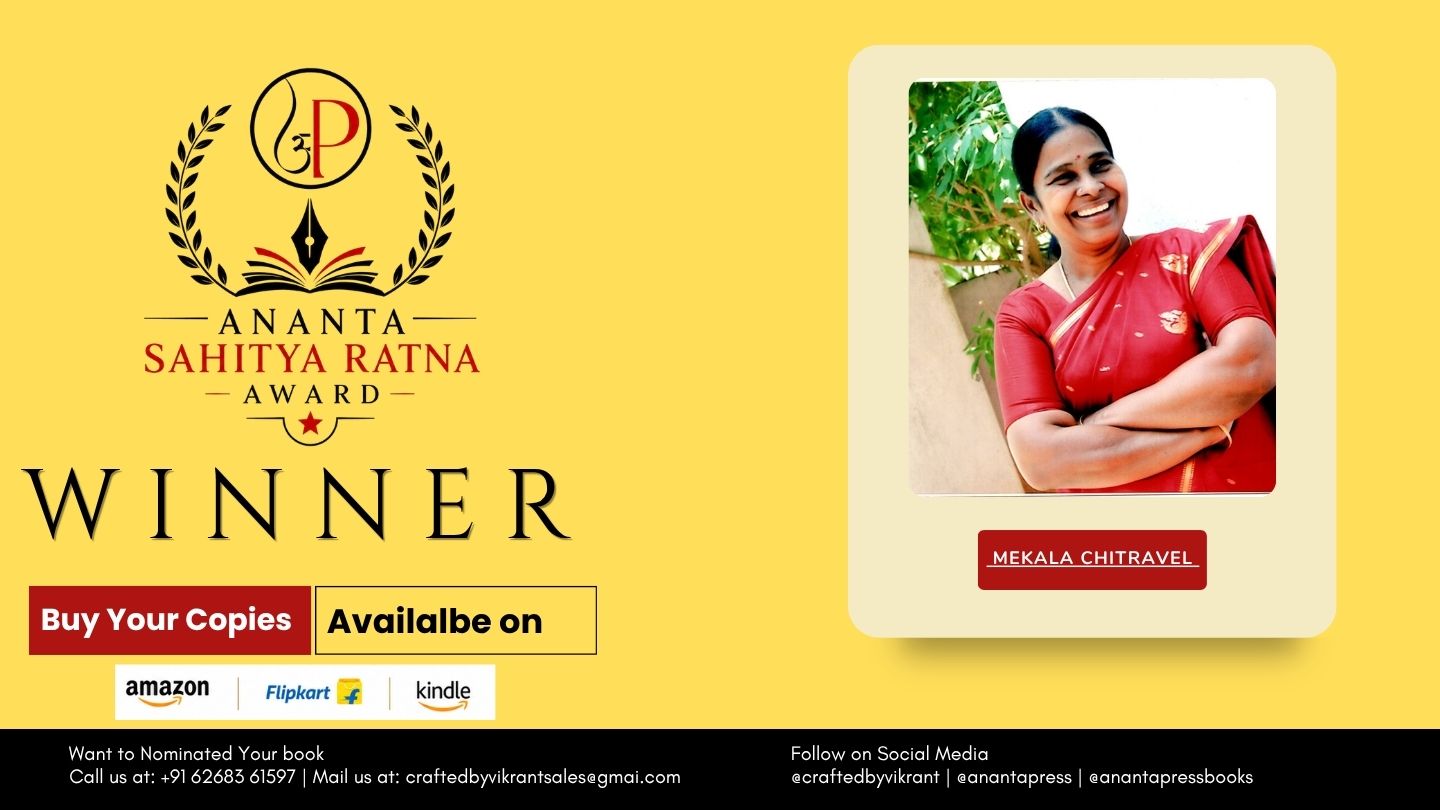
Ananta Press is delighted to congratulate author Mekala Chitravel on being officially declared a Winner of the Ananta Press Sahitya Ratna Award for the fiction novel சௌகந்தி… (Sowganthi). This recognition celebrates a work that places one of the most intimate and meaningful human relationships at its centre: the bond between a mother and her son.
Sowganthi is built around a simple but deeply emotional idea. Every mother hopes that her child will grow with love, concern, respect, and a willingness to care for her. In the novel, Sowganthi is portrayed as a fortunate mother because her son, Rishi, gives her the affection and care that a mother naturally longs for. Through this relationship, Mekala Chitravel draws attention to the emotional value of family, gratitude, responsibility, and the quiet forms of love that often shape a person’s life more strongly than grand gestures.
The title itself adds an important layer of meaning to the book. Sowganthi is described as the name of a divine flower mentioned in the Mahabharata, associated with the episode in which Bhima brings the flower for Panchali from a heavenly realm. By choosing this name for the central mother figure, the novel connects a personal family story with Indian mythological memory. The flower becomes a fitting symbol of something precious, pure, rare, and worthy of care. This cultural connection gives the book an identity of its own and helps its central theme of maternal love feel both personal and timeless.
The Ananta Press Sahitya Ratna Award recognises literary works that offer meaningful ideas, emotional or intellectual value, originality of presentation, and a positive contribution to readers. Sowganthi stood out to the award committee because it takes a universally understood relationship and gives it a clear emotional and cultural focus. Rather than depending on complexity alone, the novel finds strength in sincerity. It invites readers to look at the mother and son relationship not merely as a biological bond, but as a relationship sustained by affection, respect, presence, and responsibility.
The committee also recognised the relevance of the book’s message in contemporary life. Families today often face distance, changing priorities, demanding routines, and reduced time for emotional connection. Against this background, a story that reminds readers to value a mother’s love and to return that love through genuine care has social as well as literary importance. Rishi’s relationship with Sowganthi can encourage readers, especially younger readers, to think about how love is expressed in everyday actions and how meaningful it can be to remain emotionally present for one’s parents.
As a work of fiction, Sowganthi also demonstrates that powerful literary themes do not always need to be built around extraordinary events. Sometimes the most lasting stories begin with relationships readers already know. By placing maternal affection at the heart of the narrative and linking its title to a culturally significant image from the Mahabharata, Mekala Chitravel gives the story both emotional accessibility and symbolic depth.
The selection of Sowganthi for the Ananta Press Sahitya Ratna Award therefore reflects the committee’s appreciation of its heartfelt subject, cultural connection, positive message, and ability to encourage reflection on family relationships. The novel celebrates a form of love that is nurturing, protective, grateful, and deeply human.
Ananta Press warmly congratulates Mekala Chitravel on this achievement. May this recognition bring Sowganthi to a wider readership and encourage the author to continue creating stories that carry emotional meaning and cultural value. We extend our best wishes to Mekala Chitravel for the literary journey ahead and proudly recognise the contribution of Sowganthi to fiction centred on family, affection, and the enduring significance of a mother’s love.
Jury-Style Feedback
Glenville Ashby
Sowganthi is a gentle and emotionally sincere novel that places the bond between a mother and her son at the centre of the story. What stayed with me most was the simplicity of its emotional idea. The relationship between Sowganthi and Rishi is not presented only as a family connection, but as a form of devotion, responsibility, and gratitude. Rishi’s love and care for his mother give the story a warm human quality that many readers can understand. I also found the meaning behind the name Sowganthi very interesting. Connecting the name to the divine flower mentioned in the Mahabharata gives the novel a cultural and symbolic layer without taking attention away from the main emotional theme. The book reminds readers that caring for parents is not merely a duty but can also be an expression of deep love. Its strength lies in its heartfelt message, its emotional accessibility, and the respect it gives to motherhood.
Kavya Pandey
While reading Sowganthi, I was drawn to the way the novel celebrates a mother’s emotional world through a simple but meaningful relationship. Every mother hopes to receive love, concern, and respect from her child, and the character of Sowganthi represents that universal hope. Rishi becomes important because his care is shown as something natural and heartfelt. The story therefore speaks about values that can easily be forgotten in busy modern life. I especially liked the symbolic meaning of the title. The reference to the divine Sowganthi flower from the Mahabharata gives the book a sense of grace and connects a personal family story with a larger Indian cultural memory. This combination makes the novel feel rooted and distinctive. The book does not need an overly complicated idea to create an impact. Its emotional strength comes from affection, gratitude, and the sacred place of a mother in a child’s life. It is a sincere and touching work.
Apeksha Gupta
What I appreciated in Sowganthi is its focus on an emotion that is familiar to almost everyone but is not always explored with enough attention in fiction. The love between a mother and son can appear ordinary from the outside, yet this novel shows how powerful that relationship can become when it is built on care, understanding, and respect. Rishi’s affection for Sowganthi gives the story its emotional centre. The title also adds depth to the reading experience. Knowing that Sowganthi refers to a divine flower associated with the Mahabharata creates a beautiful parallel between something precious in mythology and the precious nature of a mother’s love. I found this idea thoughtful and memorable. The novel carries a positive message for younger readers as well. It reminds them to value parents while they are present and to express love through actions. The book’s simplicity works in its favour because the feeling remains clear, direct, and easy to connect with.
Kavita Kaushik
Sowganthi touched me because it speaks about care in a very direct and human way. The novel is built around the affection between a mother and her son, but the emotion goes beyond these two characters. It can remind readers of their own homes, their own mothers, and the small acts of love that often remain unspoken. Sowganthi is described as a fortunate mother because Rishi truly loves and looks after her. That idea gives the book an uplifting quality. I also liked the cultural meaning attached to her name. The connection with the divine flower from the Mahabharata brings beauty and symbolism to the story and makes the title meaningful rather than decorative. For me, the strongest quality of the novel is its message that love should be visible through care and presence. It encourages readers to think about family relationships with more gratitude. The story is simple in its foundation, but its emotional message is strong, warm, and relevant.
Neel Preet
The most appealing aspect of Sowganthi is the emotional clarity of its central theme. The book knows what it wants to say about motherhood, and it communicates that message through the loving relationship between Sowganthi and Rishi. Rishi’s care for his mother gives the novel a sense of hope and goodness. In a time when many stories focus on conflict, this book gives importance to affection, responsibility, and emotional connection. The title has also been chosen thoughtfully. The Sowganthi flower, linked with the Mahabharata and the story of Bhima bringing it for Panchali, gives the novel a mythological reference that enriches its meaning. It suggests something rare, divine, and precious, which suits the way the book views a mother’s place in a child’s life. I believe readers who enjoy emotional family fiction will connect with this work. Its message is easy to understand, but it stays with the reader because it comes from a deeply relatable human bond.
Deepak Seth
Sowganthi is a meaningful family-centred novel that highlights one of the most important relationships in human life. The mother and son bond has been explored through Sowganthi and Rishi with a clear emphasis on love, care, and emotional responsibility. I found the premise refreshing because it does not depend only on dramatic events to attract the reader. Instead, it gives value to feelings and relationships that shape everyday life. Rishi’s devotion to his mother becomes the heart of the narrative and presents a positive example of how affection can be expressed through support and attention. The mythological association of the name Sowganthi also adds originality. The divine flower mentioned in the Mahabharata gives the title cultural depth and creates a beautiful symbol for purity and preciousness. The novel has the potential to speak across generations because its central message is universal. It reminds readers to honour their parents, cherish family bonds, and recognise that genuine love is shown through consistent care.